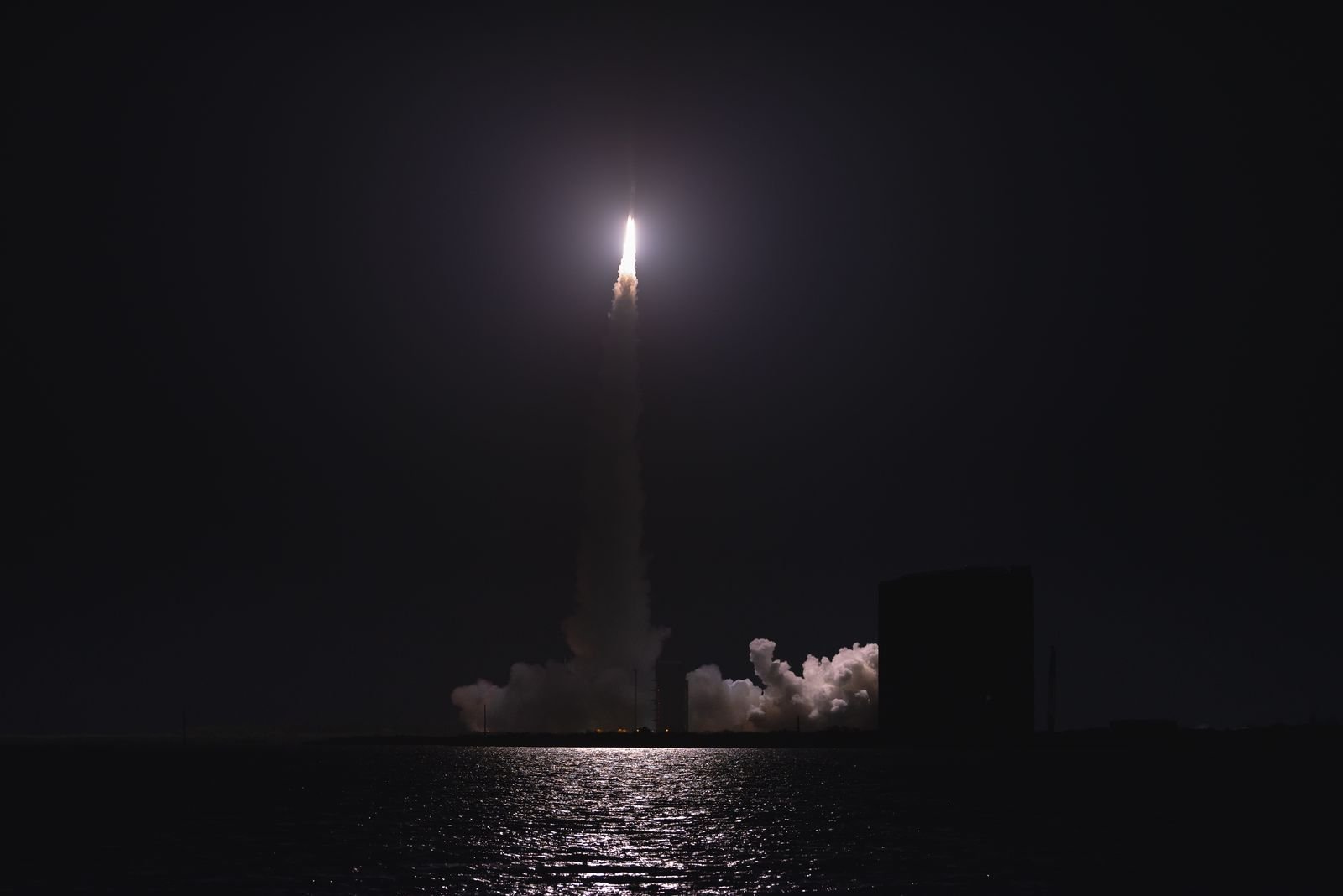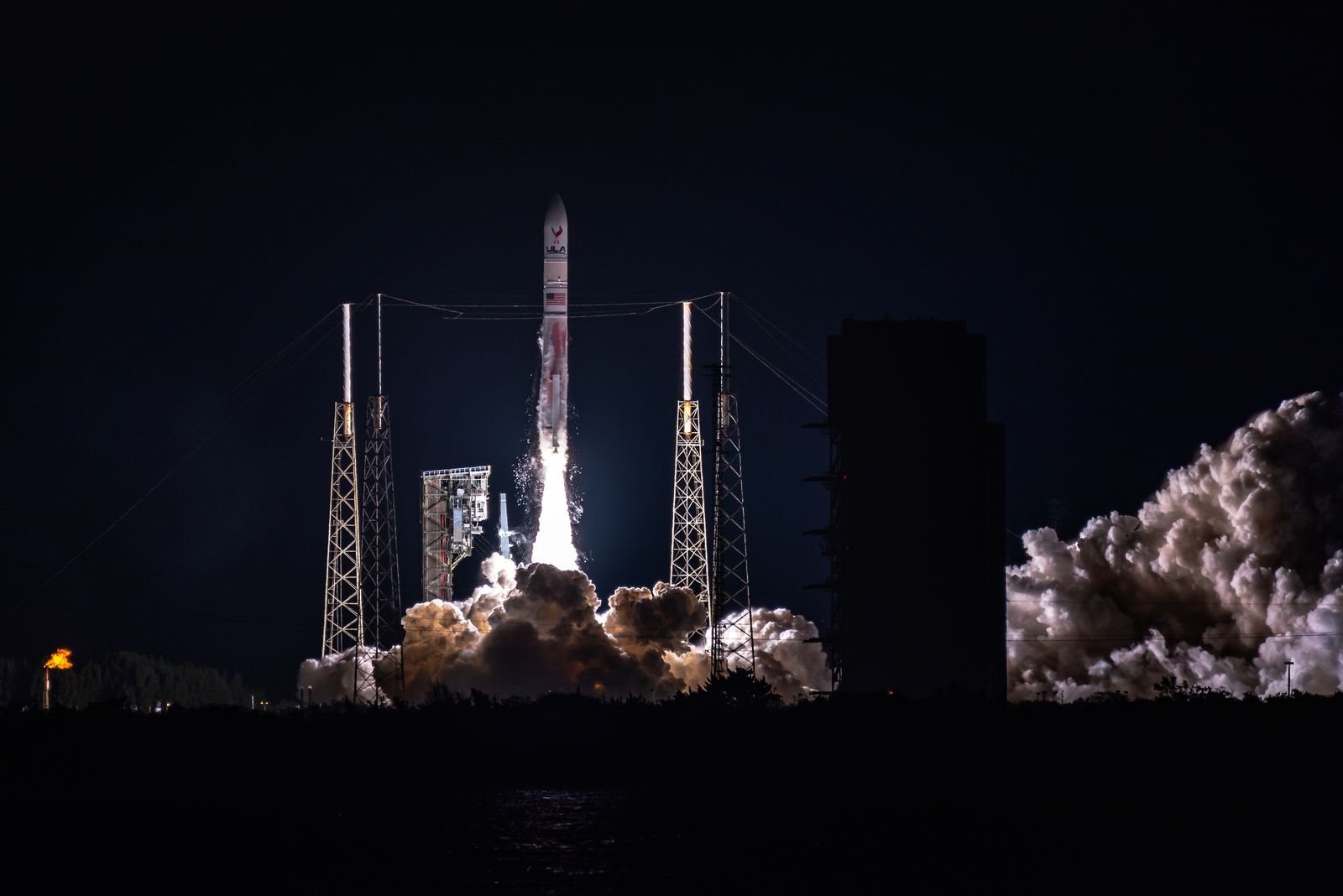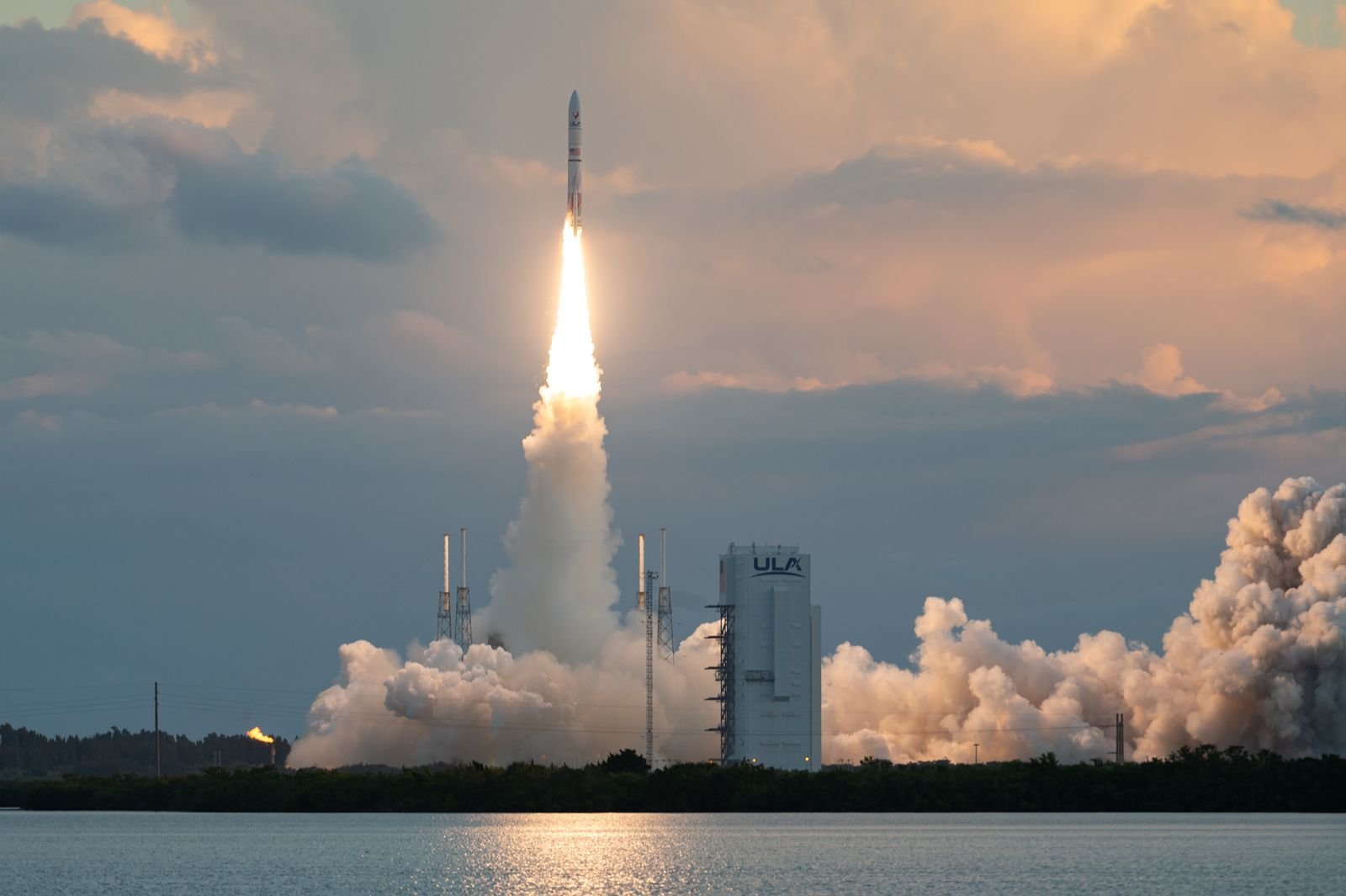
CAPE CANAVERAL, Fla. — United Launch Alliance’s Vulcan rocket suffered an anomaly about 10 minutes after liftoff on Sunday and failed to deliver 40 Amazon Leo broadband satellites to low-Earth orbit, turning the rocket’s highly anticipated return to flight into a fresh setback.
The rocket lifted off at 12:40 p.m. ET from Space Launch Complex 41 at Cape Canaveral Space Force Station on the Amazon Leo 1 mission, its first launch in nine months. ULA reported the setback occurred 10 minutes into flight, after the Centaur V upper stage had ignited, the payload fairing had jettisoned and the vehicle was traveling more than 11,000 mph about 95 miles above Earth east of Charleston, South Carolina.
In a media update after the anomaly, ULA said it would work closely with Amazon and other organizations “to find the cause, determine the appropriate corrective action, and return to flight as quickly as possible.”
“Every flight generates data, and every flight teaches us something. Since the anomaly just occurred, we don’t have any specific data yet to understand what occurred today,” the update said. “ULA exists to provide assured access to space for our nation and for the customers who depend on us. That purpose is why we take on some of the hardest missions in spaceflight, and why we hold ourselves to the standard of mission success,” it added. “Today, we did not meet that standard.”
NASA Administrator Jared Isaacman offered his agency’s assistance in a post after the anomaly. “Appreciate you quickly keeping the public and your partners informed. The team at @NASA is available to assist in all matters related to the investigation and remediation effort. Artemis, Moon Base, and the nation need ULA. We are in your corner and here to help,” Isaacman wrote. ULA and NASA are teaming up to develop a larger version of the company’s Centaur upper stage for future Artemis missions.
The failure came on Vulcan’s return to flight after a nine-month grounding. A solid rocket booster nozzle malfunction marred the February 12, 2026, USSF-87 national security liftoff — the second such failure in the rocket’s first four flights — and the U.S. Space Force paused Vulcan’s use for national security missions while ULA investigated and redesigned the nozzle. Sunday’s flight was the first test of the fix in flight. The mission had already been delayed twice, with Friday’s attempt scrubbed after a power interruption at an Air Liquide gaseous nitrogen plant and Saturday’s attempt scrubbed after a network communication issue between ground equipment and the rocket. Liftoff on the third attempt came at the very end of Sunday’s 12:11–12:40 p.m. ET window, after a late countdown hold.
Sunday’s mission was slated as the kickoff of a 38-launch contracted partnership between ULA and Amazon, and the first time Vulcan had carried Amazon Leo satellites. The 40 satellites were the largest batch Amazon has launched at once, and the flight was the first to use a shorter, optimized version of ULA’s Centaur V upper stage, designed to let Vulcan carry more satellites to low-Earth orbit. Amazon plans a constellation of more than 3,200 satellites to rival SpaceX’s Starlink, with Vulcan set to carry more than 1,500 first-generation Leo satellites across the 38 missions.
The satellite deployment, which had been scheduled to begin about 70 minutes after liftoff in 16 separation events over about 25 minutes as Centaur crossed the Pacific Ocean, never took place. “There is risk with any launch, and that’s especially true for inaugural missions like (Amazon Leo 1). ULA has been a trusted partner for Amazon, and we believe they’ll learn from this mission and deliver on their long-term plans for Vulcan,” Amazon Leo officials said in a post after the anomaly.