CAPE CANAVERAL, Fla. — United Launch Alliance will make a third attempt on Sunday to return its Vulcan rocket to flight, after ground problems scrubbed two launch tries in as many days at Cape Canaveral Space Force Station.
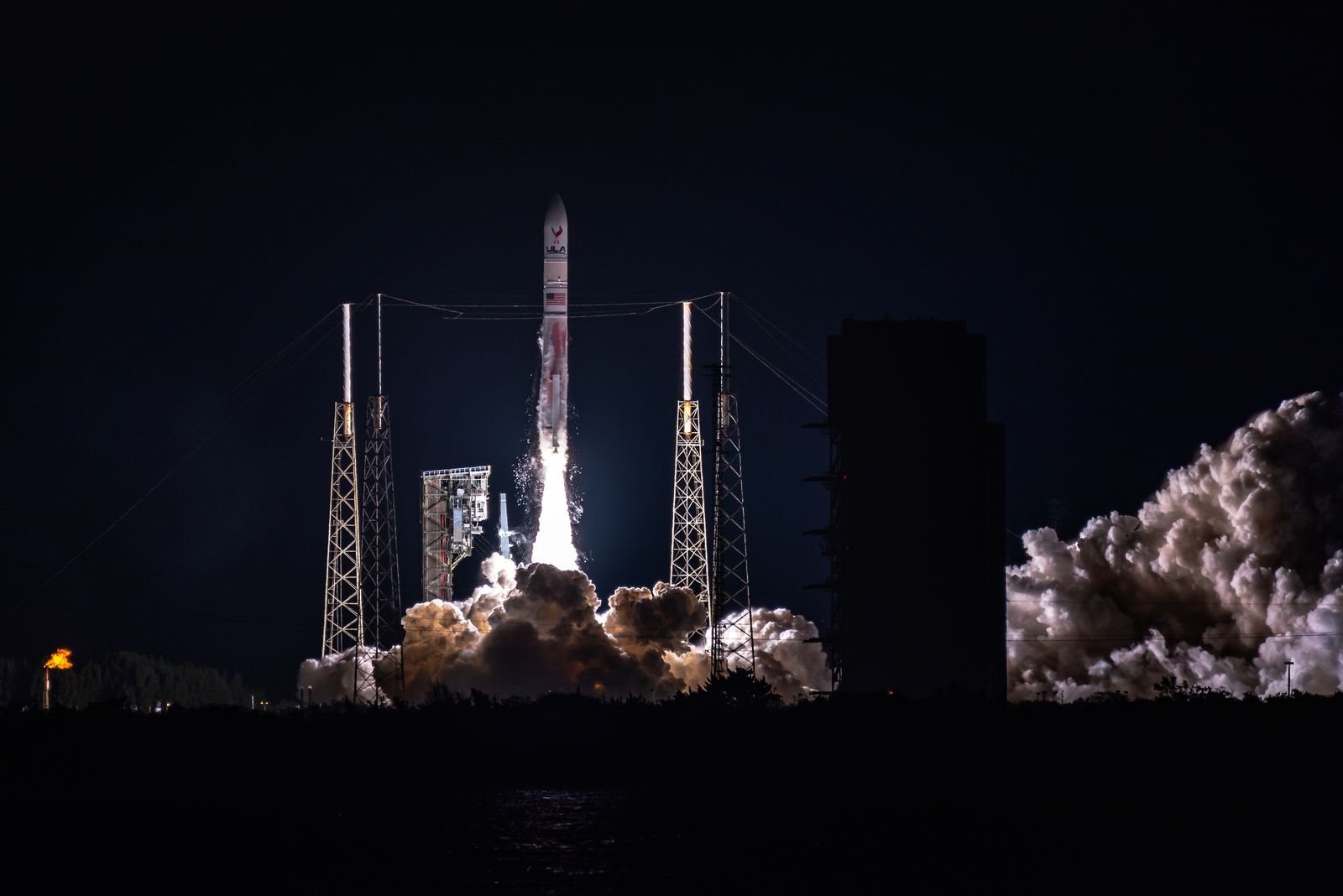
ULA's Amazon Leo 1 mission is now rescheduled for liftoff at 12:11 p.m. Sunday from Launch Complex 41, with a 29-minute launch window. The white-and-red, 215-foot-tall Vulcan — flying with six solid rocket boosters for added power — is set to ascend along a northeasterly trajectory before deploying 40 Amazon Leo broadband satellites into low-Earth orbit.
The mission will mark Vulcan's return to flight after a Feb. 12 booster anomaly shortly after liftoff from the Cape. The rocket has been grounded since February because of recurring nozzle issues with its GEM-63XL solid rocket boosters, which also surfaced during the rocket's second flight in October 2024 and again on the USSF-87 mission in February.
The first scrub came Friday, Nov. 13, while rocket fueling was underway. ULA crews halted the countdown after a power interruption at the Air Liquide gaseous nitrogen plant hampered the facility's high-pressure pumps.
A different issue arose Saturday morning, forcing another postponement. “The launch of a United Launch Alliance Vulcan rocket carrying the Amazon Leo 1 mission is delayed due to a network communication issue between the ground equipment and the launch vehicle that requires reconfiguration that would extend the hold beyond the 29-minute launch window,” ULA officials said.
ULA reported that both the Vulcan rocket and the Amazon Leo 1 spacecraft remain healthy.
The flight uses the Vulcan VC6L, the most powerful configuration of the rocket, with six solid rocket boosters, an extended payload fairing and a Centaur V upper stage. The 65-metre rocket, powered by two Blue Origin BE-4 engines, can carry up to 27,200 kilograms to low-Earth orbit.
The 40 satellites are the most carried on any Amazon Leo mission to date, and LV-01 is the first of up to 38 Vulcan launches booked by Amazon for its broadband constellation, a competitor to SpaceX's Starlink. Once the satellites are deployed, the Amazon Leo constellation will have 432 satellites in orbit; Amazon needs 578 satellites deployed to start initial regional service, and the first-generation network is planned to use up to 3,236 satellites.
The flight will be closely watched: any further issue with the boosters, such as another nozzle problem, would likely delay future Vulcan flights and Amazon's satellite rollout.