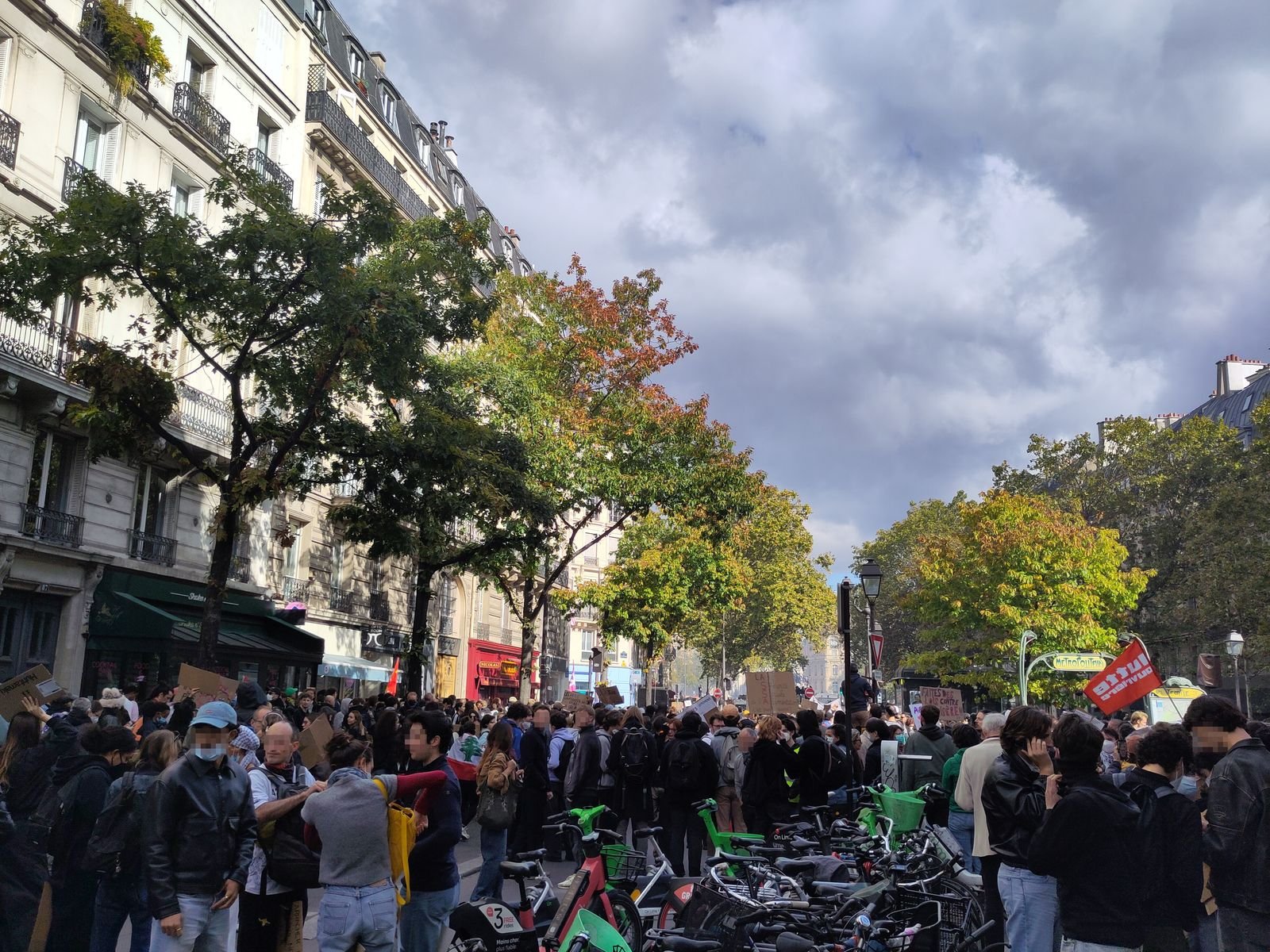
Tens of thousands of protesters marched across France on Saturday in a fifth consecutive weekend of demonstrations over the rising cost of living and a proposed law giving police greater legal protection, but turnout fell to its lowest level in recent weeks, according to the Interior Ministry.
Around 106,000 people took to the streets nationwide, including 24,000 in Paris, the ministry said. Student unions put the numbers far higher, at 200,000 nationwide including almost 100,000 in the capital. The largest protests in recent weeks came during a union-led strike on November 5, when more than half a million people marched nationwide, according to official figures.
The rallies were largely peaceful, but police fired tear gas to disperse crowds in Paris, Bordeaux and the western city of Nantes. In Lyon, police had to intervene to protect a team of television reporters after protesters attacked them, local authorities said.
Protesters marched against rising prices and called for higher wages and pensions, better conditions in education and stronger protections for social rights. A central focus of the day was a new bill in Parliament that would give police who use their weapons further legal protection, presuming they acted in self-defence. Backers of the bill — including the far-right party of leading presidential hopeful Marine Le Pen — say it is necessary to stop officers being automatically suspected of using disproportionate force. Activists argue it would amount to a "licence to kill" and make holding security forces accountable even harder.
Unions have called for a new day of strikes on Tuesday, November 17, after rejecting a government promise to increase the minimum wage by 0.6 percent as "crumbs". Prime Minister Sébastien Lecornu is due to meet labor and employer representatives on Monday to discuss wages and purchasing power.
The European Union's second-largest economy has been gripped by high-school blockades and mass demonstrations for more than a month, with the far right leading in the polls to win presidential elections in 2027 to replace Emmanuel Macron. Macron's popularity is the lowest it has ever been since he first became president in 2017, according to recent polls, and the government has little leeway to respond to protester demands as it struggles to reduce its debt.