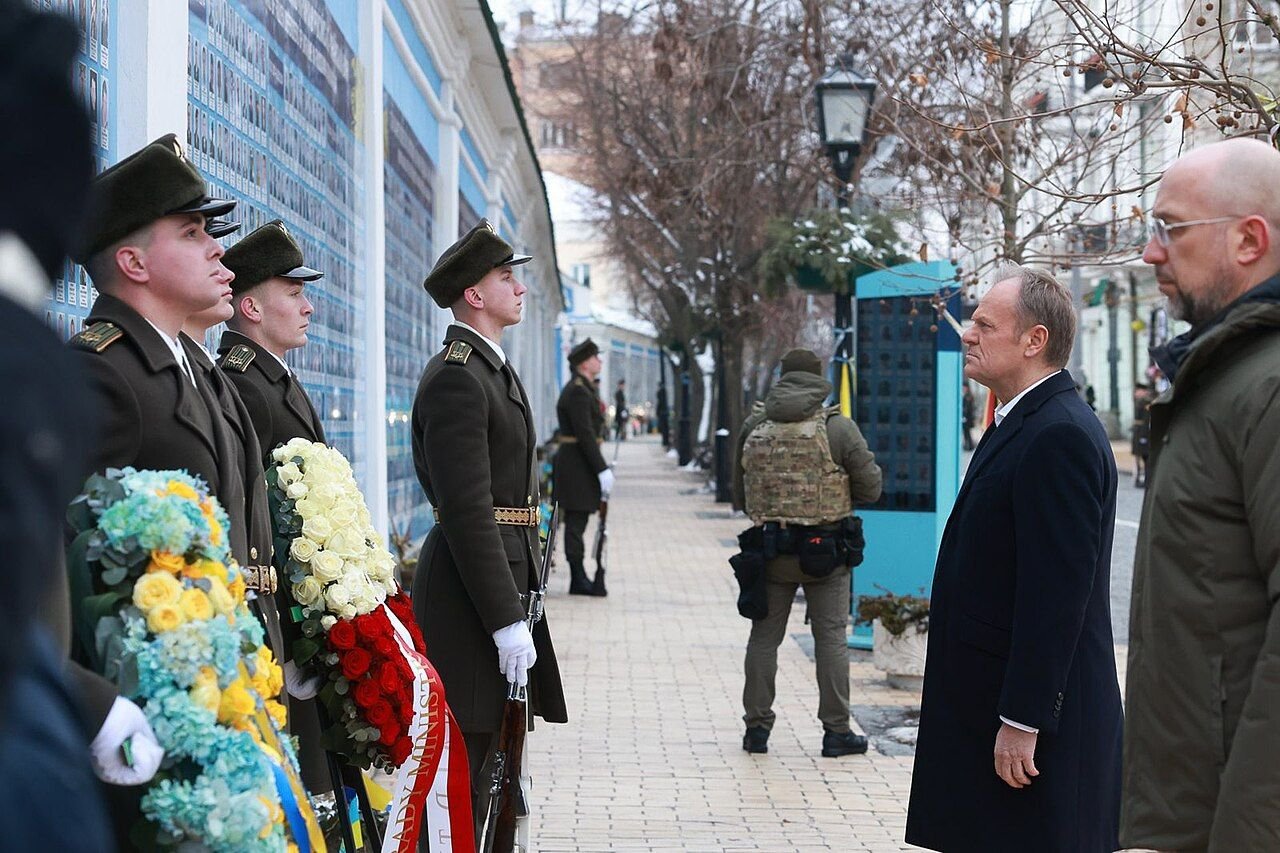
Two Russian missiles and a suspected drone came down in Poland on Friday in what its prime minister said was likely a provocation timed to coincide with European military exercises in his country for a possible postwar mission in Ukraine.
The incidents occurred while Russia carried out a major nighttime bombardment of neighboring Ukraine. The development stoked tensions between Europe and Moscow just as the United States tries to add momentum to talks it is mediating on ending the war that began with Russia's all-out invasion of Ukraine nearly five years ago.
Polish Prime Minister Donald Tusk said it appeared that 'we are dealing with an intentional provocation' by Russia. There was no immediate comment from Moscow on the missiles and suspected drone, or on Friday's drills.
One Russian missile is believed to have crashed around 35 kilometers (22 miles) from where the military exercises were taking place, officials said. A Kh-101 cruise missile went down roughly 50 kilometers (30 miles) from the Ukraine border, and what officials believe was likely a jet-powered drone hit about 30 kilometers (20 miles) from the border with Ukraine. There were no immediate reports of injuries or damage.
European troops were taking part Friday in an unprecedented two-week military exercise that began November 9 in southeastern Poland. Forces are preparing for a possible postwar mission in Ukraine aimed at helping to stabilize the country and rebuild its military.
NATO Secretary-General Mark Rutte called the development in Poland a 'grave violation' of that country's airspace. 'This incident is clearly dangerous — a consequence of Russia's ongoing war against Ukraine,' Rutte wrote on X. Rutte is expected to go to Poland this weekend in response.
The development brought a chorus of European condemnation. British Prime Minister Andy Burnham described it as 'utterly unacceptable.' European Council President António Costa said that Russia 'continues to spread (its) threats.' Germany's Foreign Ministry called it 'yet another example of Russia's ongoing provocations.' Ukrainian Foreign Minister Andrii Sybiha said the incident in Poland 'demonstrates the threats posed by Russian aggression to the whole of Europe and the trans-Atlantic community.'
Under NATO's collective security guarantee — Article 5 of its founding treaty — an attack on any ally should be considered an attack on all 32 members. Article 5 is not triggered automatically; ultimately, it is a political decision that all members must agree to. Poland also has the option to enact Article 4, which provides for emergency consultations only.
Russia's nighttime attack on Ukraine came hours after President Vladimir Putin vowed to retaliate for Ukrainian strikes this week on a bridge linking occupied Crimea with the Russian mainland. Overnight strikes killed at least eight Ukrainian civilians and wounded more than two dozen, Ukrainian President Volodymyr Zelenskyy said. Russia fired more than 400 drones and over 110 missiles, 27 of them ballistic and some carrying cluster warheads, he said.