Germany and Britain on Tuesday rejected Pentagon policy chief Elbridge Colby's criticism that Ukraine's deep strikes on Russian oil infrastructure and commercial warehouses were ineffective and risked hardening Russian resolve.
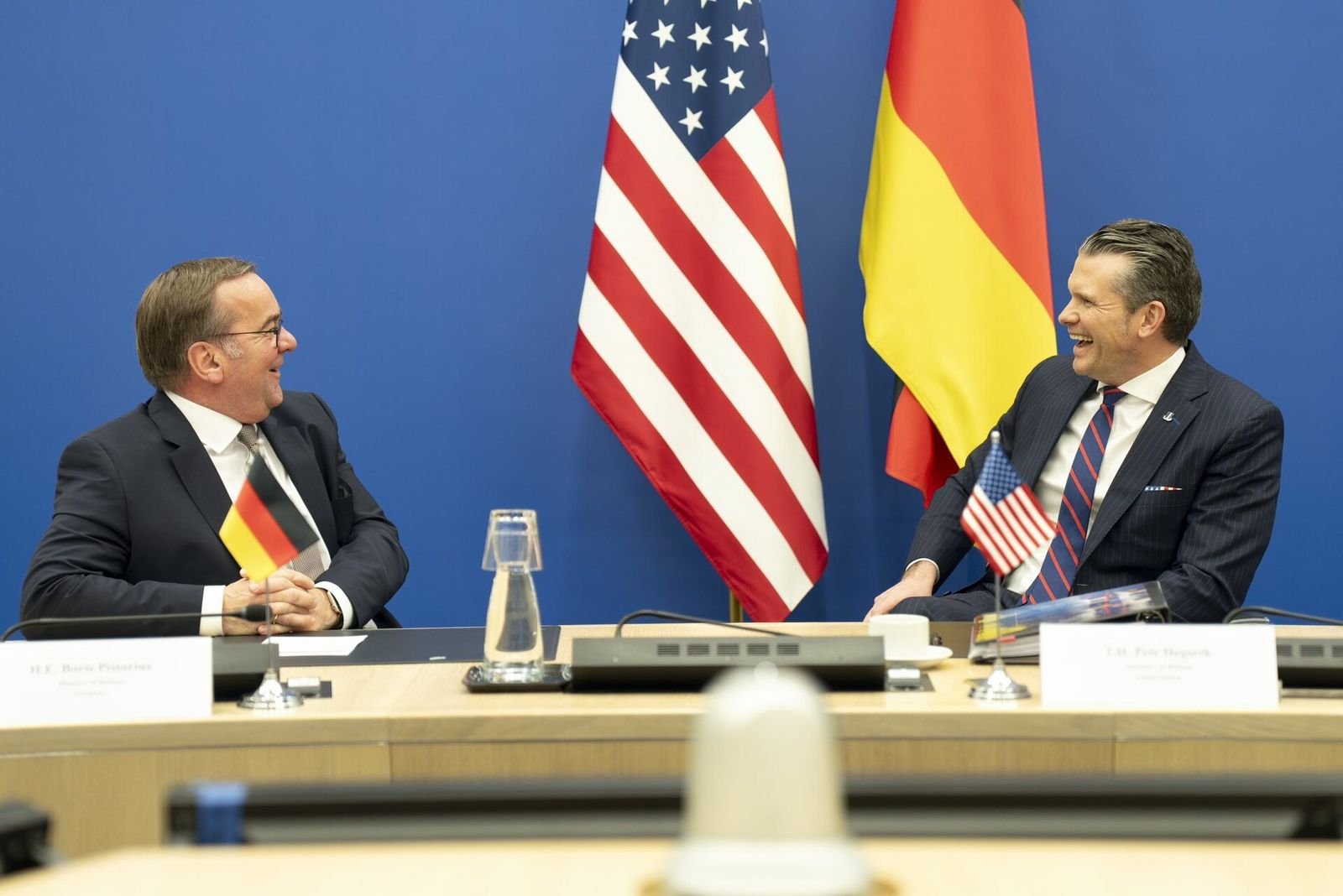
Asked whether he shared Colby's position, German Defence Minister Boris Pistorius said criticizing strikes "like that in Russia to destroy strategic military and military-used targets" was "quite a stupid thing."
"Instead of criticizing that, we should rather criticize and talk about the terroristic strikes every night and every day on ... energy, water, and heating infrastructure in Ukraine. This is kind of terrorism," Pistorius said.
British Defence Minister Wes Streeting took the same line, saying those strikes "helped to degrade (Russian President Vladimir) Putin's war machine, buying time and saving lives."
Speaking at NATO headquarters in Brussels, Colby likened Ukraine's deep strike campaign to a spectacle. "While the public conversation focuses on the spectacle of deep strikes designed to incur pain on the Russian population, our assessment is that such strikes have not been effective in driving an end to the war, nor do they contribute to blunting Russia's advances on the front line," he said.
Colby said Ukrainian strikes, especially targeting infrastructure such as warehouses of Wildberries, the Russian equivalent of Amazon, might serve to harden the Russian population's resistance. "Strikes, especially those that target civilian infrastructure such as Wildberries, have actually probably hardened the Russian public's resolve and the Kremlin's own willingness to escalate," he warned.
The clash laid bare a widening rift between Washington and its European allies over how Ukraine should wage the war, even as Europe and Canada have stepped in to fund arms supplies after the United States stopped doing so under President Donald Trump. Colby was addressing a meeting of the Ramstein Group of Ukraine's military supporters, where allies discussed supplying more arms to Kyiv ahead of a harsh winter while Russia steps up air strikes on civilian infrastructure.
Germany and Norway will sponsor another package of U.S. weapons under the PURL programme, focused on PAC-2 and PAC-3 missiles for Patriot air defence systems, with Berlin putting in some $300 million. Colby also cautioned European allies against excluding U.S. firms from weapons deals as they arm up and shed dependence on the United States for conventional defence.