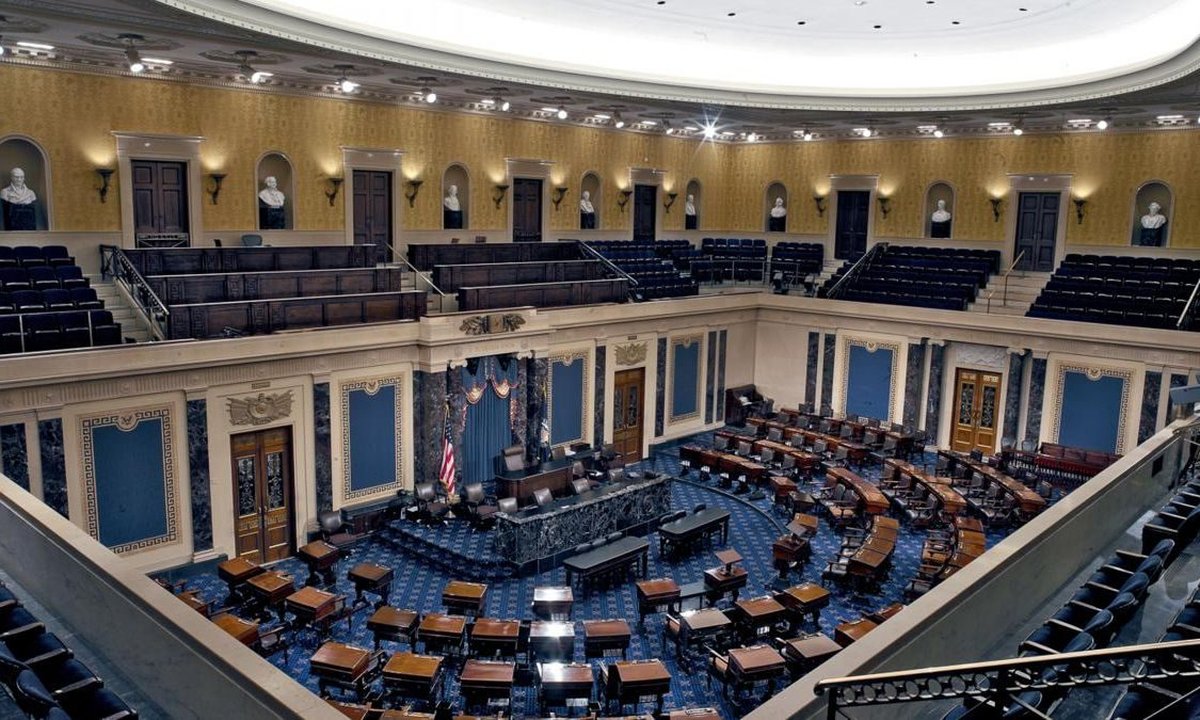
WASHINGTON — Democrats have won control of both chambers of Congress in the 2026 midterm elections, a result that reshapes the balance of power in Washington for the remainder of President Donald Trump's term. According to CNBC, Democrats will hold at least 250 seats in the House of Representatives and at least 54 seats in the Senate when the new Congress convenes.
The Senate outcome was driven by an unusually broad map of Democratic gains. Seven Senate seats flipped to the Democrats, in North Carolina, South Carolina, Ohio, Texas, Kansas, Iowa and Maine. Several of those states had been considered reliably Republican in recent cycles, and the breadth of the flips pointed to a national political environment that favored Democratic candidates well beyond the party's traditional strongholds.
Democrats also won House races in districts that Republicans had redrawn in their favor. Party officials had entered the cycle concerned that new district maps would insulate Republican incumbents, but Democratic candidates prevailed in a number of those seats anyway, adding to a House majority that, at a minimum of 250 seats, gives the party a comfortable working margin for legislation and investigations alike.
The new majority brings with it the subpoena power that comes with control of congressional committees. Democratic leaders are expected to use that authority to open oversight inquiries across the executive branch, compelling testimony and documents from administration officials. The shift ends a period in which the administration faced limited formal scrutiny from Capitol Hill and sets up a more adversarial relationship between the White House and Congress.
Analysts caution, however, that the Democrats' leverage has limits. Some warn that the debt ceiling fight expected in 2027 could become the new majority's main bargaining chip — the point at which Democrats hold the most power to extract concessions, because raising the federal borrowing limit will require votes the administration cannot supply on its own. How the party uses that moment is likely to define the next two years of divided government.
Within the Democratic Party, the results were also a milestone for representation. Nancy Pelosi hailed the election of more than 100 Democratic women to the House, a figure the party presented as evidence of the depth of its candidate recruitment in a cycle that favored its message.
President Trump struck a conciliatory tone in his first reaction to the results. Telling CNBC that he can work with Democrats on 'many more things than people understand,' the president signaled that he intends to seek areas of agreement with the new majority rather than open his post-election period in confrontation.
Not everyone in the Republican Party was in a conciliatory mood. Vice President JD Vance openly blamed the war with Iran for the Republican loss, an unusually direct acknowledgment from within the administration that foreign policy had become an electoral liability. Trump himself acknowledged that the Iran conflict cost Republicans votes, but said he would launch the operation again — a position that sets up an early point of tension with a Congress now positioned to investigate the war's conduct.
The new Congress will be sworn in on January 3, 2027. Between now and then, both parties will choose committee chairs, set legislative priorities and begin the negotiations that will determine whether divided government produces compromise or confrontation.