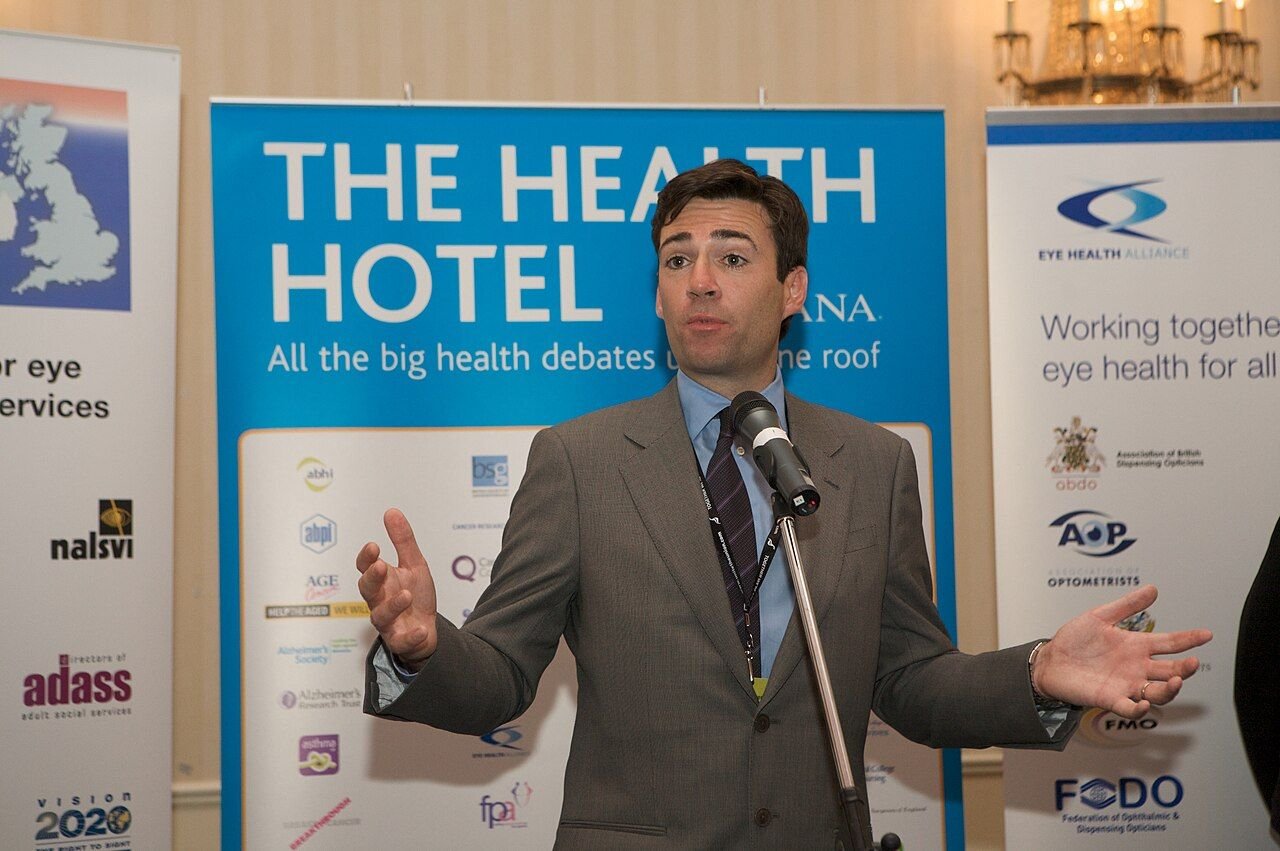
British Prime Minister Andy Burnham has said it would be "unthinkable" for the United Kingdom to rejoin the European Union without another referendum, giving his clearest indication yet of how his Labour government could steer any decision on Britain's future ties with the bloc.
Burnham's comments came in the House of Commons on Monday, days after the UK and the EU agreed to a set of deals on youth mobility, trade in foodstuffs and emissions markets at a summit in Brussels. Asked by Conservative MP Sir Bernard Jenkin whether rejoining the bloc without another plebiscite would be unthinkable, Burnham replied: "Yes, it would be unthinkable."
The prime minister was presenting the reset deal his government signed in Brussels on Friday, which he described as a "landmark" agreement that would make the next decade a better one for Britain. The package eases controls on British food exports through a sanitary and phytosanitary agreement that will end most checks on food and agricultural products from March 2028, links the two sides' emissions trading schemes, and creates a youth experience scheme under which up to 100,000 people aged 18 to 31 from each side could live, work and study in the other territory for up to three years.
The government says the deal could add about 0.5 percent to Britain's gross domestic product, equivalent to around £17 billion a year. Burnham said the agreement had passed three tests he set for it: that it is consistent with the Labour manifesto, that it improves on the existing Brexit settlement, and that it makes life better for communities neglected for too long. Legislation to write the agreement into British law, the European Partnership Bill, will be introduced in Parliament on Thursday.
But hurdles remain. Brussels wants EU students attending British universities to pay the same domestic rates as British students rather than the substantially higher international fees they currently pay, and has set a six-month deadline to settle the issue, calling it a red line for completing the deal. Negotiations also continue over linking British and European electricity markets.
The deal drew immediate fire from the opposition. Conservative leader Kemi Badenoch called Burnham's approach "spectacularly foolish" for signalling the UK's eagerness for a deal, while Reform UK leader Nigel Farage also attacked the agreement at a business conference the same day.
Burnham told MPs that almost three quarters of people in Britain wanted closer ties with Europe, and said the government would set out its longer-term thinking on the relationship as part of a 10-year plan due next month — with options ranging from maintaining the current arrangements to joining the EU customs union or eventually rejoining the bloc.