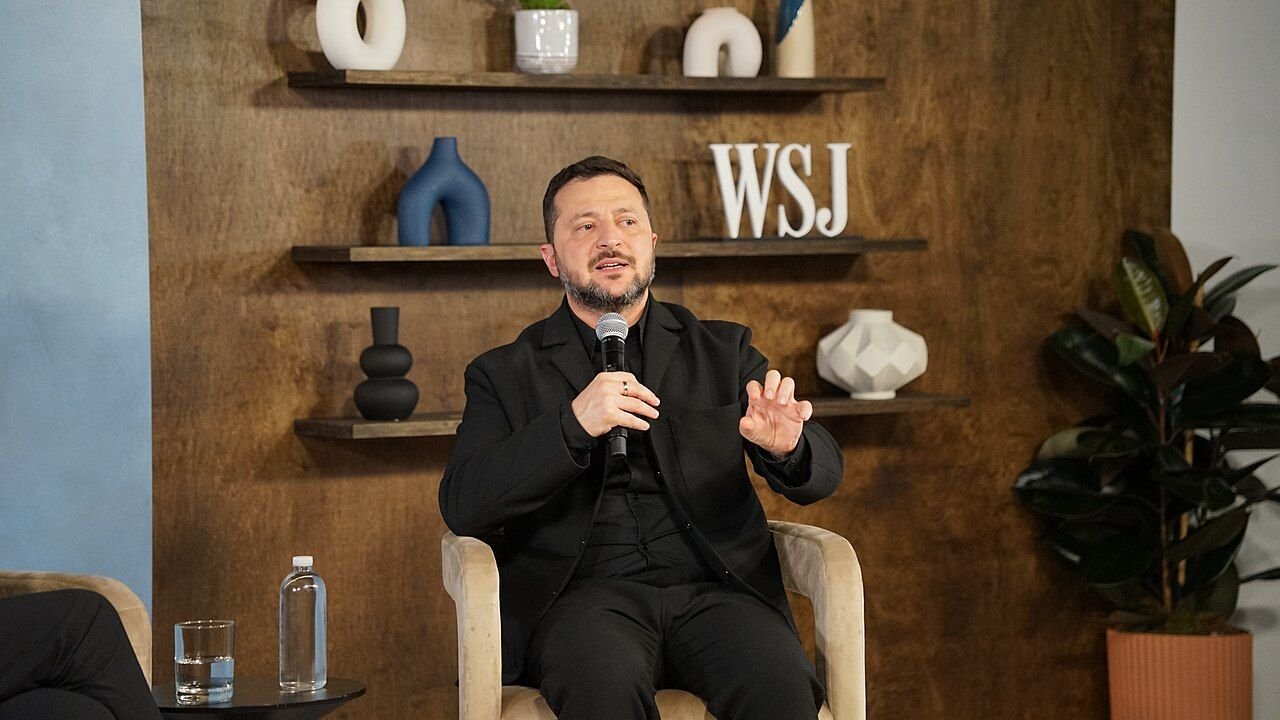
KYIV — Ukrainian President Volodymyr Zelenskyy expressed frustration with the U.S. stance toward Russian leader Vladimir Putin, urging Washington to apply more pressure on Moscow to stop its invasion of Ukraine, which began almost five years ago and grinds on despite President Donald Trump's efforts to broker a peace deal.
In an interview with the BBC broadcast Friday, Zelenskyy described Trump's calling Putin "my friend" at a recent summit in China as "strange" because the Russian leader is "an aggressor and a killer." "He can't be a friend," Zelenskyy told the British broadcaster in Kyiv, likening it to someone calling Adolf Hitler a friend during World War II.
Trump on Thursday again defended his comments about his relationship with Putin. "We want to make a deal. We want to stop the killing," he told reporters at Mar-a-Lago, adding: "I could walk in and say, 'I don't like you!' and then we have the same problem that we have with Zelenskyy and Putin." Kremlin spokesman Dmitry Peskov said Friday that Zelenskyy's comment was "insulting."
Zelenskyy also questioned the U.S. position of maintaining neutrality between the two sides. "When you try to be very neutral with the aggressor ... it means you support victims and you support also aggressor. It's not right," he said. He complained that the Pentagon is not delivering paid-for Patriot missiles that could stop Russia's ballistic missiles, and that the military-grade version of SpaceX's Starlink satellite internet service, the backbone of Ukraine's drone operations and communications, isn't working properly.
The comments were broadcast a day after Jared Kushner, Trump's son-in-law and a U.S. envoy trying to mediate an end to the war, complimented Putin. Negotiations are expected to resume in December. Zelenskyy also announced the latest Bring Kids Back UA operation, thanking first lady Melania Trump for her role in mediating wartime reunifications that have brought 43 children home. Russia launched close to 300 aerial attacks a week through Nov. 20 on Ukraine's civilian infrastructure, according to the Armed Conflict Location and Event Data Project.