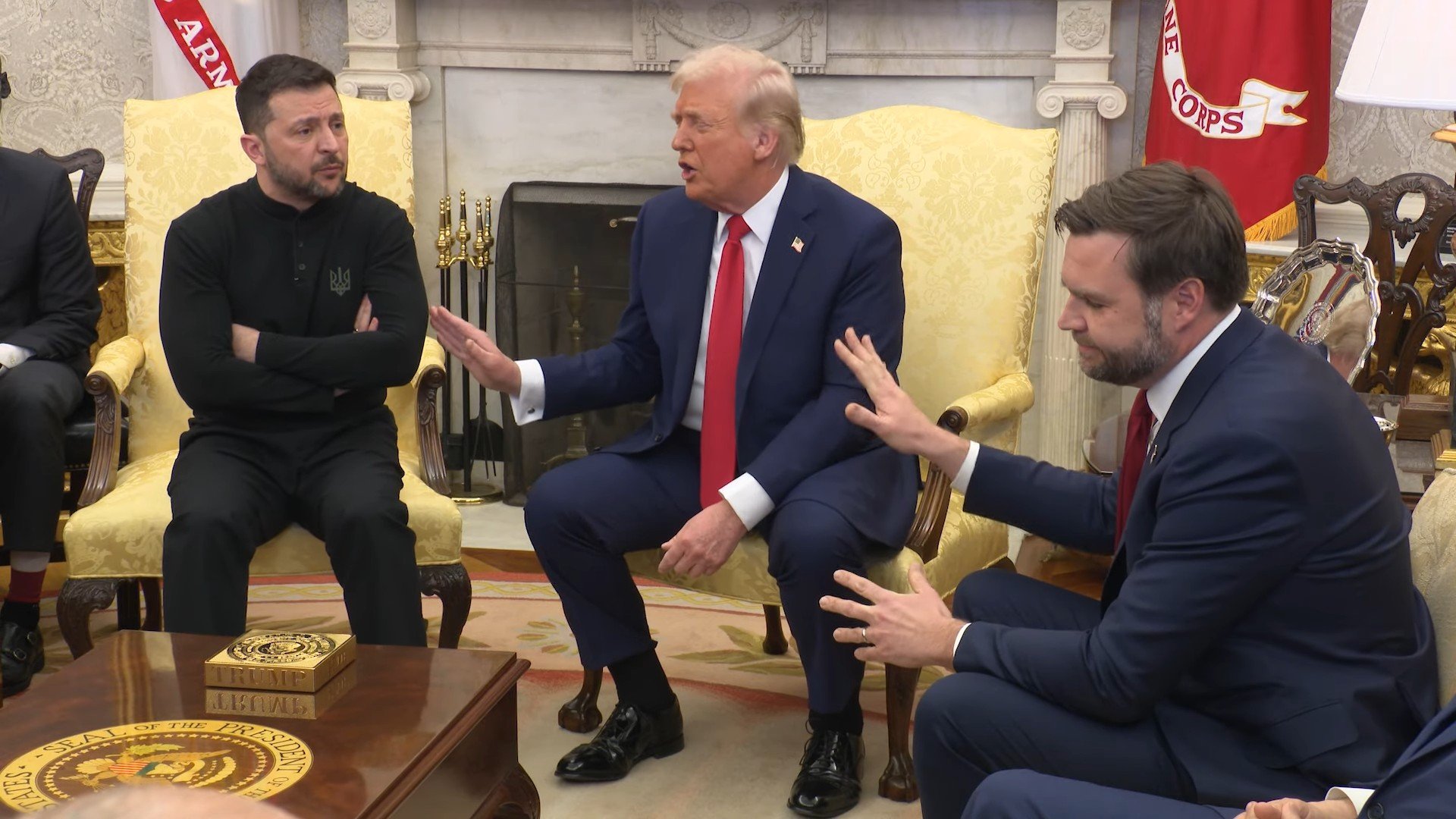
President Donald Trump signed a proclamation on Thursday designating the Oval Office and the Cabinet Room a national monument, his first official action after Republicans lost control of both houses of Congress in Tuesday's midterm elections.
The proclamation, issued under the Antiquities Act, covers the Oval Office itself (Room 110), together with the Outer Oval Office (Rooms 106 and 108) and the Cabinet Room (Room 105). Trump said it will prevent significant overhauls or destruction of the two iconic West Wing rooms, both of which have undergone major cosmetic changes during his second term — including gold-colored appliques on the fireplace and gilded mirrors in the Oval Office, and the paving over of the Rose Garden.
"It will not be allowed to be touched by anybody — destroyed, ripped down by stupid people in order to build something in a slightly different shape," Trump said as he signed the proclamation in the Oval Office in front of reporters. "We're making it a national monument." He added that a future president who wanted to change the shape of the room would have to go back to Congress: "Let's not have an oval anymore, let's make it square."
The proclamation directs Interior Secretary Doug Burgum to develop a management plan to preserve the Oval Office, and to document, review and consider alternatives before substantially altering or demolishing it. But it does not freeze the rooms as they are: nothing in the proclamation restricts a president's authority to redecorate the monument, select furnishings, or make ordinary operational and security modifications.
As an executive action, the proclamation could also be overturned by a successor — as Trump himself has done to roll back national monuments. The signing came two days after Democrats took control of the House of Representatives and the Senate in a midterm election that delivered a major repudiation of Trump and his agenda, and a day after Trump hosted a ceremony recognizing the final beam lifted for his new White House ballroom.