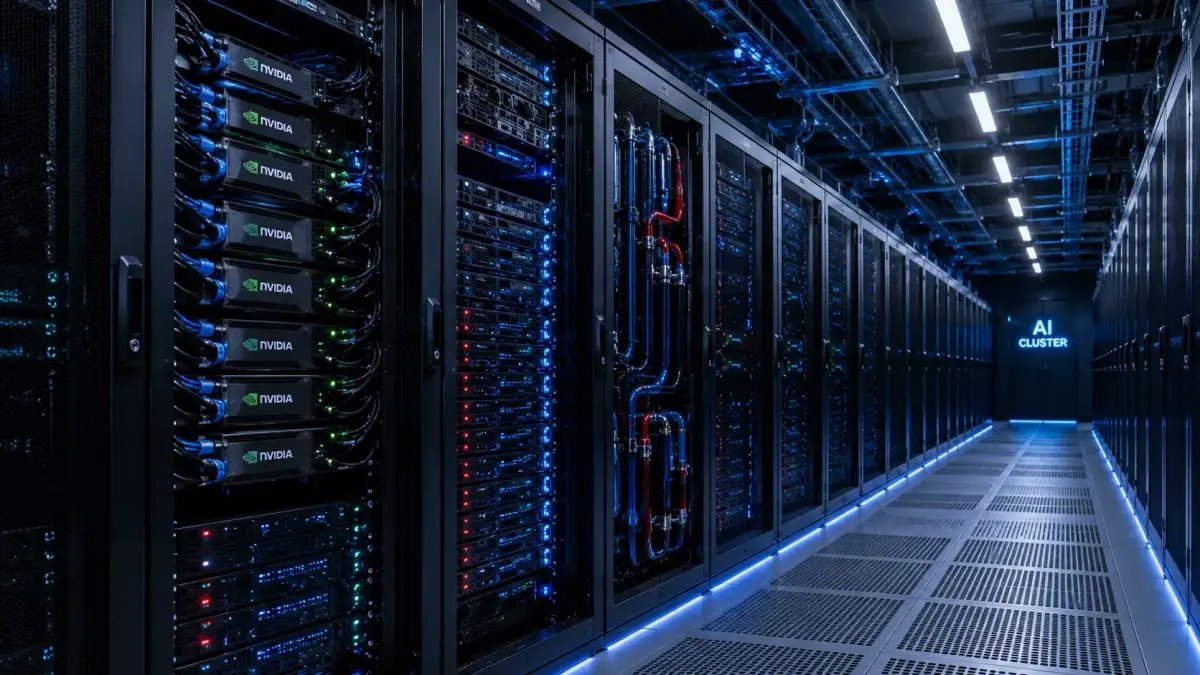
Nvidia is reportedly considering guaranteeing construction debt for a planned AI data center in West Virginia, a step that would put the chipmaker's balance sheet behind the infrastructure its customers build. TechCrunch reported the discussions, citing The Information and Bloomberg.
The facility is being planned by Nscale and would serve Anthropic, the AI company whose models would run on the computing capacity the site provides. A guarantee from Nvidia would help Nscale finance construction by assuring lenders that the debt carries the backing of one of the world's most valuable companies — an unusual, if increasingly plausible, arrangement in an industry where the supply of computing power has become as strategically important as the chips themselves.
The reported discussions reflect how completely the boundaries of the AI industry have blurred. The companies that design chips, the companies that build data centers and the companies that train models are bound together by enormous capital requirements, and financing structures are evolving to match. A debt guarantee would deepen Nvidia's exposure beyond selling hardware into the infrastructure layer of the business.
In a separate development underlining the legal exposure that comes with the build-out, a U.S. federal court has denied xAI's motion to dismiss a Clean Air Act lawsuit brought by the NAACP. The case concerns gas turbines used to power xAI's facilities in Mississippi.
The court's decision does not decide the merits of the case; it means the lawsuit survives its first test and will proceed. The dispute centers on the turbines that supply electricity to xAI's operations — a reminder that the race to secure power for AI computing has pushed companies toward on-site generation, and that those choices carry environmental and legal consequences that communities and advocacy groups are increasingly willing to contest in court.
The two stories, taken together, describe an industry entering a more complicated phase. On one side, financing innovation at the largest scale: a chipmaker reportedly weighing whether to stand behind the debt of a data center built for a leading AI lab. On the other, litigation and regulation: a civil rights organization using the Clean Air Act to challenge how an AI company's facilities are powered, and a federal court allowing that challenge to move forward.
Both developments also arrive as the politics of data centers shift. Voters in dozens of cities approved restrictions or bans in Tuesday's elections, and analysts warn that increased Democratic control could constrain the roughly $900 billion AI capital expenditure cycle. The industry's next phase will be shaped not only by chips and capital, but by courts, voters and the price of power.