WASHINGTON — NASA is seeking industry partners to design and test the first nuclear reactor built to generate electricity on the Moon, a major step toward establishing a sustained human presence on the lunar surface.
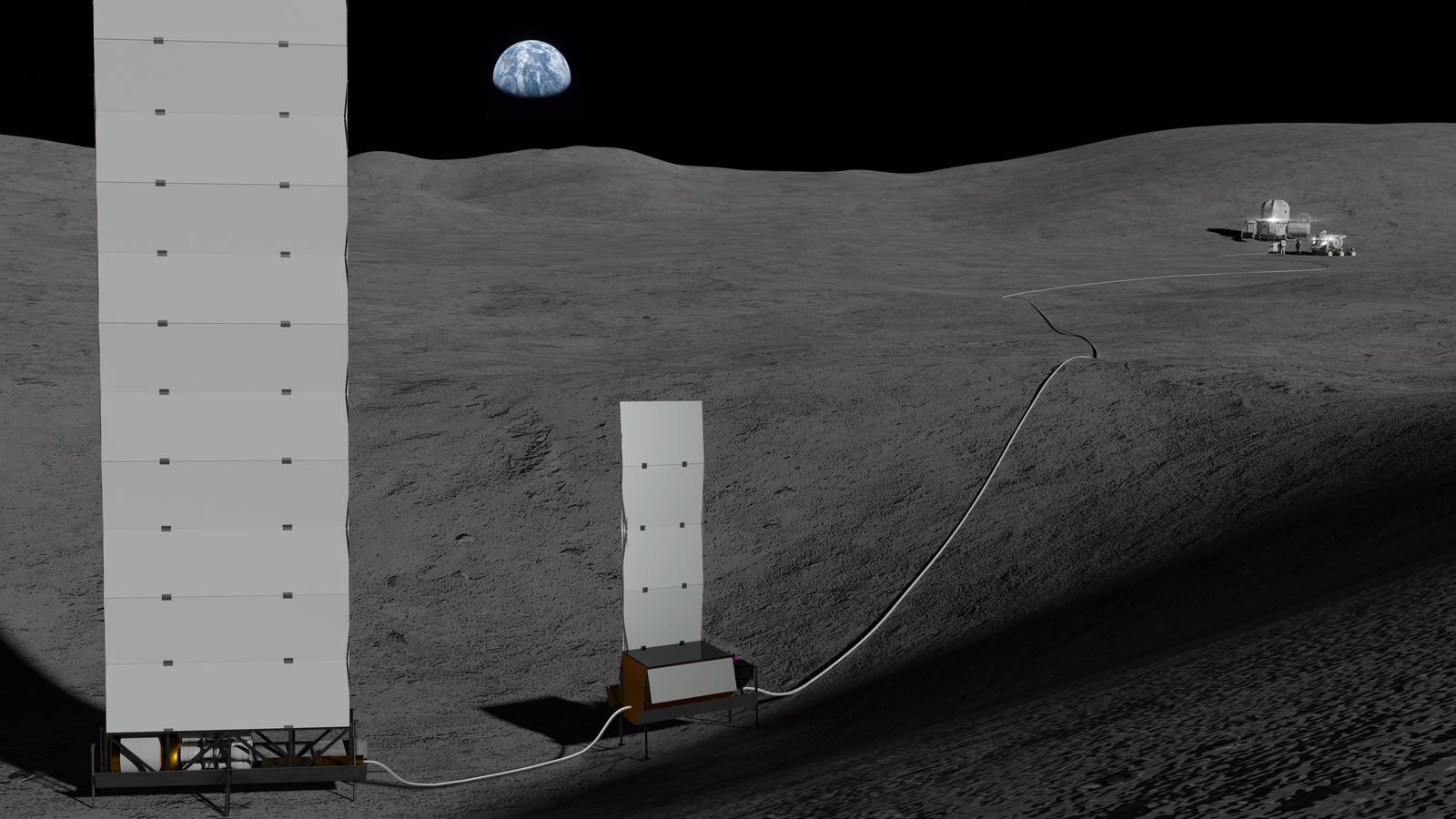
The system, called Lunar Reactor-1, or LR-1, will be a small fission power system generating 20 kilowatts of electricity — enough to power approximately 16 average U.S. households annually on Earth. NASA aims to have a launch-ready system by 2030 and to operate it on the Moon for at least five years after deployment.
“This request for proposals represents an important step forward as NASA partners with industry to establish an enduring human presence on the lunar surface,” said Brian Giblin, NASA's Lunar Reactor-1 program manager.
A fission reactor would provide steady power where sunlight is limited or unavailable, including during the two-week lunar night and in permanently shadowed craters. That continuous energy supply is considered a prerequisite for habitats, science operations and the production of resources on the surface.
The Space Power and Reactor Capabilities Request for Proposals, issued Monday, incorporates feedback received after the agency released a draft proposal in August and hosted an industry day in September at the Ohio Aerospace Institute in Cleveland. Proposals are due by December 21.
While the primary purpose of the solicitation is to advance the technology, testing and flight design of LR-1, NASA said it may issue additional task orders to support the development of other space nuclear power systems. LR-1 is managed by the agency's Space Reactors Division in partnership with the Department of Energy, and the reactor must meet the department's safety standards for nuclear operations.
The announcement marks a shift from decades of paper studies to procurement. Rather than designing the reactor in-house, NASA is asking industry to propose, build and test the flight unit, with the agency acting as anchor customer for a capability it says is essential for any sustained human presence beyond low Earth orbit.
If NASA meets its 2030 target, LR-1 would become the first fission reactor operated on another world, eclipsing the small radioisotope power sources that have powered deep-space probes since the 1960s. NASA has not named a design, a contractor or a contract value, and no reactor has yet been built or ground-tested under the program.