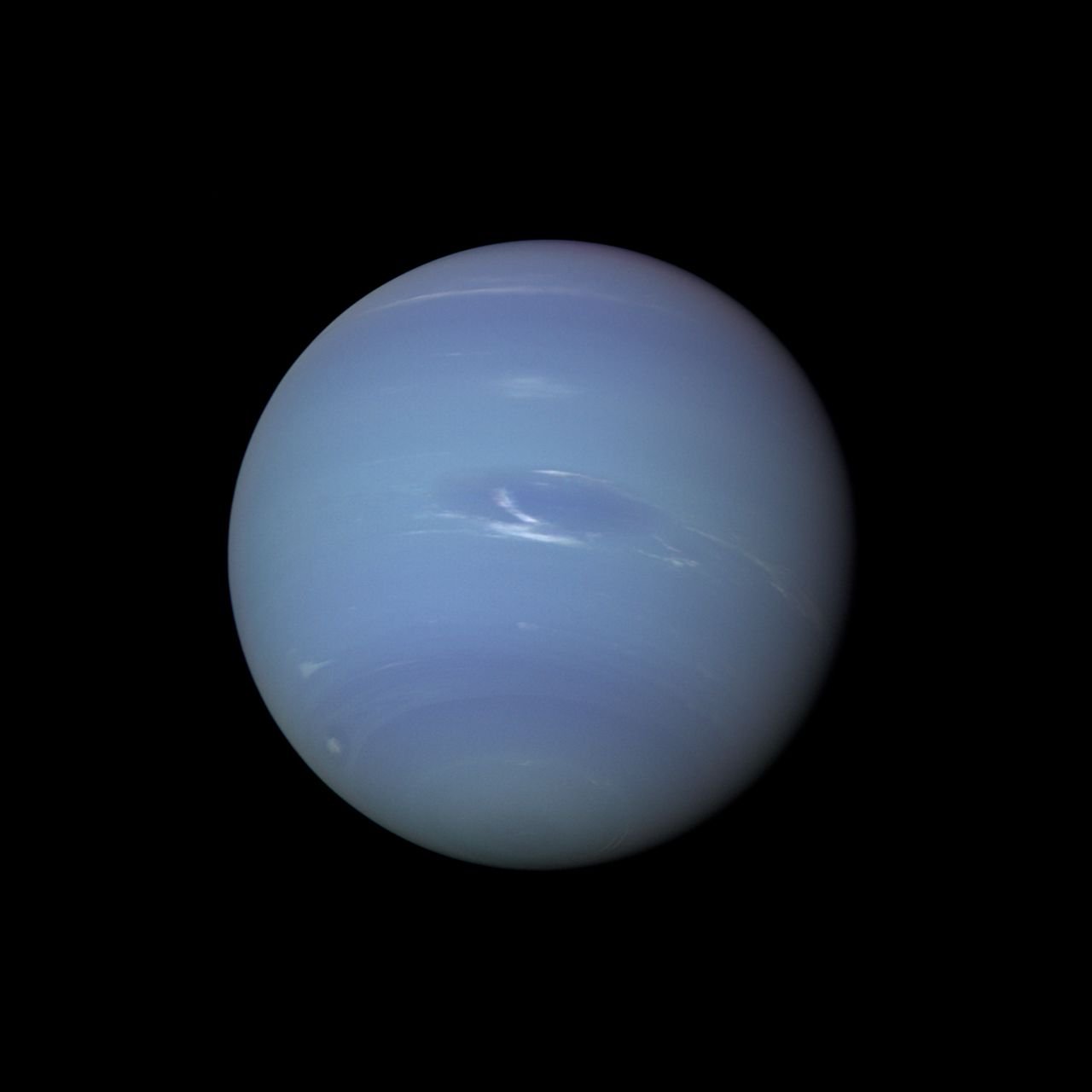
Out beyond Neptune, where sunlight is hundreds of times weaker than on Earth, astronomers have found signs of a second hidden world — a planet one to two times the mass of Earth that no telescope has ever seen.
The evidence comes from a new study published in the Monthly Notices of the Royal Astronomical Society, led by planetary scientist Patryk Sofia Lykawka of Kindai University in Japan and the University of Southern Queensland, with Pedro Bernardinelli of the University of Washington and Jonti Horner of the University of Southern Queensland.
The team ran detailed computer simulations spanning 4.5 billion years, tracing how the outer Solar System evolved as the giant planets migrated to their present positions. When the models included only the four known giant planets, they failed to reproduce two unusual populations of distant icy objects: one whose orbits are tilted at extreme angles, and another whose closest approaches to the Sun lie far beyond even Pluto's orbit.
Add an extra planet, and the picture changed. The simulations began producing populations of objects on highly tilted and detached orbits that closely matched what astronomers have actually observed. The closest match was a world of around one to two Earth masses, on a distant orbit with a semimajor axis of 350 to 500 astronomical units, never coming closer to the Sun than 200 astronomical units.
This is not Planet Nine. That long-hypothesized world, estimated in a 2025 analysis at about 4.4 Earth masses with a semimajor axis of around 290 astronomical units, was proposed to explain a different set of orbital anomalies. Because the two hypotheses address different patterns, the researchers say the Solar System could potentially hold both worlds — or either one, or neither.
One possible candidate for the new world is already known: 2026 ED138, a dwarf planet candidate spotted by the Vera Rubin Observatory in Chile in October. Estimated at 600 to 1,500 kilometres across and orbiting about 46 astronomical units from the Sun, it would be one of the largest objects ever found beyond Neptune if confirmed. But far more observations are needed before anyone can say whether it is the elusive planet.
The Vera Rubin Observatory is expected to uncover far more trans-Neptunian objects in the coming years, giving astronomers the data to test the Planet X2 hypothesis — though the planet itself, if it exists, would be so distant and faint that direct detection will be extremely difficult.