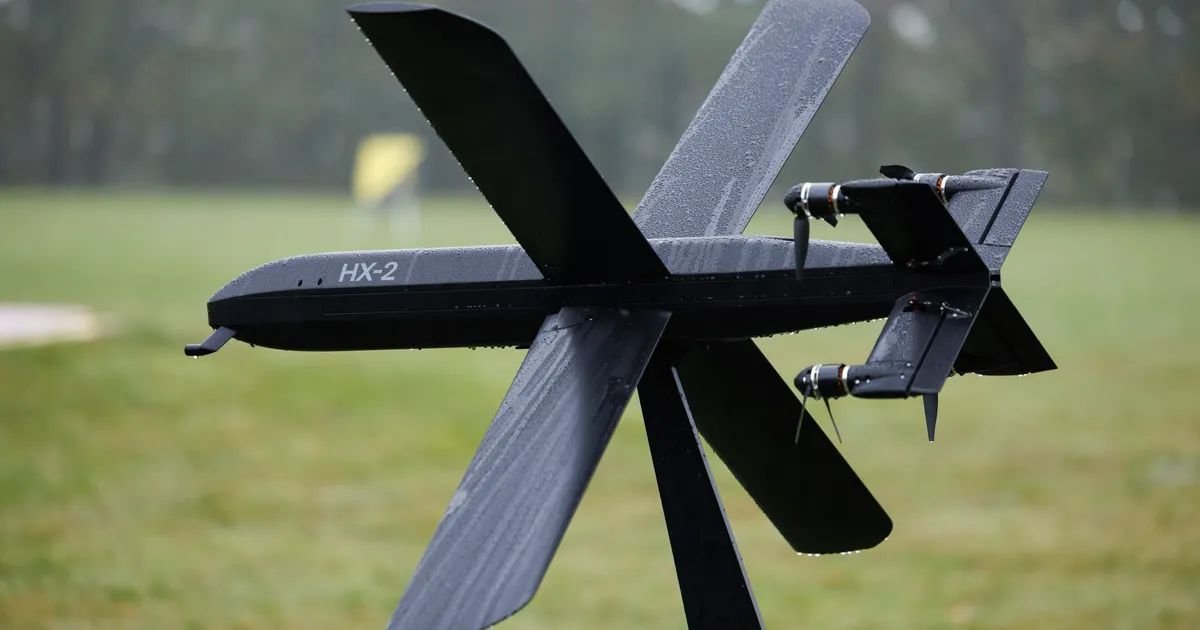
Germany's army began its first tactical tests of kamikaze drones during drills on Sunday in Lithuania, where an armoured brigade of 5,000 German troops will be permanently stationed by the end of 2027, Reuters reported. The tests mark a significant step for Germany, which only decided in 2025 to buy loitering munitions, or exploding drones, after years of controversy over the procurement of the weapons, according to the report.
Both Russia and Ukraine have fielded single-use drones, which can stay airborne over an area before cruising towards their target, plummeting at velocity and detonating on impact, Reuters reported.
At the Rudninkai training ground near the Belarusian border, army chief Christian Freuding watched loitering munitions made by German companies Helsing and Stark, equipped with inert warheads, plummet from the sky and hit main battle tanks, Reuters reported. The tests were part of Freedom Shield, the largest German military drills in Lithuania to date, according to the report.
Days earlier, German troops at Rudninkai ran their first tests of Helsing's targeting software Clarity, an AI-based tool that can sift through large volumes of data supplied by satellites, drones and other sensors faster than any human, analyse them and recommend action, Reuters reported. Lieutenant General Freuding, who oversaw Berlin's arms supplies to Kyiv before taking his current position, described both kinds of systems as indispensable for modern warfare, according to the report. He is set to assume the post of chief of defence in February, Reuters reported.
In 2023, German Defence Minister Boris Pistorius pledged to permanently deploy a combat brigade to Lithuania, a first for Berlin, Reuters reported. Germany kicked off a surge in defence spending after Russia's invasion of Ukraine, investing hundreds of billions of euros to bring its forces up to speed after decades of neglect, according to the report.
The newly formed Panzerbrigade 45, based in Rudninkai and Rukla, will comprise some 5,000 troops and 2,000 vehicles, including dozens of tanks, when it is fully operational by the end of 2027, Reuters reported. Some 1,800 of those troops are already in Lithuania, according to the report. NATO officials have warned for years of an increased threat from Russia, which they say could potentially mount a large-scale assault on allied territory as early as 2029, Reuters reported. Moscow denies aggressive intentions and accuses the alliance of stoking tensions by expanding into neighbouring territory, according to the report.