Tens of thousands of people took to the streets across France on Saturday for a sixth consecutive weekend of nationwide demonstrations over the cost of living, student rights and alleged police violence, Firstpost reported, citing France's Interior Ministry and AFP reporting.
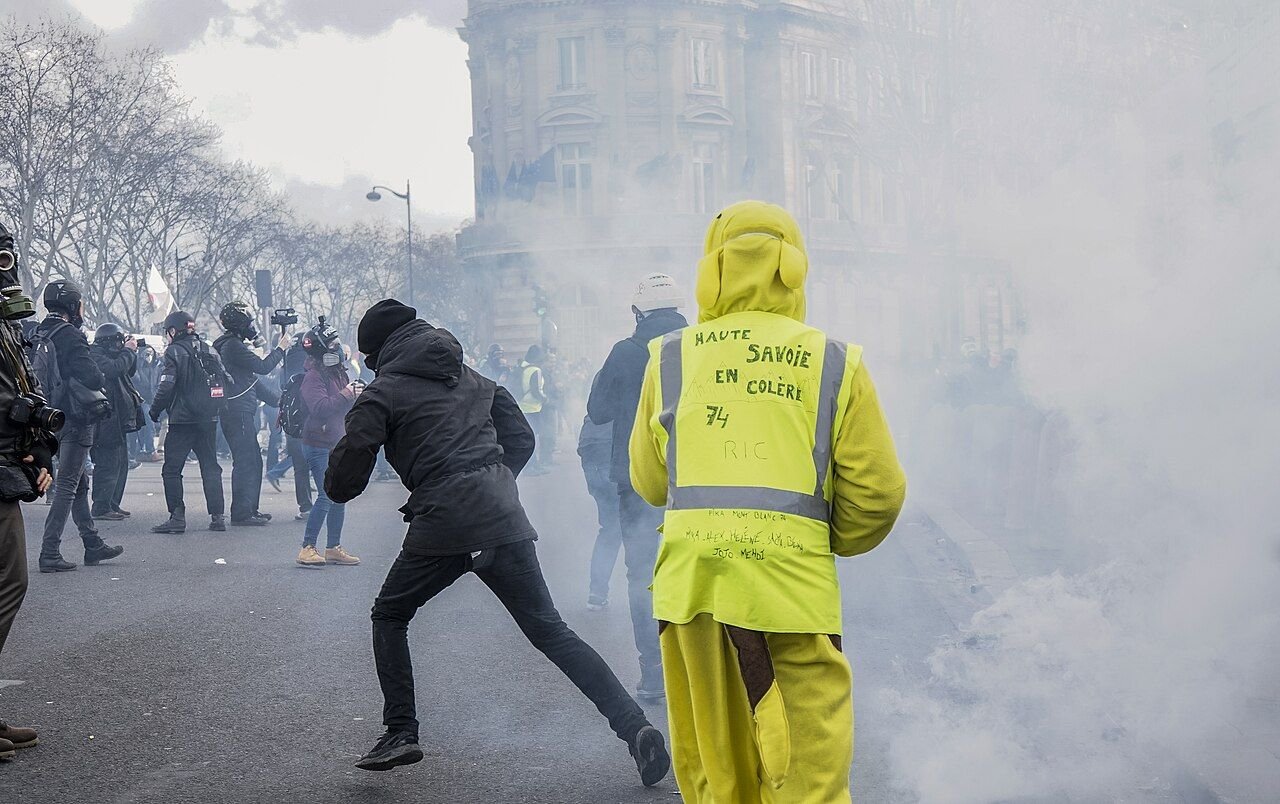
In Paris, protesters marched from Place de la République to Place de la Nation, waving flags and wearing trade union insignia, with several demonstrators also wearing the movement's distinctive yellow vests, according to Firstpost. The Interior Ministry put turnout at 82,500 people nationwide, including 21,500 in Paris, while organisers put the national turnout at 150,000, with 45,000 demonstrators in the capital. A week earlier, officials had estimated nationwide turnout at 106,000, while organisers claimed 200,000 people had participated. Authorities said 144 arrests had been made across the country by early evening, according to reporting on the demonstrations.
The latest wave of unrest came a day after the French Senate approved a controversial law extending legal protections for police officers who use their firearms while on duty, which opponents have labelled a "license to kill" law, according to reporting on the protests. Critics warn the measure could make investigations into police shootings more difficult and further shield officers from scrutiny, while supporters argue the legislation is intended to protect law enforcement personnel from being automatically presumed guilty when force is used. In Paris, protesters carried signs reading "I want to live, not survive" and "No to the license to kill," and erected mock gravestones symbolising the decline of public institutions such as education and social security.
Many demonstrators described economic insecurity as the driving force behind their mobilisation. "In a number of countries, young people are going through the same thing, namely precarity. You have to choose between having a roof over your head, getting medical care, and being able to eat your fill," Manon Moret, general secretary of the Unef student union, told AFP. The protests highlighted growing concerns over housing affordability, access to education and rising healthcare costs, as well as alarm over what participants see as the gradual erosion of public services.
Around 70,000 police officers and security personnel were deployed across France, Firstpost reported. The protests were largely peaceful, although sporadic incidents of violence were reported. In Paris, tensions escalated toward the end of the march around 6 p.m. after projectiles were reportedly thrown at police officers, with riot police charging sections of the crowd, making several arrests and later using tear gas to disperse remaining crowds, according to reporting on the march. In Lyon, police used tear gas to disperse several unauthorised marches attempting to reach the city centre, according to an AFP journalist at the scene, while 4,600 people joined demonstrations in Marseille, matching the previous week's turnout.
Violence was also reported in several other cities. In Bordeaux, footage circulating on social media showed violent clashes accompanied by loud explosions, with burning barricades and property damage reported, while authorities said nine police officers were injured and 17 people were arrested, according to reporting on the unrest. In Toulouse, protesters entered the city centre despite restrictions imposed by authorities, confrontations erupted near Christmas market installations prompting police to deploy tear gas, and around 20 demonstrators were detained. At least 31 people have been seriously injured by security forces since the protests began, according to an AFP tally based on direct testimonies, victims' lawyers and NGO records, Firstpost reported, while authorities have not released an official figure.
The demonstrations coincided with the eighth anniversary of the Yellow Vest movement, which emerged in November 2018 over rising fuel taxes before expanding into a wider campaign against the cost of living and social inequality, Firstpost reported. The French marches unfolded alongside protests elsewhere in Europe on Saturday, including thousands marching through Lisbon demanding higher wages, affordable housing and stronger public services, and demonstrators in Barcelona calling for reforms to housing and education policies. "We'll be there next week and the next week and as long as we're needed," said Avril Bas, 27, who joined the Paris march, according to reporting on the demonstrations. As the protests enter a seventh week, the standoff between demonstrators and authorities shows little sign of easing.