More than 3,500 flights within, into or out of the United States were canceled on Saturday as airlines worked to dig out from Friday's nationwide ground stop, with the disruption stretching into a second day and officials warning that a full recovery would take time.
FlightAware counted 3,568 canceled flights and 1,432 delays by 8:17 a.m. ET on Saturday, and the count of cancellations for the day had topped 3,600 by 8:45 a.m., according to The Points Guy. Nationwide, more than 12,000 departures have been scrubbed since Friday, when the Federal Aviation Administration halted every departing flight in the country for more than four hours.
Transportation Secretary Sean Duffy said on Saturday that flights were slowly coming back. "Operations are slowly returning to normal this morning. Planes are pushing back, taxiing, and taking off, and it is safe to fly," Duffy said in a post on X. "You will continue to see some delays and cancellations as carriers reschedule flights and reposition aircraft/crews where they are needed most."
Duffy and FAA Administrator Bryan Bedford were due to brief reporters at 10:30 a.m. ET at the Transportation Department's headquarters, with passengers advised to check their flight status directly with their airlines and to follow the FAA's airport status page for live updates.
The ground stop, issued at 3:54 p.m. ET on Friday and lifted at 8:15 p.m., was the longest nationwide halt of U.S. airspace since the September 11 attacks and only the second since then, after a system failure in January 2023. More than 9,100 flights were canceled on Friday, according to FlightAware, with about 3,500 aircraft in the air when the order took effect. More than 3,000 of those flights landed safely, Homeland Security Secretary Markwayne Mullin said.
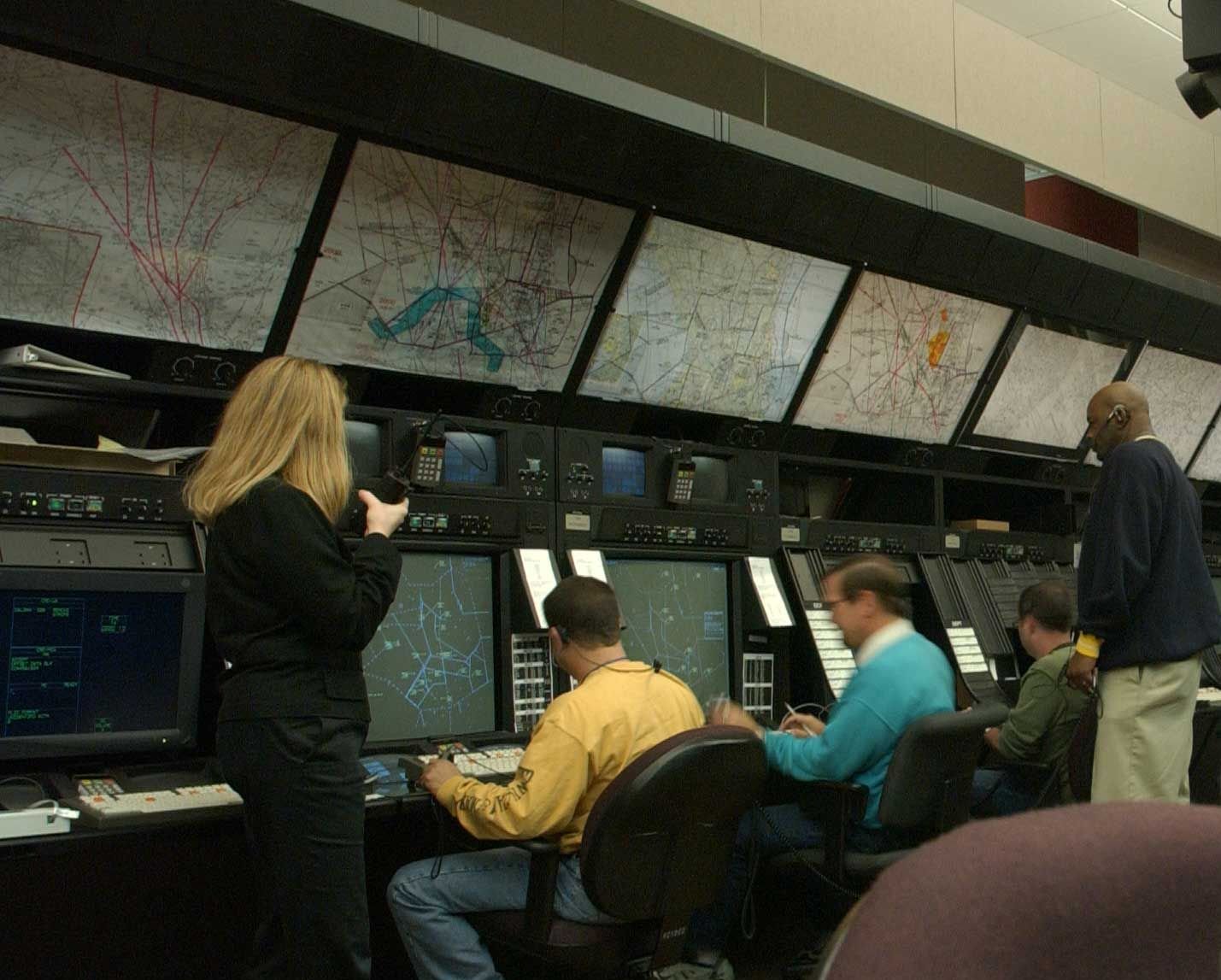
The trouble began at 3:36 p.m. ET on Friday, when radar and radio links at the FAA's en route centers and the facilities that handle planes approaching and leaving airports became unstable. Duffy blamed aging equipment, saying the agency still runs on 1980s copper telephone lines and that "our switches, our routers actually got overloaded with data" and began sending inconsistent readings. Mullin said new technology being added to the air traffic control system had overwhelmed the antiquated equipment.
Officials said there was no evidence of a cyberattack. Mullin said investigators had seen "zero evidence" of foul play, though he added that nothing had been completely ruled out, and he said there was "no connection between this and Microsoft," whose global outage a day earlier had prompted speculation. The Washington Post, citing a person briefed on the outage, reported that the FAA's internal network was having trouble with its timing system, and The Wall Street Journal reported that a telecommunications network overseen by L3Harris Technologies was among the systems affected.
Duffy also pushed back on suggestions that the FAA's new artificial intelligence planning tool, SMART, had anything to do with the failure. The tool was switched on across all 22 of the FAA's en route centers on November 10, three days before the ground stop, but Duffy said it "isn't plugged in" to the radar and communications systems that failed. "There was no possible way SMART would have impacted what happened today," he said. Air Space Intelligence, the company that builds the tool, issued its own denial while planes were still grounded.
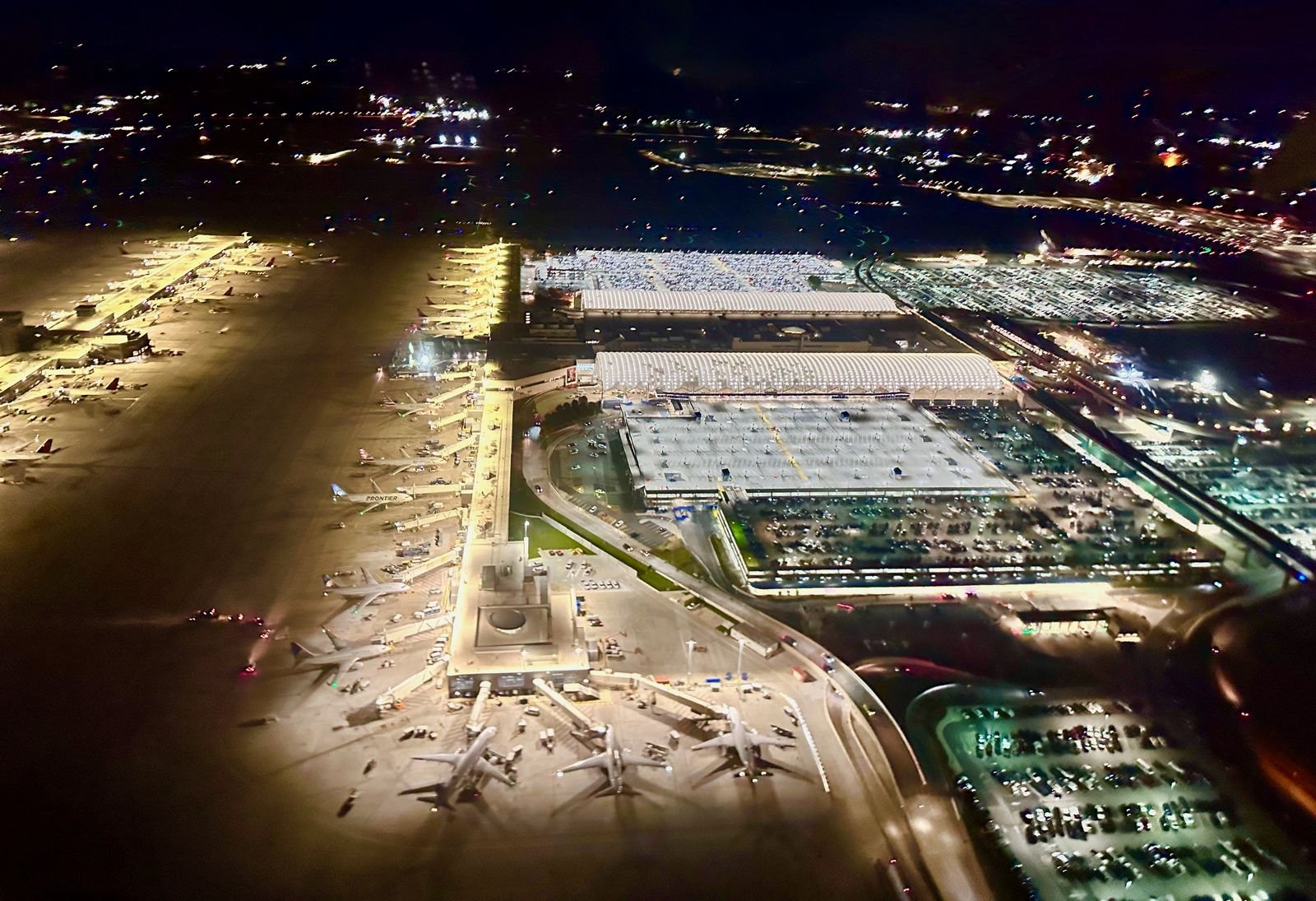
Delta Air Lines had the most Saturday cancellations, with 640 flights scrubbed by 8:17 a.m. ET, or 20 percent of its schedule. United cut 17 percent of its Saturday flights and American 15 percent, according to FlightAware data. FlightAware's "Misery Map" ranked Atlanta's Hartsfield-Jackson, Chicago's O'Hare and New York's John F. Kennedy airports as the worst hit on Saturday morning.
The disruption spilled into college football, with Auburn taking a bus to Mississippi State after its flight plans fell through and the game's kickoff moved from noon to 4:15 p.m. ET. Utah's game at Arizona was pushed back three hours to a 10:30 p.m. ET start. Duffy encouraged college football teams to reach out to the FAA so the agency could prioritize flights for Saturday games.
Duffy has asked Congress for $50 billion in emergency funding to rebuild the air traffic control system, warning that the old equipment will keep failing. He said he expected schedules to be "back up and operational" in time for the Thanksgiving travel rush, but officials cautioned that the effects of the shutdown could be felt for days as airlines work through the backlog of stranded passengers, misplaced aircraft and out-of-position crews.