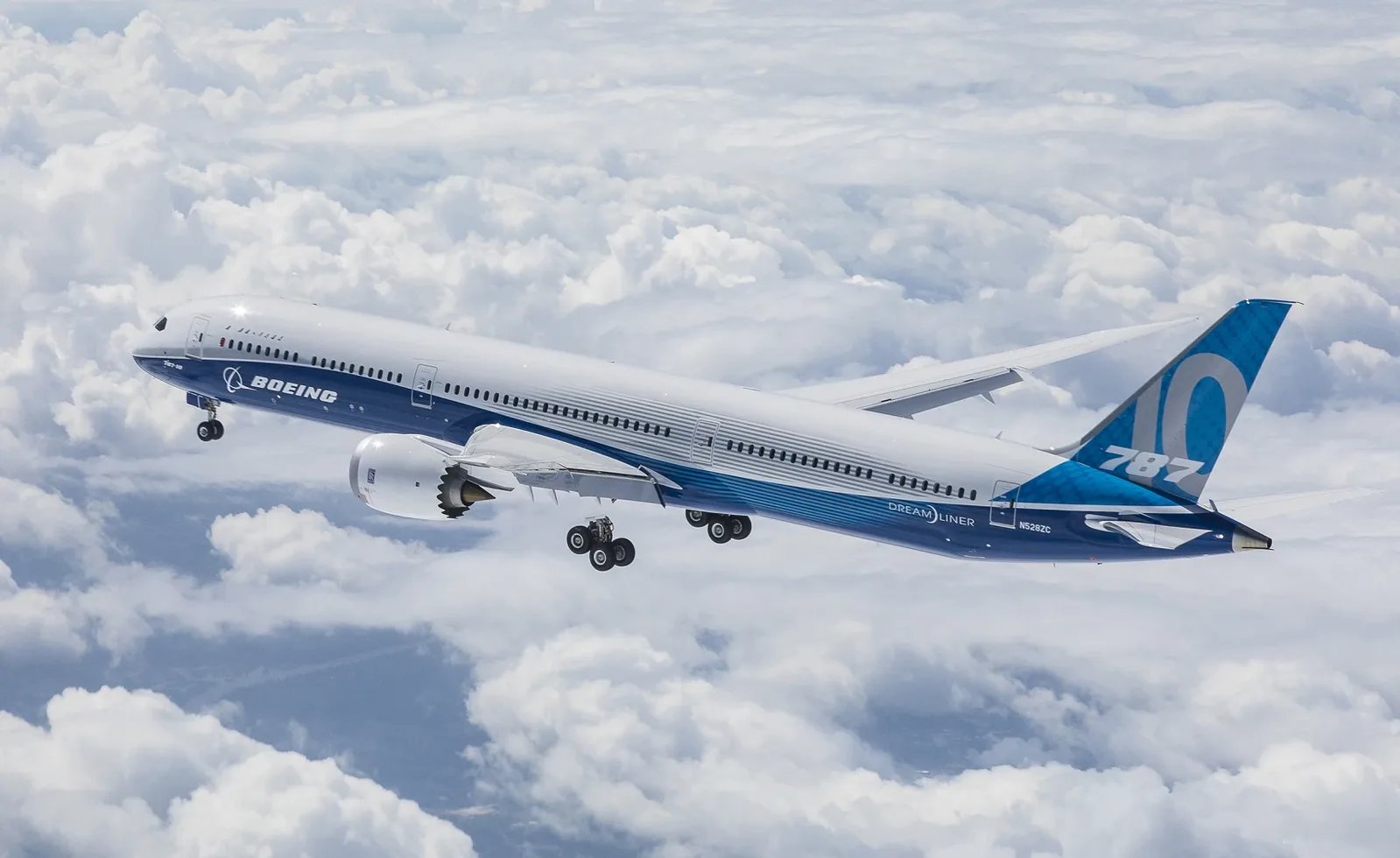
The Federal Aviation Administration has ordered sealant checks on 60 U.S. Boeing 787 aircraft over a lightning risk, a directive that adds to the regulatory attention on the wide-body jet.
Sealants play a quiet but essential role in aircraft safety. In fuel tanks and around joints and fasteners, they help prevent fuel vapor from escaping and protect against ignition sources. Lightning strikes are a routine fact of commercial flying — airliners are designed to conduct the energy safely across the airframe and away — but that protection depends on the integrity of the materials involved, which is what inspections of this kind are meant to verify.
The order covers 60 U.S.-registered 787s. It does not ground the fleet; it requires operators to check the sealant and address what inspectors find. Such directives are the FAA's standard instrument for managing a identified risk across a fleet: define the issue, set the inspection, and require compliance within a stated process.
For Boeing, the order arrives in a period when the company's aircraft remain under heightened regulatory and public scrutiny, and when even routine airworthiness actions draw attention well beyond the aviation industry. The 787, the company's composite wide-body flagship, is flown on long-haul routes by airlines around the world, and the U.S. fleet covered by the order is part of that global operation.
In a separate aviation development, the National Transportation Safety Board said part of the tail came off before impact in a Florida jet crash. The finding — that the aircraft lost part of its tail section while still in the air — is a significant early data point in the investigation, narrowing the sequence of events investigators will work to reconstruct.
The NTSB's work proceeds methodically: documenting wreckage, gathering records and recordings, and building a factual record before analysis begins. An observation about the tail section does not, by itself, establish a cause. It tells investigators where to look — at the structure, its history and the forces it experienced — as they determine why the section separated and what happened in the aircraft's final moments.
Together, the two developments illustrate the twin tracks of aviation safety: the regulator's preventive work on fleets in service, in the form of the FAA's sealant checks on 60 Dreamliners, and the investigator's retrospective work after a crash, in the form of the NTSB's inquiry in Florida. Both will continue in the weeks ahead, and both will produce findings that feed back into how the system operates.