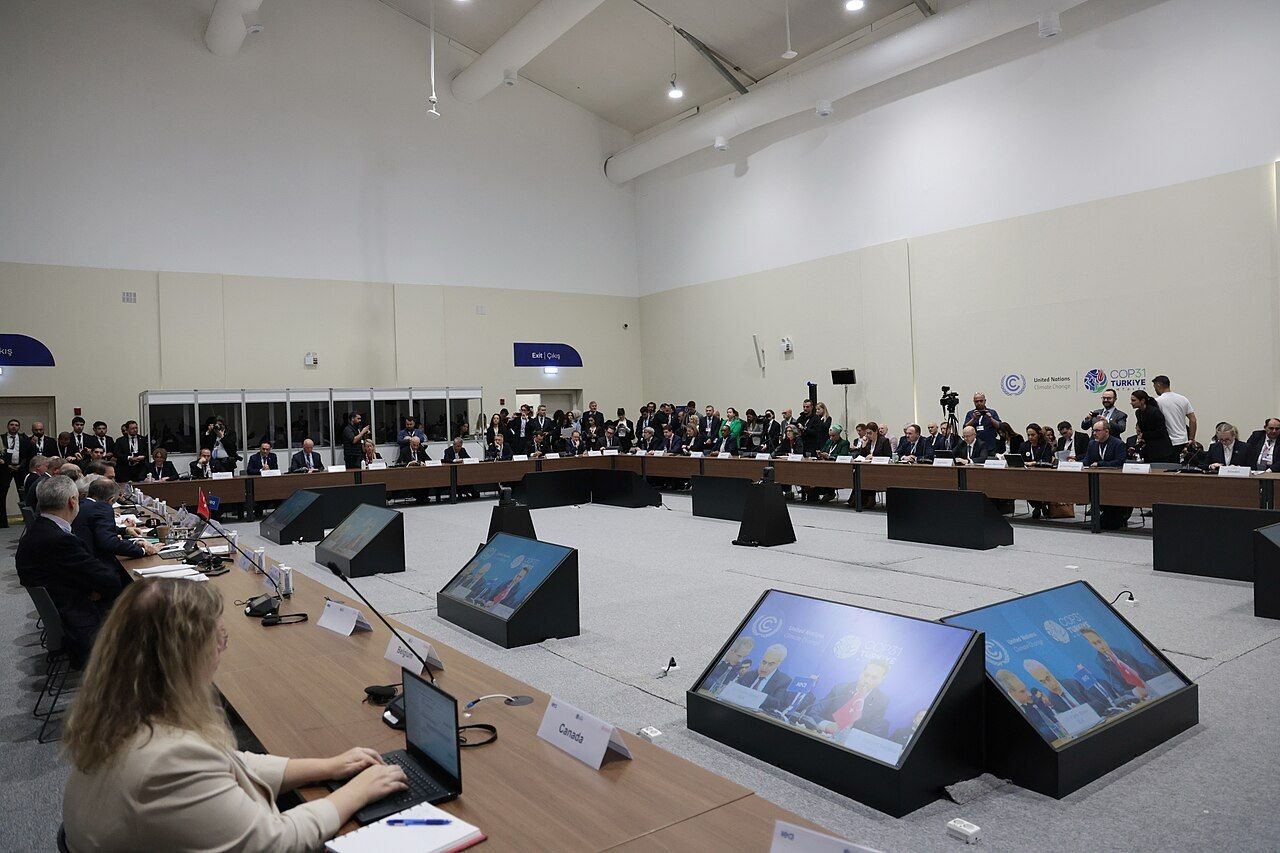
United Nations climate talks in Antalya, Turkey, ended without an overarching agreement on Sunday after the European Union and other countries rejected a final draft deal that made no mention of fossil fuels, Reuters reported.
After more than two weeks of negotiations that spilled two days into overtime — making it the longest COP on record — Turkey's COP31 President Murat Kurum said at the closing plenary that he could see there was no agreement and confirmed he would not advance any new text, Reuters reported. "It is clear that there are parties in this hall who oppose this text. We recognise that there is no consensus on this document. Therefore, these decisions have not been adopted," Kurum said, according to Al Jazeera.
The last time U.N. climate talks failed to get a deal adopted by all was in Copenhagen in 2009, Reuters reported.
The final draft, put forward by COP31 presidents Turkey and Australia, omitted mention of the fossil fuels that scientists say are driving climate change, Al Jazeera reported. Instead, it included language referring to a previous COP at which governments had agreed to transition away from oil, gas and coal, and it acknowledged the planet's projected temperature overshoot while calling for faster development of carbon-removal technologies, Reuters reported.
Ireland's Climate and Energy Minister Darragh O'Brien, whose country holds the rotating EU presidency, said the bloc and its member states objected to the pact because it "does not meet the moment," Al Jazeera reported. "We will not endorse a cover decision, or an Antalya Pact, that does not even mention fossil fuels, which is the key driver of climate change," O'Brien told the closing session, a record 44 hours after the summit's official end. "We will not accept negotiating backwards in time. And we will not accept a COP that greenwashes fossil fuel," he said.
The proposed deal needed consensus approval from nearly 200 nations, Al Jazeera reported. Panama, the Marshall Islands and Norway were also among those that rejected it, according to CNN. Around 130 countries had pushed for an explicit reference to transitioning away from coal, oil and gas, while Saudi Arabia and other oil-producing nations opposed naming fossil fuels in the text, Moneycontrol reported. Observers at the venue said Saudi Arabia and other big oil producing nations had pushed hard in negotiations for a text that left out explicit mention of fossil fuels while including carbon removal technologies, Reuters reported.
An opening draft from Australia on Monday called for a faster phase-out of fossil fuels, but a slimmer version on Thursday removed every mention of them after Saudi Arabia and other major oil and gas producers reportedly objected, Al Jazeera reported. The first draft of the cover decision had called for "the immediate transition away from fossil fuels in energy systems," but all mentions of fossil fuels were stripped out of every subsequent draft despite a push by more than 100 countries to keep them in, CNN reported.
Australia's COP31 President of Negotiations, Chris Bowen, called the outcome "very disappointing" and said disagreements over fuels and climate finance were the dealbreakers, Reuters reported. Bowen said there were "a lot of good things" to come out of the talks, including more than 90 countries signing a pledge to ramp up the electrification of their economies, CNN reported.
The failed deal had called for a tripling of climate finance but did not specify from what baseline, Reuters reported. It had also included a goal put forward by Turkey to expand electricity's share of total final world energy consumption to 35% by 2035, from around 23% now.
While a blow to efforts to ratchet up international action, the failure to agree on a political declaration in Antalya does not erase the obligations agreed on by previous summits or remove the technical and legal frameworks governing multilateral action against climate change, Reuters reported. The collapse came against a backdrop of competing crises, including wars and public outcry over the cost of living, that have distracted political attention from the problems caused by a warming climate.