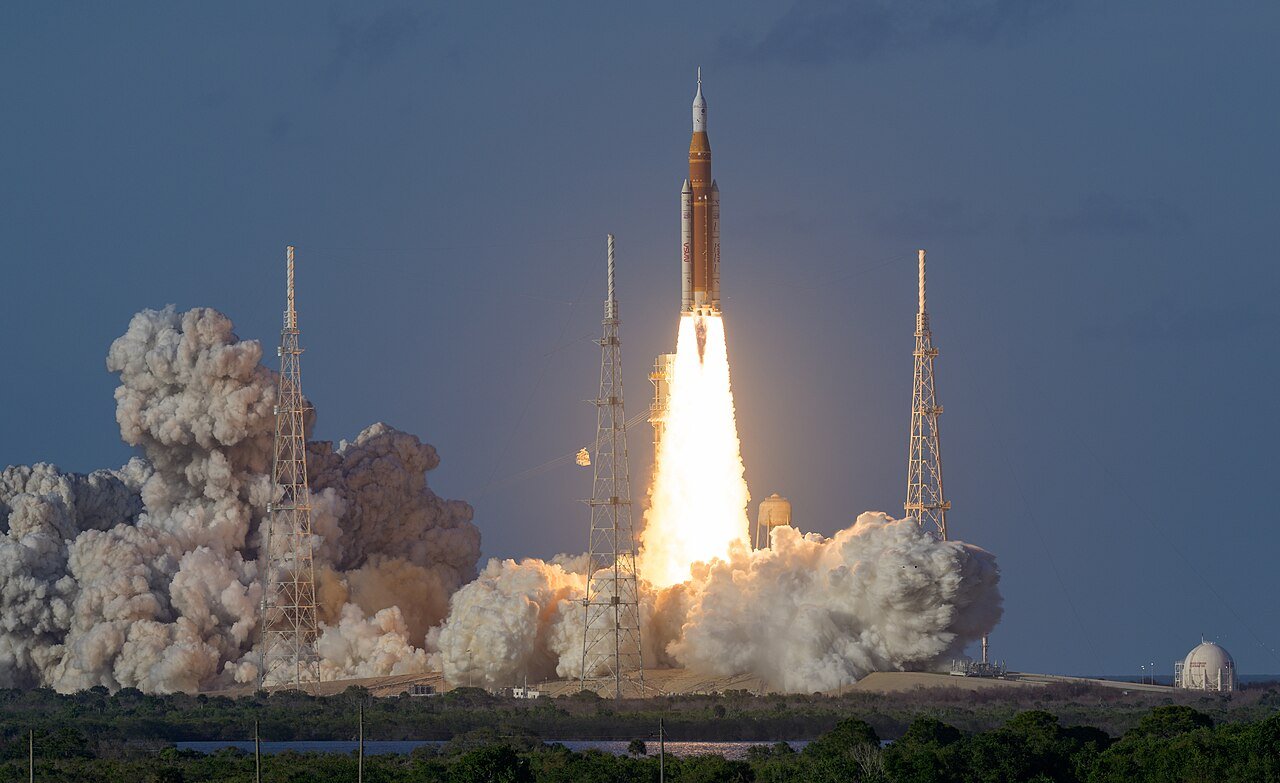
NASA's Artemis II moon launch in April tore two huge disturbances in Earth's upper atmosphere, each stretching about 5,000 kilometres across North America, according to new research reported by Space.com on Wednesday.
Researchers at Taiwan's National Cheng Kung University analysed measurements from ground-based GPS receivers and found two disturbances in the ionosphere, the electrically charged region of the upper atmosphere. The first followed the Space Launch System core stage after liftoff on April 1, 2026. The second was associated with two burns of the rocket's upper stage at an altitude of about 185 kilometres, more than an hour after launch.
The disturbances could translate into GPS positioning errors of several metres, the researchers found. Study co-author Charles Lin, an Earth science professor at National Cheng Kung University, told Space.com that an error of a couple of metres could affect an autonomous car's lane choice and drone positioning. The study recorded no actual outages or navigation failures — the errors are estimates derived from the measurements, not a log of incidents.
The features are commonly described as ionospheric holes, but they are not physical openings in the sky. They are regions where the concentration of free electrons in the ionosphere falls well below the surrounding levels.
Artemis II carried astronauts on the first crewed Artemis flight around the Moon and returned to Earth on April 10, 2026. The findings, published as a preprint, raise questions about how increasingly powerful rockets and rising launch rates could affect the navigation systems that cars, drones and phones rely on every day.