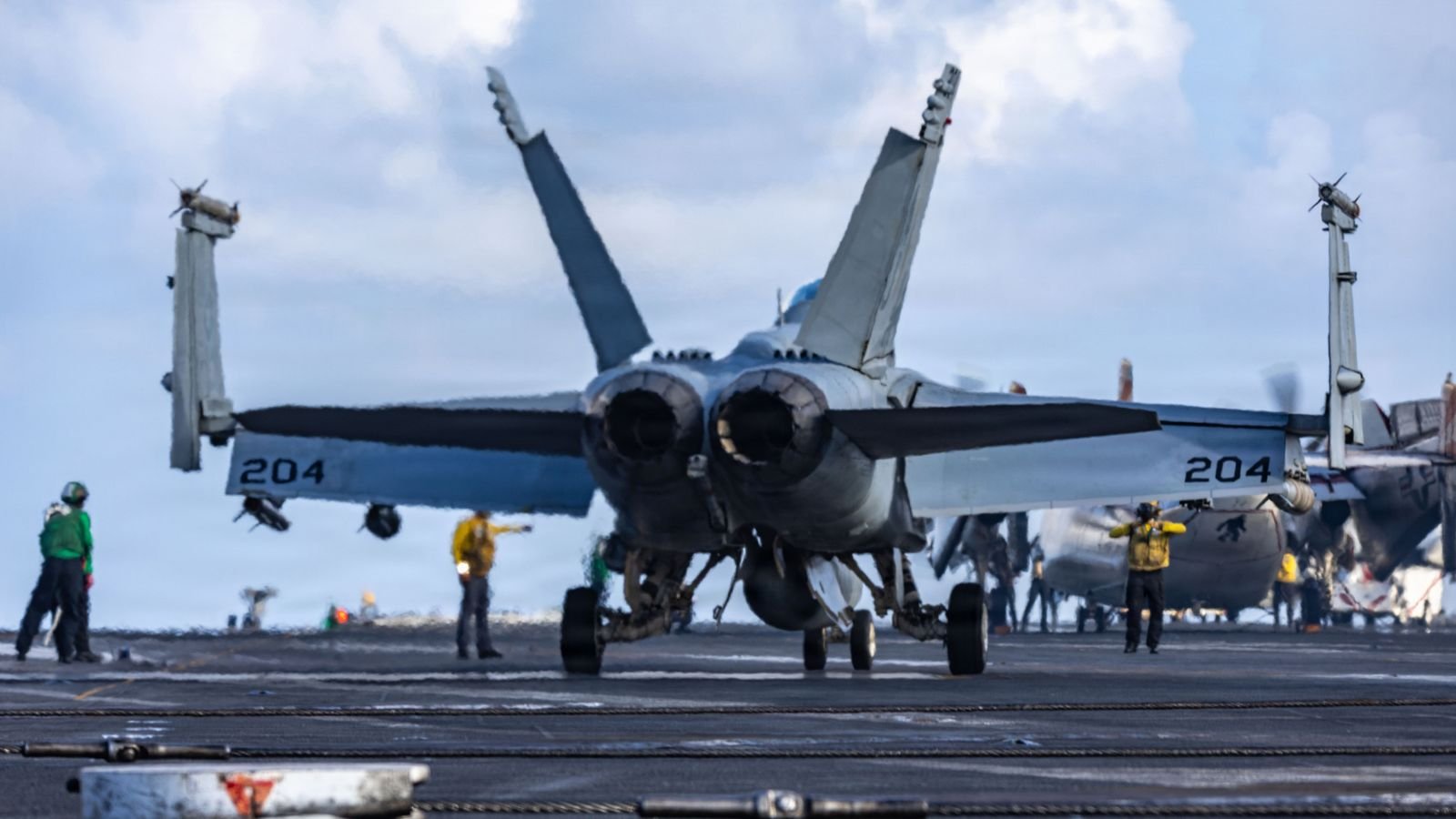
Senate Armed Services Committee Chairman Roger Wicker told the Navy's top nominee on Tuesday that President Donald Trump's order to bring back steam catapults on new aircraft carriers is a "non-starter." "Secretary Cao, returning to steam is a non-starter, and everybody needs to understand that," Wicker, a Mississippi Republican, said midway through the confirmation hearing for acting Navy Secretary Hung Cao.
Trump directed the Navy in an August memorandum to draw up plans to replace the electromagnetic launch system on future Ford-class carriers with steam catapults and hydraulic elevators, the technology used on the older Nimitz-class ships. The order would apply to carriers now under construction, including the future USS Doris Miller, and Cao delivered the Navy's plan last month. Initial estimates for the design work alone to put steam back into the carrier class run to around $10 billion, according to USNI News.
Republicans on the Senate Appropriations Committee also moved against the plan on Monday, in a statement accompanying the 2027 defence appropriations bill. The committee said it was concerned that such a major redesign would result in "many billions of dollars in additional costs and many years in program schedule delays," and directed the Navy to report to Congress on the effectiveness of the new magnetic launch system compared with the old steam one.
Senator Tim Kaine, a Virginia Democrat, pressed Cao on the issue before Wicker intervened. Kaine said he had recently visited the USS Gerald R. Ford and that sailors operating the electromagnetic system were "very complimentary" of it, warning that reverting to steam would drive up costs with "diminished capacity." Cao responded that the electromagnetic launch system and the ship's electromagnetic elevators were contributing to carrier delays.
The Associated Press reported that the fighting in Iran showed the new electromagnetic system aboard the Ford launched more planes in less time and with fewer sailors than the steam catapults on older carriers. Trump has criticised the electromagnetic system for years, arguing in the August memorandum that overly complex ship designs have contributed to cost increases, delays and cancellations, and calling on the Navy to prioritise "proven, reliable, and affordable technologies."
Any move to steam would still need approval from both chambers of Congress, and Wicker told reporters that adding a waiver as an amendment to the 2027 defence authorisation bill was unlikely, noting the Senate process would need 60 votes to overcome a filibuster. The dispute comes as Trump presses Congress to pass his $1.5 trillion defence budget before the end of the year, with Democrats set to take control of the House and Senate on January 3.