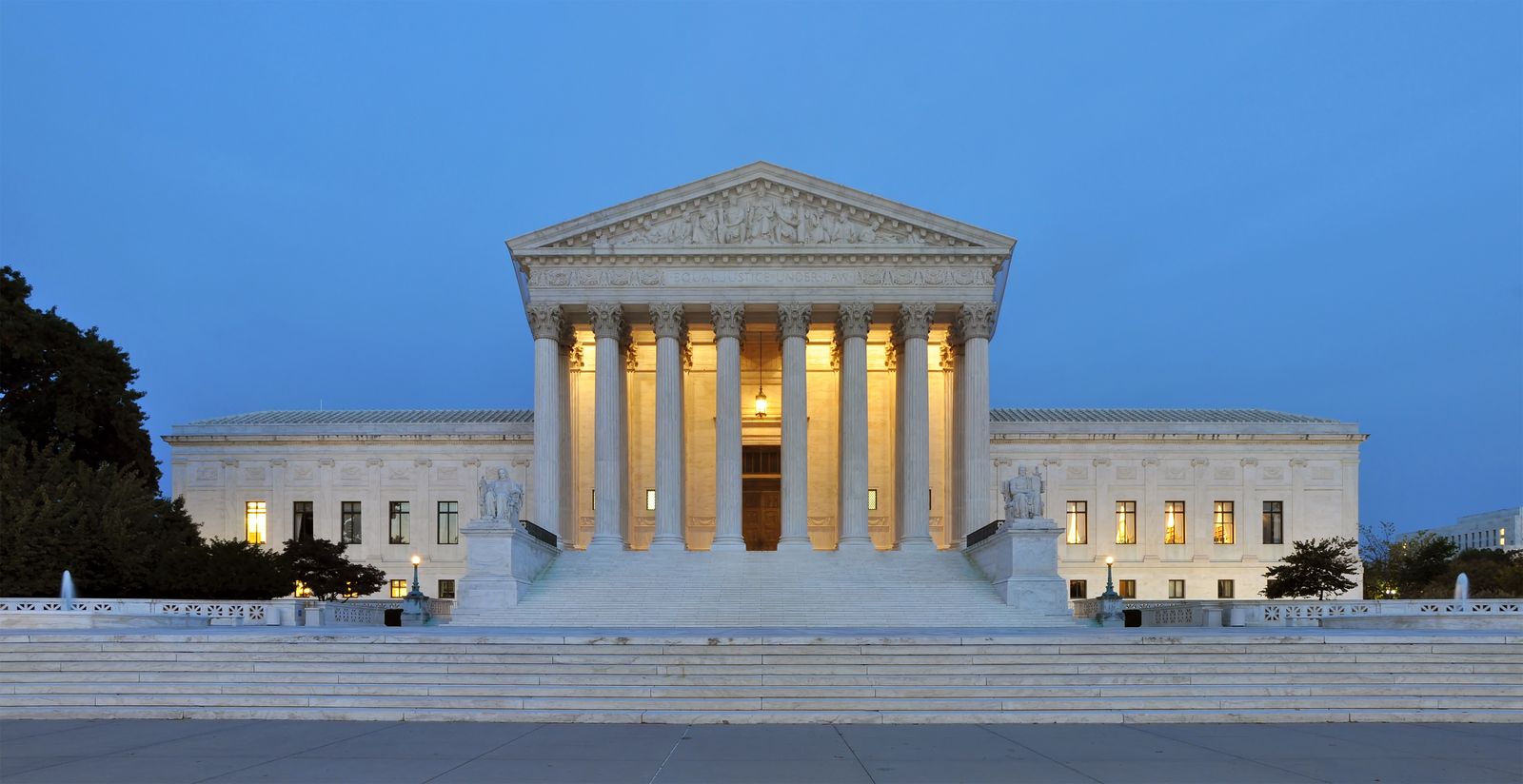
The Supreme Court appeared divided on Tuesday over whether federal agencies can impose fines on businesses that violate federal law without first going to court, in a case that could undermine the enforcement powers of regulators across the government.
The case, Department of Labor v. Sun Valley Orchards, centers on the H-2A visa program, which allows farmers to hire seasonal migrant workers. The Labor Department enforces the program, requiring farm owners to provide basic necessities such as housing, access to meals and transportation in addition to wages. It fined the New Jersey farm a half-million dollars for allegedly failing to pay wages and provide housing and transportation. Sun Valley is disputing the charges and contends that the department imposing monetary fines without first going to court violates the Seventh Amendment right to a jury trial in civil cases where the amount in controversy exceeds $20.
Chief Justice John Roberts strongly suggested that the Trump administration is likely to lose the case, telling Deputy Solicitor General Sarah Harris, who represented the Labor Department, that her position seemed inconsistent with the idea that the claim has a long history of being handled by the courts.
Justice Sonia Sotomayor asked how disruptive it would be for the federal courts to enforce the law if agencies could no longer impose civil penalties themselves. Harris responded that if the court were to say civil penalties always have to be in Article III courts, that would be "a very dramatic change," adding that such a ruling would disrupt programs as diverse as Medicare, Medicaid, the federal student loan program, Social Security, farm programs, and many others.
Justice Elena Kagan asked, "Why not just go to court always?" Harris responded, "Because Congress said that we don't have to."
Robert Johnson, the lawyer for Sun Valley Orchards, argued that the penalties should be imposed by the federal courts, not administrative judges. He conceded that the statute contemplates administrative adjudication, he said, but the question is whether the statute may constitutionally do so — and his answer was no.
Justice Ketanji Brown Jackson told Johnson he seemed to be fighting the reality that Congress has chosen a different system. Justice Brett Kavanaugh said what Johnson was proposing was at war with a hundred years of history, while Justice Samuel Alito described the outline as a hodge-podge opinion that a majority might agree with.
In rebuttal, Harris was unusually candid, saying it would be a big deal for the government to lose the case. If that happens, she said, the administration will have to go to Congress — because for 100 years, Congress has set up systems in which agencies can adjudicate and impose civil penalties.