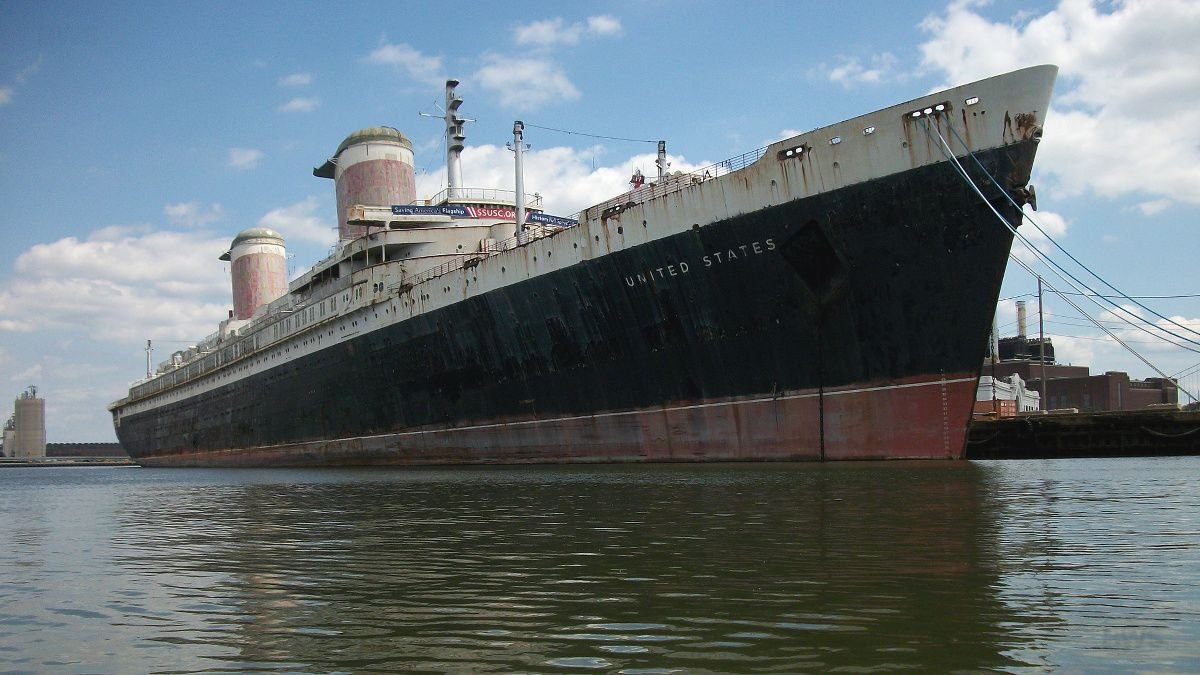
The SS United States, the 990-foot ocean liner that still holds the transatlantic speed record, slipped beneath the surface of the Gulf of Mexico on Wednesday to become the world's largest artificial reef.
Work crews began flooding the ship at about 2:40 p.m. Eastern time, and the vessel went under around 1 p.m. Central time, about 22 nautical miles southwest of Destin, Florida. Its upper decks now sit roughly 55 to 60 feet below the waterline, in about 180 feet of water, close to the USS Oriskany, the aircraft carrier sunk as an artificial reef in 2006.
Okaloosa County, Florida, which purchased the ship in 2024, moved the sinking up by a day to Veterans Day after heavy winds and unsafe weather were forecast for Thursday. The ship was towed from its berth in Mobile, Alabama, on the morning of November 9 to its final position off the Florida coast.
The sinking was a controlled flooding, not an explosion. Crews opened valves connected to the vessel's original seawater intake pipes, allowing the hull to fill slowly and settle upright on the seafloor. Federal rules bar the use of explosives for the operation, and workers had spent months preparing the ship by removing tanks, cutting large openings in its decks and taking out more than 400 portholes.
Built in 1952, the SS United States crossed the Atlantic in 3 days and 10 hours on its maiden voyage, a record for an ocean liner that still stands. The ship, 100 feet longer than the RMS Titanic, carried presidents and movie stars before it was retired in 1969 and spent decades docked in Philadelphia while repeated restoration plans failed.
The $13 million project is intended to create a marine habitat for species such as tuna, marlin and swordfish, while giving divers a landmark destination. At 990 feet, the hull is now larger than the 910-foot USS Oriskany, the previous record holder for the world's largest intentionally sunk artificial reef.
Researchers from the Woods Hole Oceanographic Institution will collect water samples around the wreck to study changes in water chemistry, microbial activity and biological colonization as marine life takes hold. A museum featuring the ship's two massive funnels and other fixtures will preserve its memory on land, and divers will be able to visit the wreck from dawn on Thursday.