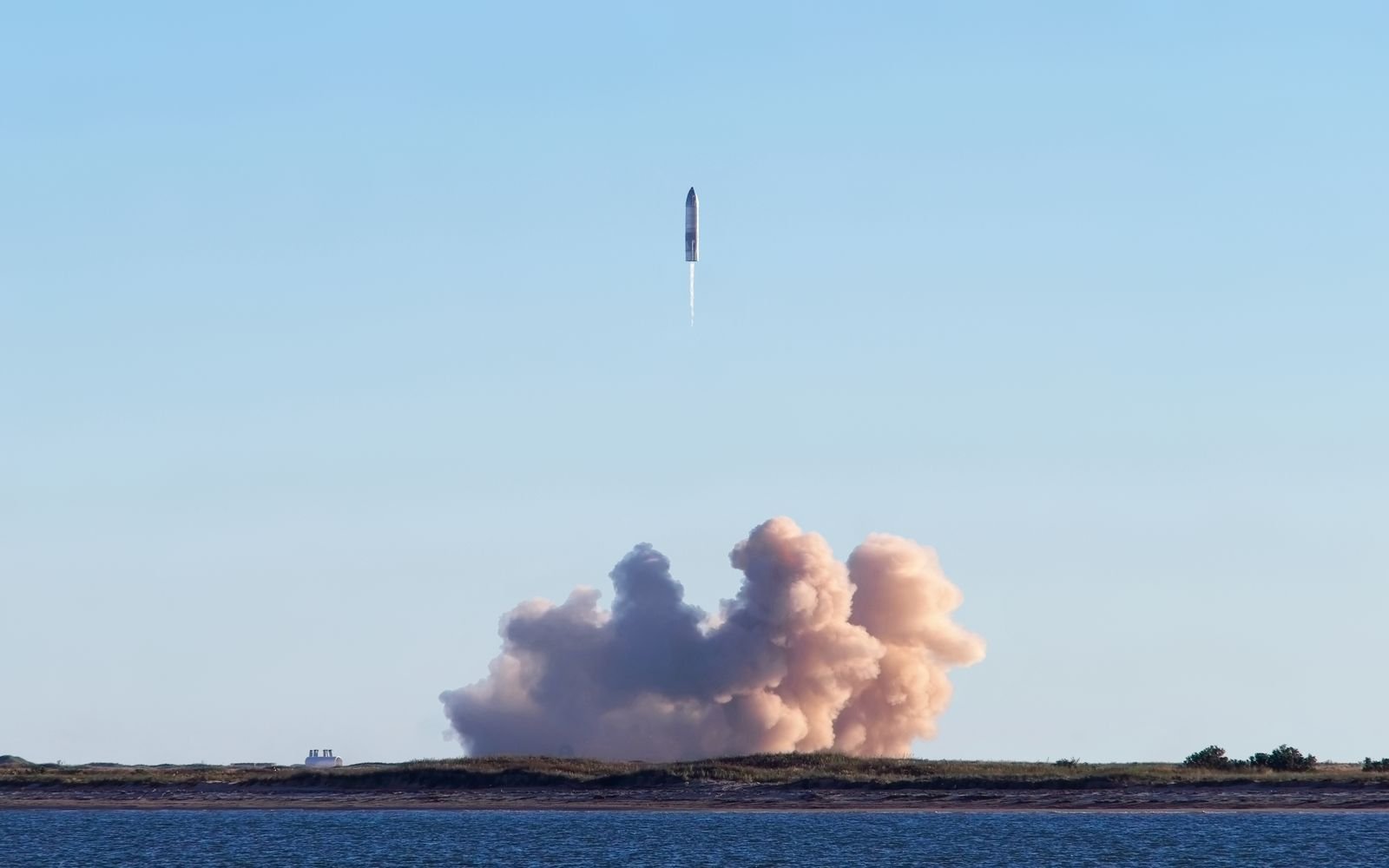
SpaceX launched the 15th test flight of its Starship spacecraft from Starbase, Texas, on Friday, lifting off at 5:47 p.m. ET on a mission the company hoped would become the first round trip of an orbital rocket — with both the Super Heavy booster and the Starship upper stage returning to the launch site to be caught by the tower's giant mechanical arms.
The plan came undone minutes into the flight. The booster separated from the upper stage about two minutes after liftoff, but SpaceX called off the tower catch during the booster's flight back, and the booster splashed down in the Gulf of Mexico. SpaceX said it did not yet know what caused the abort. "We'll dig in to what caused that abort during its flight back to the tower," SpaceX's Dan Huot said on the company's live webcast.
The upper stage, Ship 42 — nicknamed "Don't Panic" — pressed on into orbit with all six of its engines firing and was cleared to deploy 26 Starlink V3 satellites. If the ship stays healthy overnight, SpaceX will attempt the first-ever catch of the upper stage on Saturday afternoon, after about 22 hours and 14 orbits around Earth, in a window the Federal Aviation Administration lists from 2:56 p.m. to 6:14 p.m. CT.
The flight is the 15th Starship test since 2023 and the second to carry a batch of operational Starlink satellites into orbit. SpaceX has previously caught a Super Heavy booster at the launch tower three times, most recently in March 2025, and says a fully reusable Starship is central to expanding its Starlink satellite network and, eventually, landing astronauts on the Moon under NASA's Artemis program.