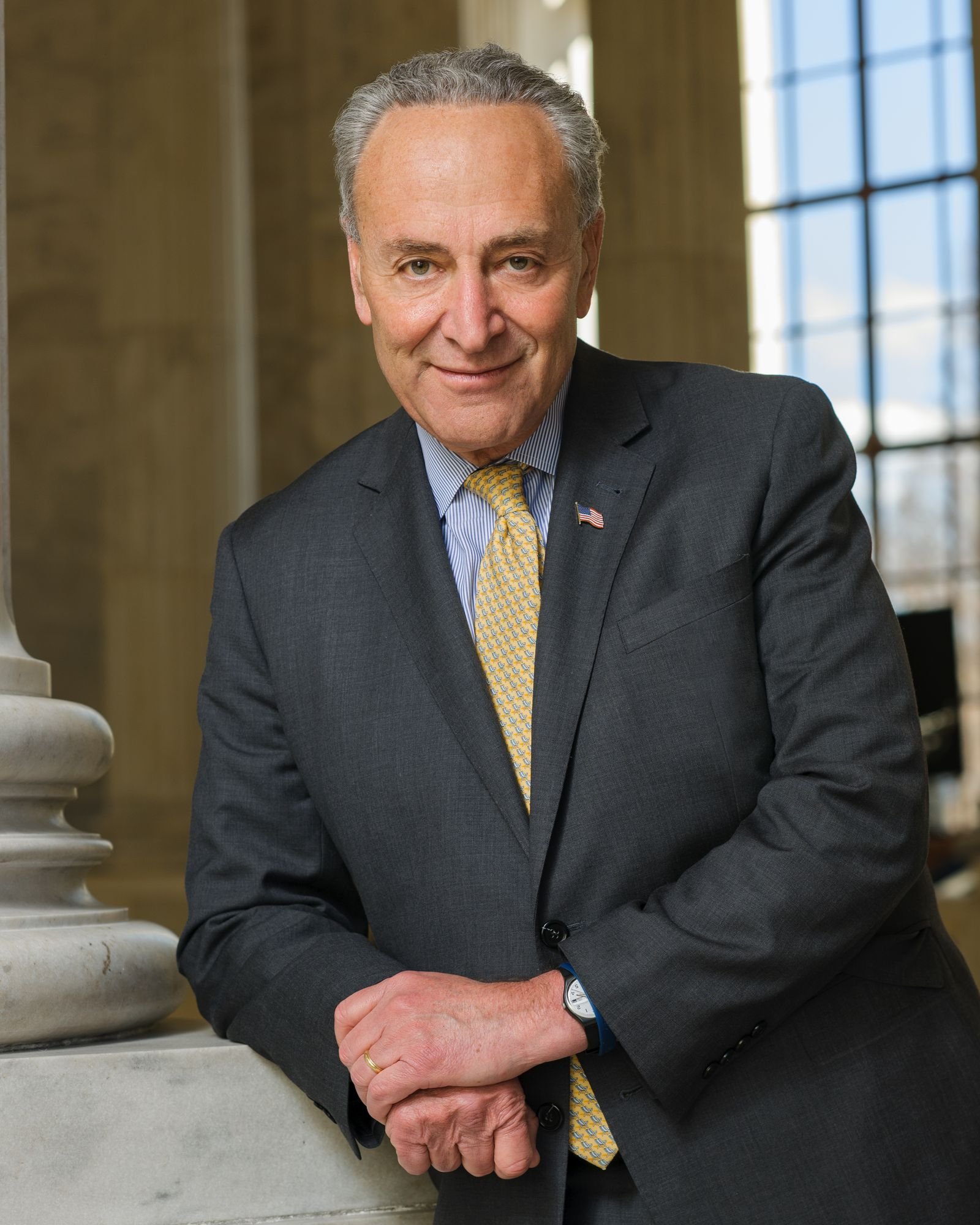
Allies of Senate Democratic Leader Chuck Schumer predict he will win more than 40 votes against leadership challenger Sen. Chris Van Hollen, and they are weighing pulling the election earlier into November, a change that would itself need a vote of the Democratic caucus.
That tally would give Schumer more than 70 percent of a Senate Democratic caucus that will number at least 55 members next year — or 56 if Democratic candidate Mary Peltola prevails in Alaska's still-uncalled Senate race. Schumer's camp wants to move the vote up to lock in what it sees as a commanding early lead and cut short weeks of coverage about Democratic infighting.
Van Hollen formally launched his bid on Thursday night, and in a speech Friday afternoon to a post-election Democratic gathering in Denver, he said voters had demanded change. He also gave his challenge its sharpest policy content yet, pledging to move to end the filibuster if elected leader, so that a 51-vote majority can legislate. Van Hollen, who has endorsed Medicare for All, acknowledged repeatedly that he is the underdog in the race.
Sen. Jeff Merkley of Oregon, the ranking member of the Senate Budget Committee and an influential progressive voice, announced on Friday that he will support Van Hollen. "Senator Chris Van Hollen is that leader. I've seen him rally support for the people against the powerful time and time again," Merkley posted on social media. "He has my full support for Majority Leader."
As of Friday, Van Hollen had four public commitments: Sens. Bernie Sanders and Jeff Merkley and Sens.-elect Abdul El-Sayed of Michigan and Peggy Flanagan of Minnesota. A public tally put Schumer at 14 declared supporters against five for Van Hollen. Sen. Elissa Slotkin of Michigan has not endorsed Van Hollen, but told reporters in Denver she will not vote for Schumer. Van Hollen has said he has the support of more than 10 senators, declining to say how many colleagues have privately pledged to back him.
Senate Democrats are set to choose their majority leader by secret ballot on December 1, in the first contested Democratic leadership election since 1994. The winner will need 28 votes — or 29 if Democrats also win the Alaska race. Van Hollen said on Friday that he no longer plans to run for the White House in 2028, and he has launched a campaign website. He has also floated using the December 11 government funding deadline, and the threat of a shutdown, to press President Trump to end the war in Iran, a lever Schumer has not embraced.
Schumer, who has led Senate Democrats since 2017, has told colleagues he has locked up the votes, and his camp points to public commitments from centrists and progressives alike, including incoming Senate Democratic Whip Brian Schatz of Hawaii, Sens. Mark Kelly and Ruben Gallego of Arizona, and Sen.-elect Sherrod Brown of Ohio. Van Hollen's allies read the push for an earlier vote as a sign that Schumer's support may be soft. Politico reported that Democrats are privately discussing moving the leadership election up to next week.