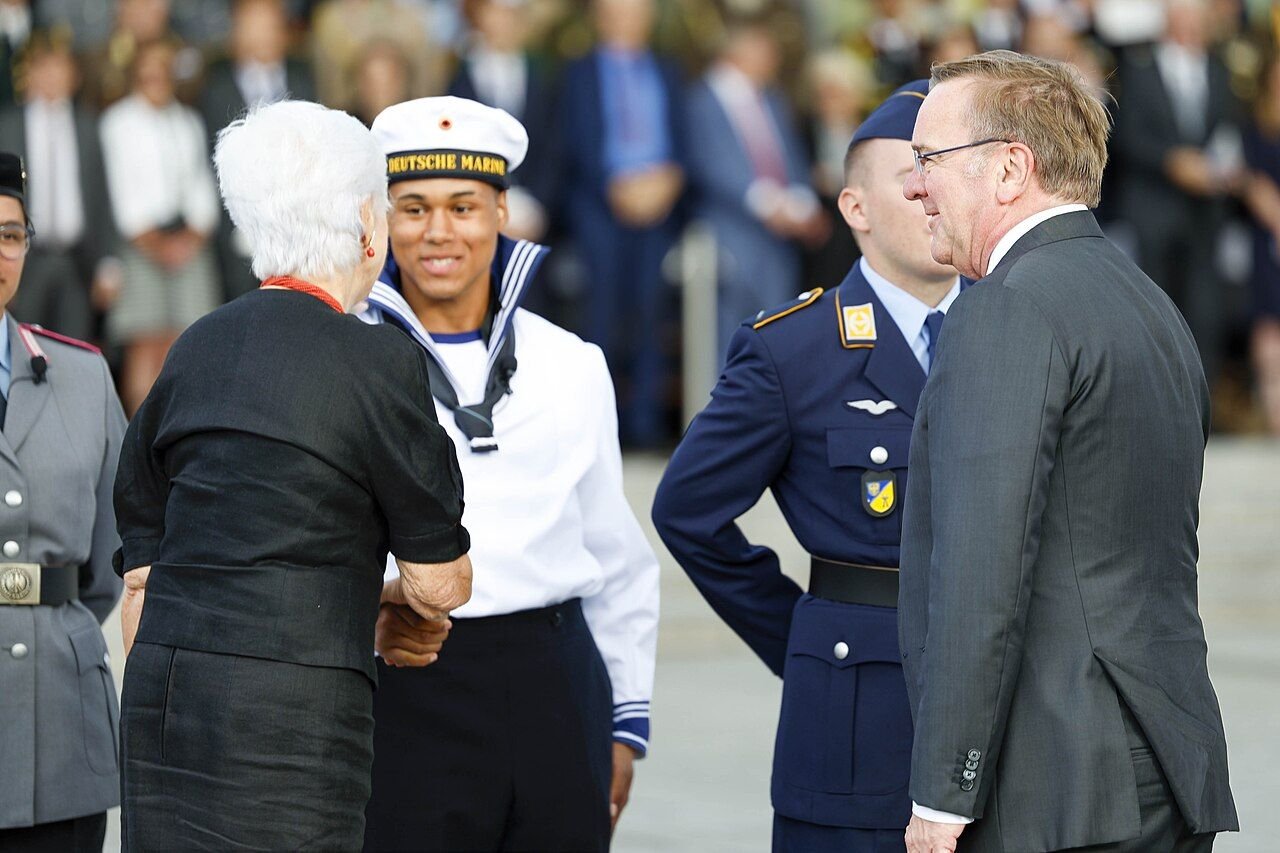
German Defence Minister Boris Pistorius said on Friday he had apologised for calling Pentagon policy chief Elbridge Colby's opposition to Ukrainian deep strikes into Russia "stupid", but said he would not withdraw his criticism.
Tuesday's testy exchange at NATO's Brussels headquarters exposed a rift between Washington and Europe over Ukraine's military strategy of trying to take the fight inside Russia in the nearly five-year-old war since Moscow's invasion.
"In hindsight, I actually think the choice of words was inappropriate, and I didn't really think it was appropriate even shortly after," Pistorius told Politico, saying he had used an unfortunate turn of phrase as a non-native speaker at a news conference.
"I shouldn't have done that," he noted, adding that he had called Colby on Wednesday to discuss the incident. "I apologised for my choice of words, but I also made it clear, and he sees it the same way, that we simply have different views on the matter."
Colby had criticised Kyiv for long-range strikes into Russia at a meeting of the so-called Ramstein Group of Ukraine's military backers, which discussed how to supply more arms ahead of the winter as Russia steps up hits on civilian infrastructure.
"While the public conversation focuses on the spectacle of deep strikes designed to incur pain on the Russian population, our assessment is that such strikes have not been effective in driving an end to the war, nor do they contribute to blunting Russia's advances on the front line," Colby said.
Ukrainian deep strikes, especially targeting infrastructure such as commercial warehouses of Wildberries, the Russian equivalent of Amazon, might serve to harden the Russian population's resistance, Colby said.
Asked at a news conference whether he shared Colby's position, Pistorius said criticising strikes like that in Russia to destroy strategic military and military-used targets was "quite a stupid thing".
"Instead of criticizing that, we should rather criticize and talk about the terroristic strikes every night and every day on energy, water, and heating infrastructure in Ukraine," Pistorius said, speaking in English.
Pistorius stressed that Germany's position on Ukraine's long-range operations had not changed, and that decisions on their use were for Ukrainians to make. Germany supports Ukraine in developing and producing long-range weapons, but does not determine how Kyiv uses them, he explained.
There was no immediate comment from the Pentagon or Colby on the apology.
The dispute laid bare a widening difference between Washington and its European allies over how Kyiv should conduct its defence, even as Europe and Canada have stepped in to fund arms supplies and Russia intensifies attacks on Ukrainian infrastructure ahead of winter.