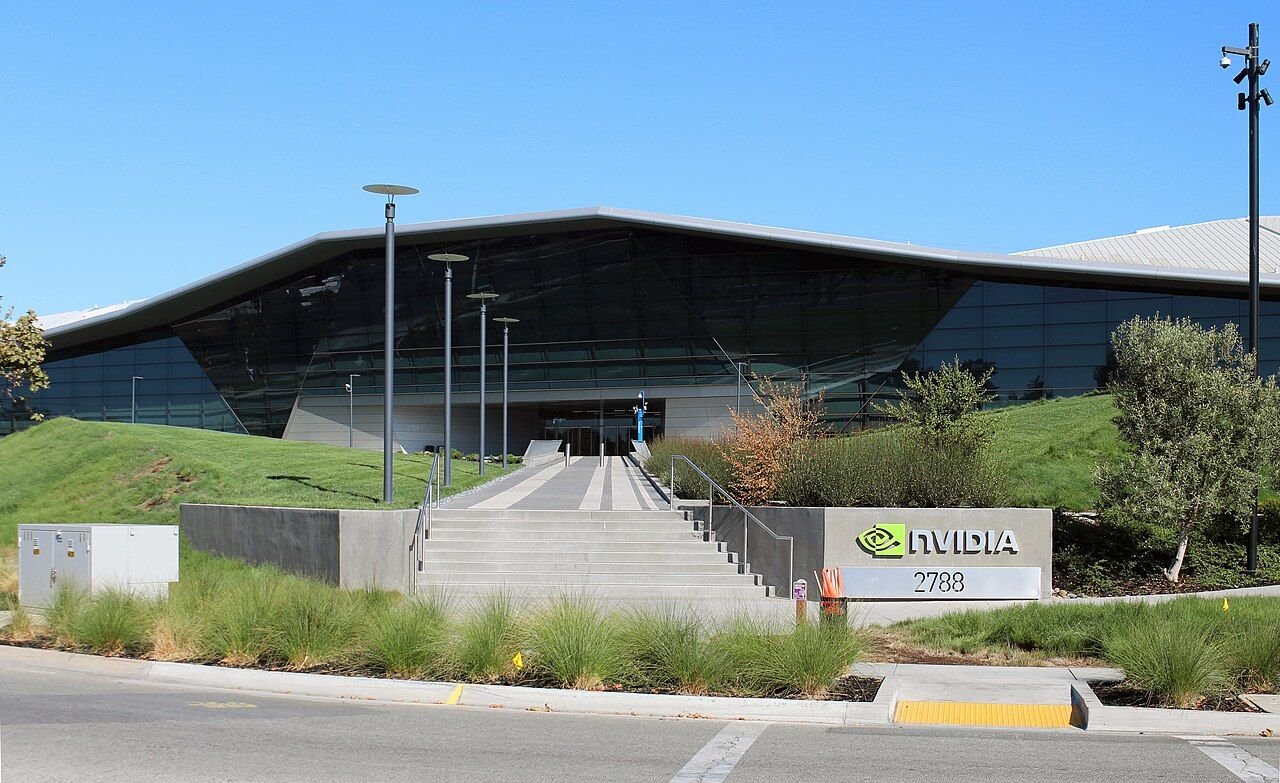
Nvidia has told its manufacturing partners to stop shipping servers containing its chips to Malaysia, Singapore, Thailand and Indonesia, the Financial Times reported on Thursday, as the United States tightens export controls aimed at preventing Chinese companies from gaining access to advanced artificial intelligence computing power.
Citing three people familiar with the matter, the Financial Times reported that manufacturing partners such as Dell Technologies and Super Micro Computer, which package Nvidia's chips into servers, told buyers in the four Southeast Asian countries that Nvidia would not allow their pending orders to leave factory floors.
It was unclear whether the halt would be temporary, as Nvidia and its manufacturing partners work through how to comply with Washington's new export controls, the report said. Nvidia declined to comment, while Dell, Supermicro and ByteDance did not respond to requests for comment.
The freeze follows an interim final rule from the U.S. Commerce Department's Bureau of Industry and Security, announced on November 16 and effective November 19, that requires export licences for advanced computing chips and certain overseas data centre operations in five countries: Malaysia, Singapore, Thailand, Indonesia and Brazil.
The rules aim to close a route through which Chinese technology companies have accessed advanced American chips. In recent years, Chinese AI developers have turned to the four Southeast Asian countries to rent computing power through cloud providers that bought servers equipped with Nvidia graphics processing units, sidestepping direct export restrictions.
Under the new rules, overseas data centres that provide significant computing capacity to companies in China, Macau and other restricted jurisdictions must obtain licences. Existing operations have 90 days from the effective date to secure the required approval if they want to continue providing covered services.
The restrictions do not amount to a blanket ban on all chip shipments to Southeast Asia. They apply to specified products, transactions and users, and the regulation provides an exemption for certain shipments to end users headquartered in the United States, or whose ultimate parent company is headquartered there, subject to reporting requirements.
The measures came days after Nvidia reinstated Jensen Huang as chief executive on November 23 following his brief removal from the role earlier in the month. On Wednesday, the Commerce Department added Singapore-based cloud company Megaspeed to its Entity List, meaning companies including Nvidia now need a U.S. licence to ship covered goods to it. The Justice Department is also investigating whether Megaspeed broke U.S. export rules.
The four Southeast Asian countries have become favoured destinations for Chinese AI developers seeking access to Nvidia's most advanced chips, whose direct exports to China are restricted by Washington. Nvidia's Singapore subsidiary reported $104 billion in revenue for 2025, a 72 percent rise from the prior year.


