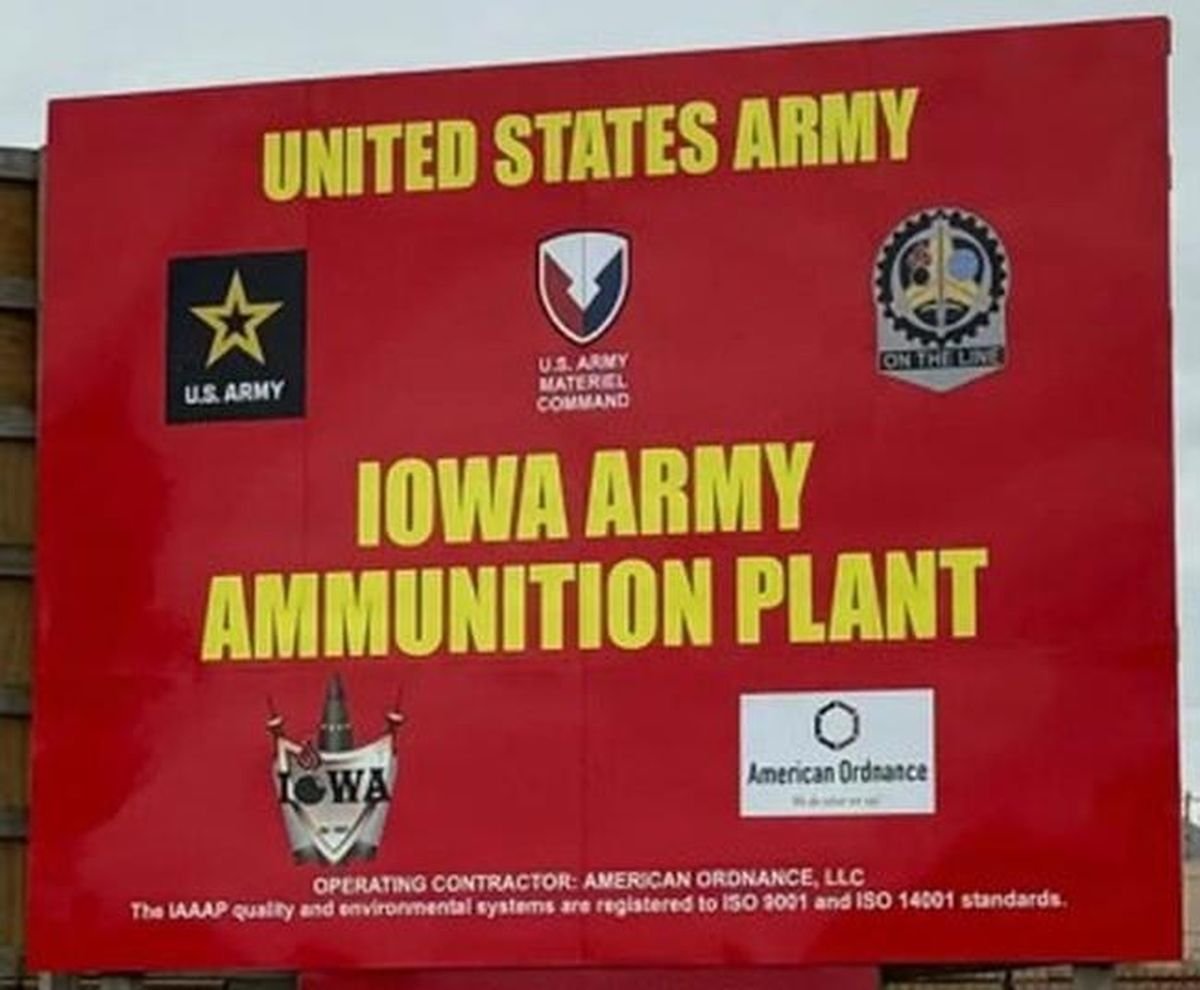
MIDDLETOWN, Iowa — The town of Middletown was relatively quiet more than 90 minutes after the U.S. Army detonated its stockpile of deteriorating lead azide on Wednesday morning, with damage minimal and no known reports of broken residential windows or structural damage, according to the Des Moines Register.
The detonation of 68 barrels of lead azide — about five tons of the unstable primary explosive — took place at about 9 a.m. CST at the Iowa Army Ammunition Plant after days of delay and a last-minute court battle. The Army has said the material, stored at the plant since 2009 and in some cases several decades old, had degraded to the point that it could have exploded on its own, and that it had to act now before coming cold weather deteriorated it further.
“The Army’s controlled, mitigated detonation exceeded all expectations and was a HUGE success. The threat of an uncontrolled spontaneous detonation has been eliminated,” President Donald Trump said.
Maj. Gen. Eric Shirley said in an update from the Army that mitigation measures were very effective in minimizing the effects of the blast. “As we saw in the immediate aftermath through overhead coverage, all of the lead azide barrels were definitively removed,” he said. EPA monitors continued to show readings at 0.0 micrograms two hours after the blast.
Former Georgia congresswoman Marjorie Taylor Greene, who has publicly pulled away from her previous support for President Donald Trump and his administration, questioned why the Army plant had canceled its contract to explore chemical neutralization to dispose of the lead azide.
The U.S. Department of Agriculture moved to help farmers near the blast site. Secretary of Agriculture Brooke Rollins said she was grateful that the mitigation efforts had been successful, and USDA Under Secretary for Farm Production and Conservation Richard Fordyce was deployed to Iowa to support farmers. More than 140 USDA offices within a 100-mile radius of the detonation site are assisting farmers in real time and will continue to do so in the post-detonation period, the department said.
The blast also cast a shadow over an environmental cleanup at the plant that had lasted 20 years and cost almost $140 million and had just completed in June — before the Army’s scheduled detonation, which is expected to pollute the site all over again for years to come, according to the Des Moines Register. Iowa Governor-elect Rob Sand demanded “immediate transparency” on lead storage at the plant.