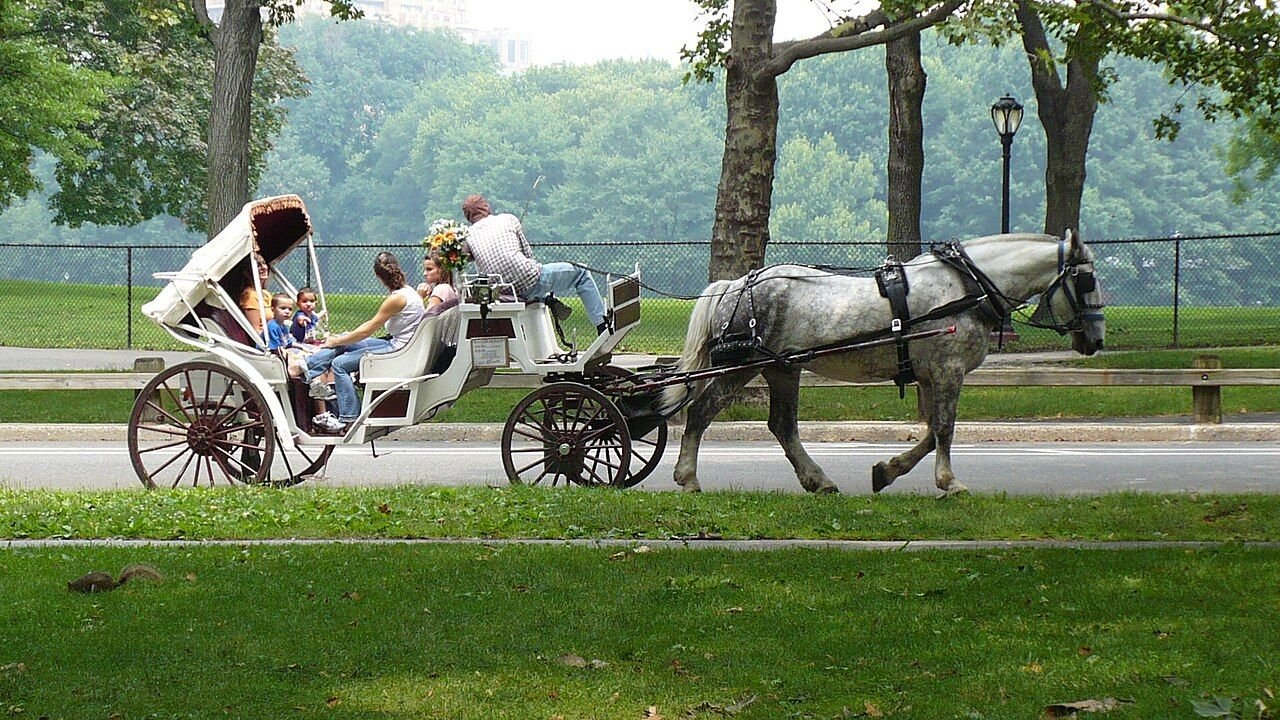
New York City Mayor Zohran Mamdani signed a horse-drawn carriage ban into law on Thursday, putting an eventual end to a Central Park fixture that has been around for more than 160 years, the Wall Street Journal reported. The new law, known as Romanch's Law, will phase out the horse-carriage industry by June 1, 2028.
"Our city has changed and now it is time for our laws to change too," Mamdani said at the signing. "As I sign this bill into law, I do so with a deep sense of both gratitude and obligation toward the more than 200 New Yorkers who make up the horse-carriage industry today. I have the utmost respect for the work that carriage drivers and stable hands do and for the more than 160 years of contributions they have made to our city."
The City Council approved the bill in October in a 40-7 vote. The law is named after Romanch Mahajan, an 18-year-old Indian tourist who was killed in June after being thrown from a runaway horse carriage in Central Park, USA Today reported. Opposition to the carriages mounted this summer after Mahajan's death and after a horse named Deniz collapsed suddenly in Central Park in June while pulling a carriage with passengers. Animal-rights activists have long called the practice inhumane for horses, while opponents of the law say it will leave roughly 170 drivers, owners and stable hands out of a job.
Transport Workers Union Local 100, which represents the drivers, filed a lawsuit on Thursday in the U.S. District Court for the Southern District of New York challenging the law. The complaint says the ban violates the Fifth Amendment by taking property without just compensation. "This bill is an unconstitutional abomination," Transport Workers Union International President John Samuelsen said. "It strips horse-carriage owners of the city-issued medallions that they purchased for hundreds of thousands of dollars — without mandating or guaranteeing compensation." Medallions can cost as much as $400,000, according to the union.
Mamdani released a framework this week to assist medallion owners, carriage drivers and stable hands while the industry winds down, including a program to buy back medallions, a stipend for drivers and stable hands to attend workforce training and career development classes, and career counseling and entrepreneurship support. A full transition plan will be released in April, he said. About 100 horses pull the carriages through Central Park, and the law requires the horses to be dealt with humanely after their retirement, prohibiting their sale for slaughter or for use in another horse-drawn carriage business. The signing makes New York City the largest metro area in the United States to ban the tradition; Philadelphia, Chicago and San Antonio have outlawed the practice over the last five years.