A federal judge in Boston on Friday appeared open to blocking the Trump administration from freezing thousands of refugees' green card applications and from enforcing a rule that would make it easier to deport refugees stripped of their legal status.
U.S. District Judge Myong Joun questioned whether the administration was allowed to indefinitely halt the processing of green card applications from refugees, and said he was "struggling" to understand its separate decision to cut the time they have to contest terminations of their legal status.
Assistant U.S. Attorney Vincent Engingro told the hearing that the changes were needed for security and public safety, arguing that lax processes in the past had allowed "bad apples" to gain admission and that anyone admitted during Democratic President Joe Biden's tenure warranted a re-review.
Erez Reuveni, a lawyer at Democracy Forward representing several refugee advocacy organizations and four individuals from Afghanistan, Ethiopia, Colombia and Iran, argued that more than 100,000 refugees were being put at risk by agency actions that are "many times over unlawful." He said the policies betrayed "this nation's promise, following the horrors of World War Two, to never again deny refuge for those fleeing oppression and persecution."
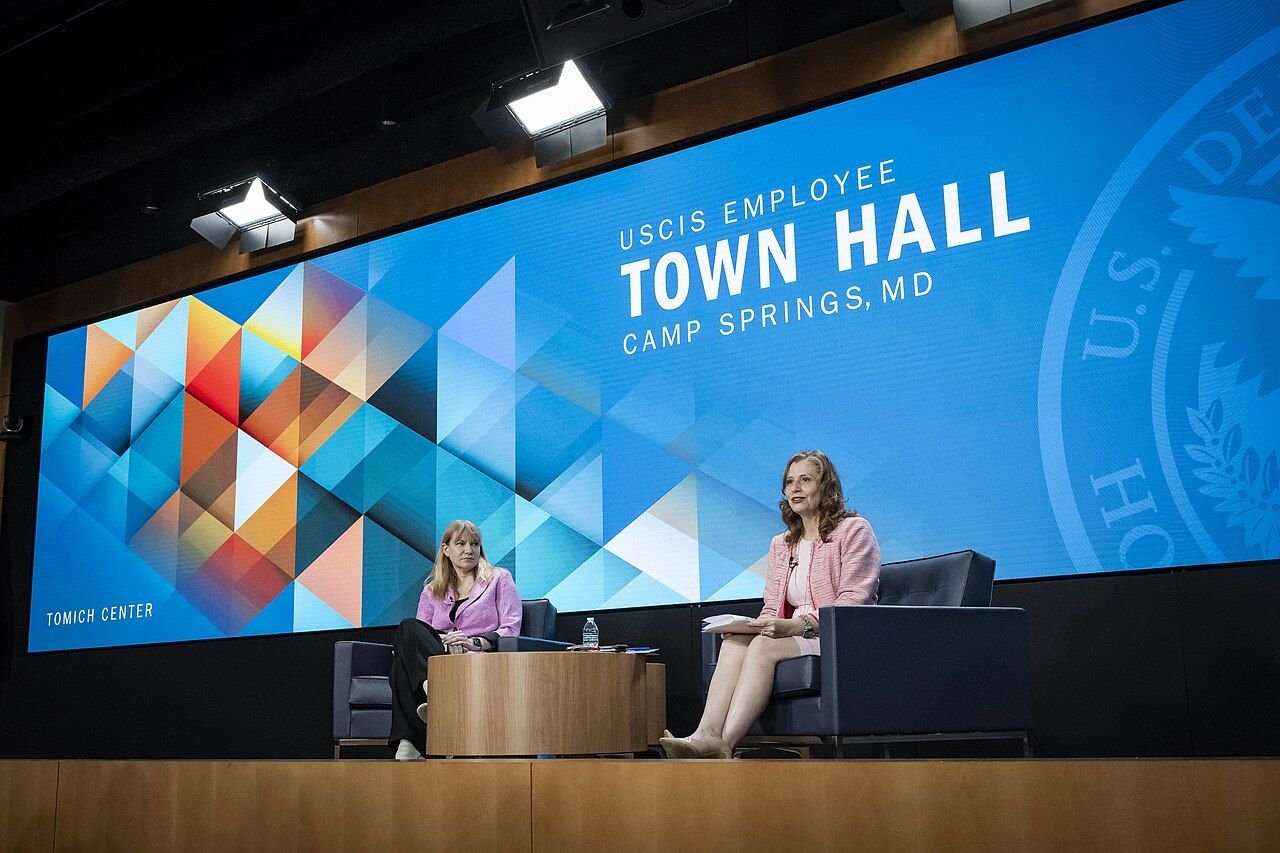
The policies were adopted as part of President Donald Trump's hardline immigration agenda after he last year suspended admissions through the U.S. refugee resettlement program. In November 2025, USCIS Director Joe Edlow issued a memo ordering a halt to all processing of applications for permanent residence for refugees who entered under Biden and directing that previously admitted refugees be reviewed and re-interviewed. About 113,000 such applications are pending.
USCIS later, in an interim rule issued on October 14, slashed the time refugees have to contest a decision to terminate their status from 30 days to 10. The plaintiffs say that could affect as many as 186,000 refugee cases.
Lawyers for the plaintiffs argued that the processing freeze and re-vetting were not authorized under the Refugee Act of 1980, and that USCIS breached an obligation to allow public comment on shortening the time to contest revocation decisions. That rule has been temporarily halted by the court while Joun considers the case.
The judge, a Biden appointee, questioned whether 10 days was realistically enough for a refugee to gather the paperwork needed for a defense, comparing it to renewing his dog's license, a process he said takes about 45 days. "All of that takes time, and almost every year I miss that January 1 deadline," Joun said.
Engingro argued that the rule let immigration authorities move quickly and avoid giving refugees extra time to evade arrest and deportation. "I believe it's important to act swiftly when it's determined that an individual is not entitled to refugee status or does not meet the definition of a refugee," he said.
The case is Partnership for the Advancement of New Americans et al v. Edlow et al, U.S. District Court for the District of Massachusetts, No. 1:26-cv-14817.