ROME — Italy's parliament has given final approval to a law banning face-covering veils such as the burqa and niqab in schools and capping the share of foreign students with poor Italian in first-year classrooms at 30 percent, in one of Prime Minister Giorgia Meloni's most contentious education reforms.
The Chamber of Deputies approved the measure on Thursday, November 26, by 142 votes to 112, with four abstentions. The Senate had already approved the legislation on November 20. The ban came into force immediately.
The law, part of the government's school decree known as the Decreto Scuola, prohibits students, parents and others taking part in school activities from covering their faces in a way that prevents identification — on the entire school grounds, not only in classrooms. Violations can draw administrative fines of €200 to €1,000, with parents liable when minors break the rule. Headscarves that leave the face uncovered are not affected, and exceptions exist for certified medical reasons and some educational activities.
From the 2027–28 school year, first-year classes at every level will be limited to 30 percent foreign pupils who do not have an adequate command of Italian. The cap applies to children who do not hold Italian citizenship, were not born in Italy and have not attended an Italian preschool for at least two years; in secondary school, pupils must have spent at least three years in Italian schools to be exempt.
The law also requires parents of children who struggle to integrate to attend free Italian lessons, and calls in social services if a child faces serious difficulties settling in at school.
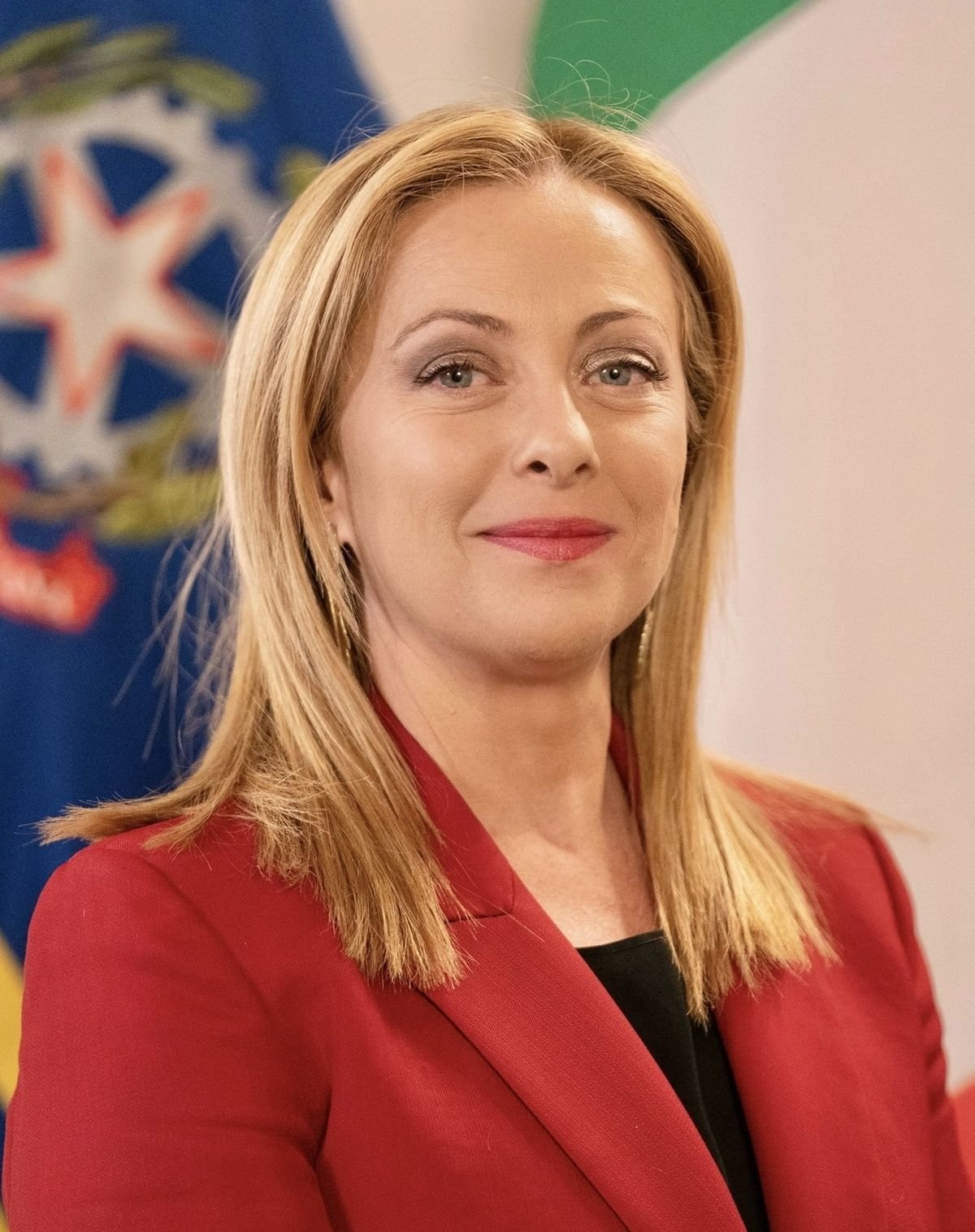
Meloni, who leads a three-party right-wing coalition, has defended the measures as a matter of security and integration. "When a woman — or worse, a young girl — is forced to cover her face, she is being denied fundamental rights and the very integration that is so often loudly championed," she said in a television interview after the cabinet adopted the decree in September. She has also argued that Italian children should not find themselves outnumbered in their own classrooms.
Opposition lawmakers denounced the law as discriminatory and protested during the vote. Education Minister Giuseppe Valditara has said there are 34,000 school classes in Italy in which more than 30 percent of pupils are foreign, though most would not be affected because the cap targets new arrivals rather than children born in Italy or who attended kindergarten there. A 30 percent limit has existed since a 2010 ministerial memorandum, but it was flexible; the new law makes it binding.