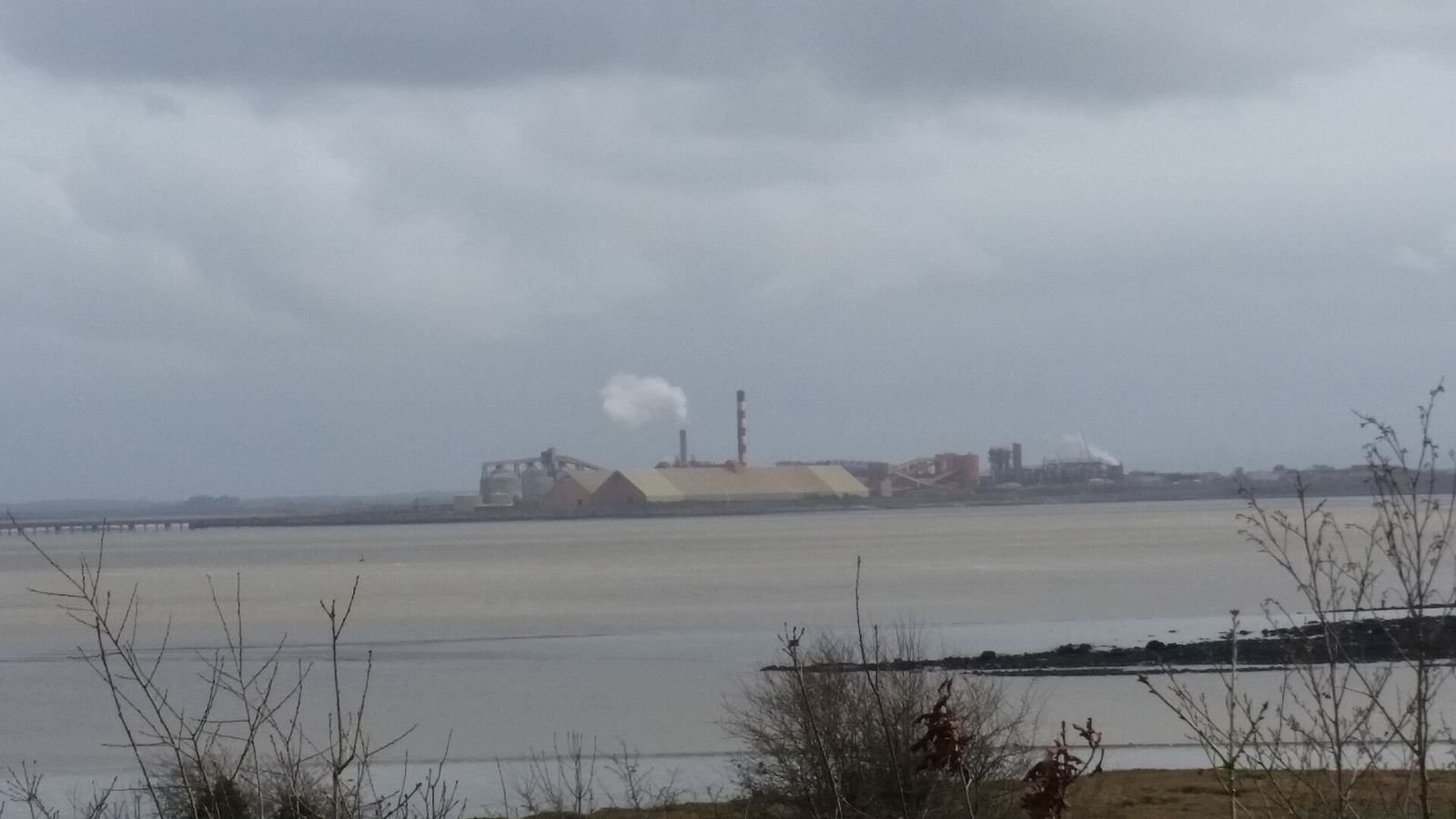
A cargo ship named the Karin sat moored this week on Ireland's River Shannon estuary, preparing to sail for Russia laden with a white powder that can be forged into weapons vital to Moscow's war on Ukraine.
The material is alumina, the key ingredient in aluminium, which goes into everything from toothpaste and lipstick to missiles, aircraft and drones. The Russian-owned Aughinish Alumina refinery in County Limerick, Europe's largest alumina refinery, regularly sends shiploads of the substance directly to St. Petersburg and other Russian ports.
The activist group Alumina 22, which is lobbying to have the trade sanctioned, estimated that about 491,307 metric tons of alumina was shipped from Ireland to Russia between March and October. The shipments remain legal under European Union rules, because alumina sits outside the bloc's sanctions regime.
An investigation by the Organized Crime and Corruption Reporting Project and the Irish Times, published earlier this year, traced alumina from Aughinish to Russian aluminium smelters, particularly Krasnoyarsk and Sayanogorsk in Siberia, with some of the resulting aluminium sold to a Moscow-based metals trader that supplies Russian defence contractors. Trade data showed that more than half of Aughinish's alumina exports since 2023 went to Russian smelters owned by Rusal, the Russian aluminium producer that bought the plant, built in the 1970s, in 2007.
The Irish government has declined to publish the findings of its own investigation into the shipments, but handed them to the European Commission, which drafts EU sanctions packages. Irish government minister Niall Collins told The Associated Press that "there's absolutely no evidence" the material is ending up in military supply chains. Enterprise Minister Peter Burke, who is in charge of sanctions enforcement, said Ireland has not found evidence that is happening, but also no proof that it is not. Aughinish Alumina said in a statement that its product "has no connection to the Russian military supply chain" and that it hired an independent company to provide monthly audits to Irish authorities for "enhanced traceability."
The shipments have grown in importance since Russia's full-scale invasion of Ukraine in 2022, after two alumina factories, one in Australia and one in Ukraine, stopped exporting to Russia, cutting its supplies by about 40 percent, according to a 2026 report by the Economic Security Council of Ukraine. Roughly 17 percent of Rusal's alumina supply now comes from Ireland, the report said. Rusal makes virtually all of Russia's aluminium, according to the U.S. and Australian governments.
Ireland is facing calls to stop the shipments as dozens of European leaders gather in Dublin this week to discuss support for Ukraine at the European Political Community summit.