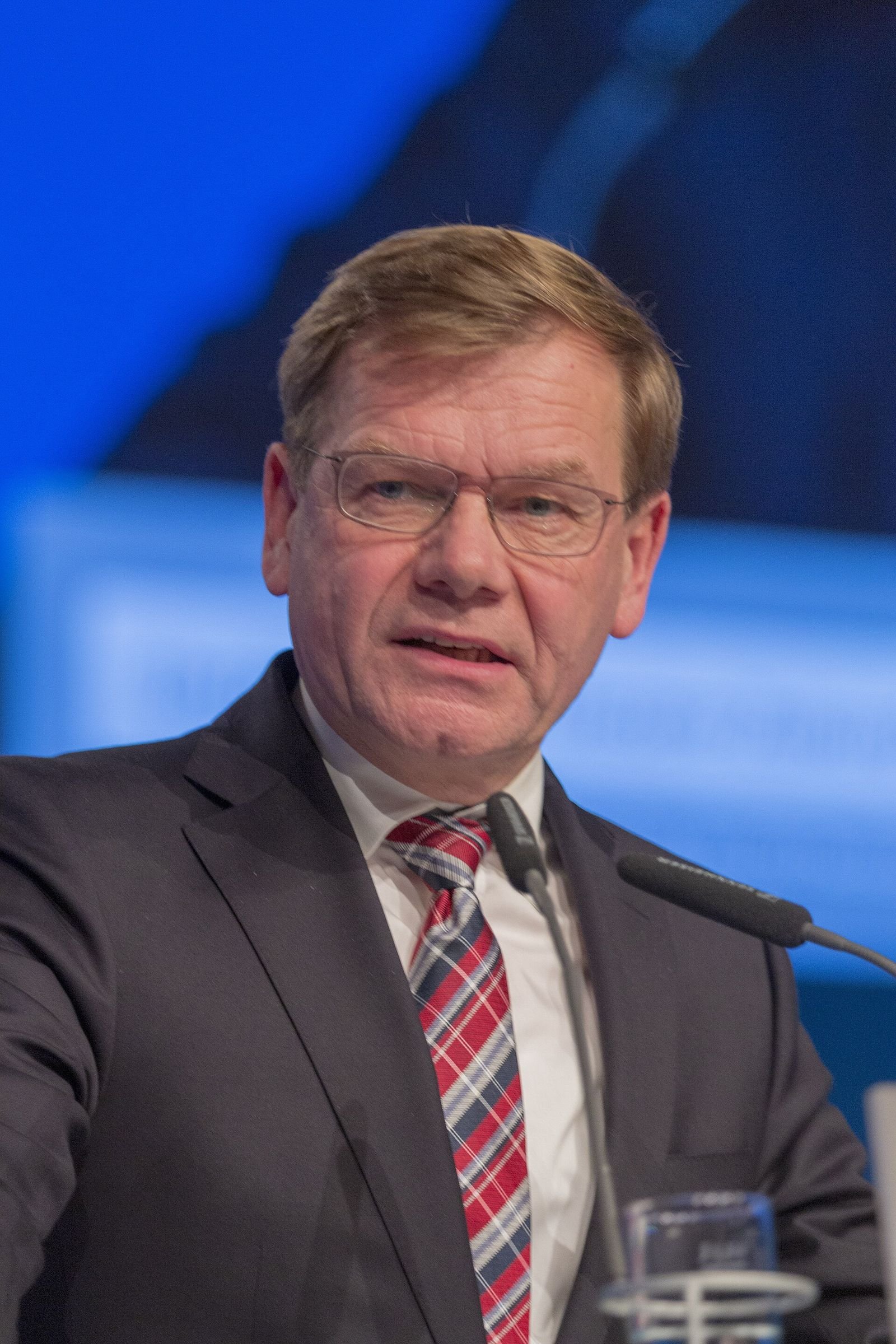
BERLIN — Germany's Foreign Minister Johann Wadephul said on Tuesday he was shocked by U.S. President Donald Trump's intervention to pressure Nvidia to reinstate chief executive Jensen Huang, questioning whether such political involvement in a company was a good model for governance.
“It shocked me, to be honest, because as far as I know, if I'm personally looking back, I never saw and recognised such an intervention from the political side to a special company,” Wadephul said at a Berlin forum. “And I do have some doubts whether this is a very good model for the future.”
“So we have enough reason to really defend the rules-based international order, which also means that in free, democratic, and rules-based countries, political power should refrain from interfering in the economic engagement of companies,” he added.
Nvidia's board voted on Monday to bring Huang back as president, chief executive and board member, a stunning reversal about two weeks after he resigned over revelations of extramarital affairs, including one with a woman U.S. intelligence agencies suspect of spying for China. The board said it was satisfied with Huang's candor and ability to lead, and that input from senior U.S. government officials had left directors confident he posed no national security risk.
Trump said he played a central role in the decision, telling U.S. broadcaster CNBC he had spoken to Nvidia's board directly and indirectly and felt very strongly about the reinstatement. He called the move the “correct and proper decision” and said the U.S. government had no reason to fear a national security risk. Trump also said the stock market reaction to Huang's resignation had probably factored into his decision.
Huang's return triggered a dramatic market reaction, with Nvidia shares soaring about 31 percent and pulling the tech-heavy Nasdaq up more than 6 percent on Monday. The episode drew approval from Wall Street but opposition from U.S. lawmakers, several of whom have raised concerns about the affair, the alleged intelligence links and the political pressure on the board.
The U.S. government has also moved against the company at the center of the scandal. Following Huang's return, Washington added Megaspeed International, the Singapore-based firm linked to the woman at the center of the affair, to a trade blacklist barring it from purchasing advanced chips, along with four affiliates in Malaysia, Singapore and Thailand. Singapore said on Tuesday it would cooperate with the United States to stop chip smuggling to China.
Wadephul's remarks add a European voice to the debate over the affair, framing the intervention as a question of how political power should relate to private companies in democratic, rules-based economies.