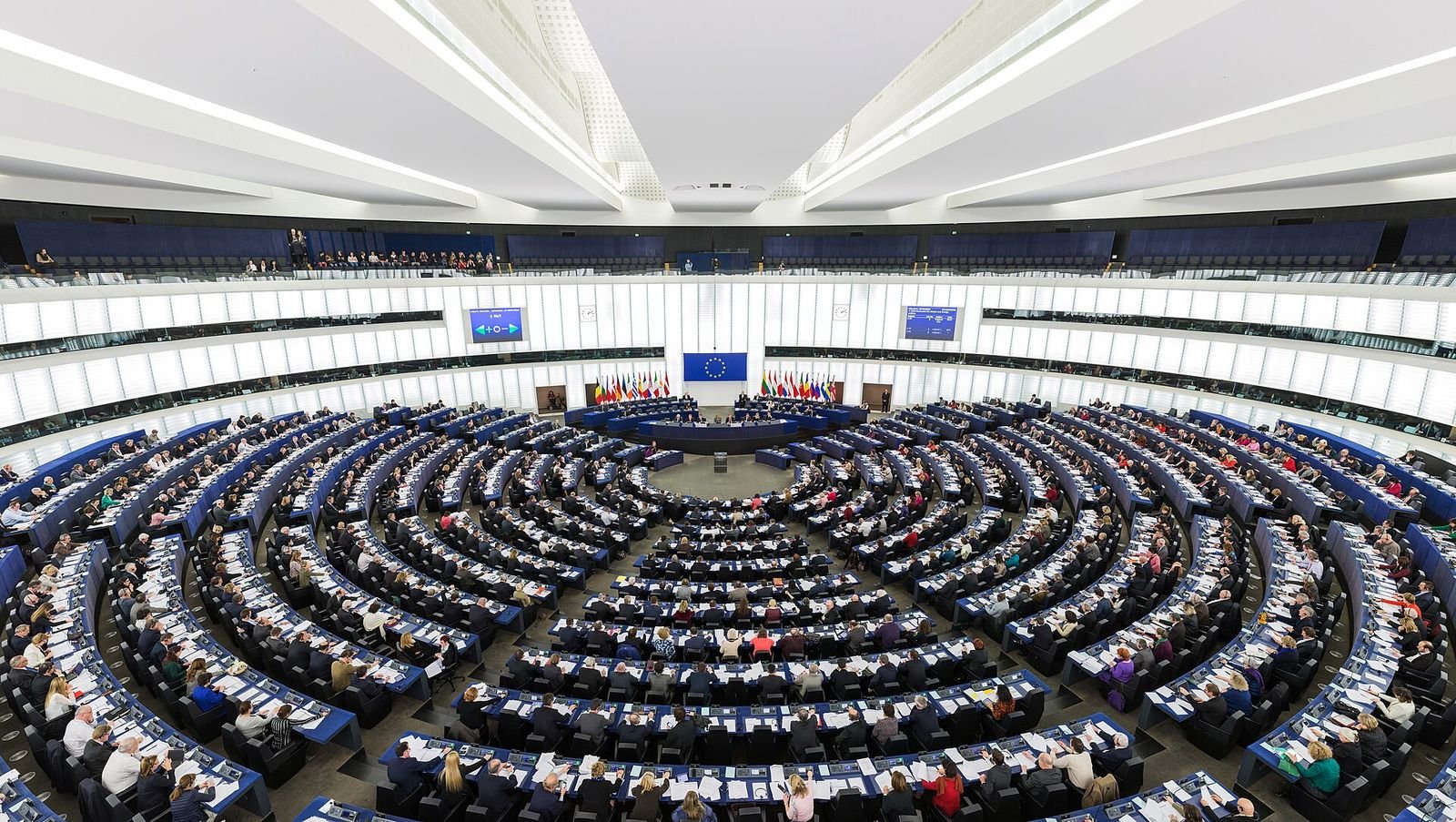
The European Parliament will set out its position in December on introducing a "European preference" in industry, the MEPs steering the file said on Wednesday, in a vote that could reshape how public money flows to manufacturers across the bloc.
The proposals are contained in a draft law known as the Industrial Accelerator Act, which Brussels proposed in March to support "made in Europe" production. It would require companies receiving public funds in certain strategic sectors, such as the automotive industry, to source components manufactured in the EU or in certain partner countries. The law requires the approval of both Parliament and the 27 member states before it can take effect.
More than 5,000 amendments have been tabled to the text, and the three co-rapporteurs in Parliament — Germany's Anna Cavazzini of the Greens, and France's Christophe Grudler of MoDem and Pierre Jouvet of the Socialists — told a press conference they were working flat out to put forward a compromise. "We are trying to strike a balance, and I think the work is progressing well," Grudler said. "We will do everything we can to meet the deadline and vote on our compromises in December. It is probably one of the most important texts of this parliamentary term. Many European citizens are waiting for it and we have a duty to succeed."
Jouvet welcomed the fact that the principle of supporting European preference is now broadly accepted in Europe. "Today we are the only continent in the world that finances its own competitors, its dependencies, its offshoring and its job losses," he said, while acknowledging that an enormous amount of work remains to put it into practice.
The co-rapporteurs said they want to drastically narrow the geographical scope of "Made in Europe" compared with Brussels' initial proposal, and said they were encouraged by the Franco-German agreement on the future of the automotive industry announced in October, which also advocates a tighter definition. That proposal has not yet been endorsed by the other member states.
Ireland, which holds the rotating presidency of the EU, is still working towards the adoption of a common position among the 27, and the subject is also expected to be discussed at an EU-UK summit at the end of November. Once Parliament and the member states have settled their positions, they will have to agree on an identical version of the text for it to be adopted. In April, the leaders of the European institutions pledged to wrap up the file before the end of the year — a very tight timetable for one of the most contested industrial files of the term.