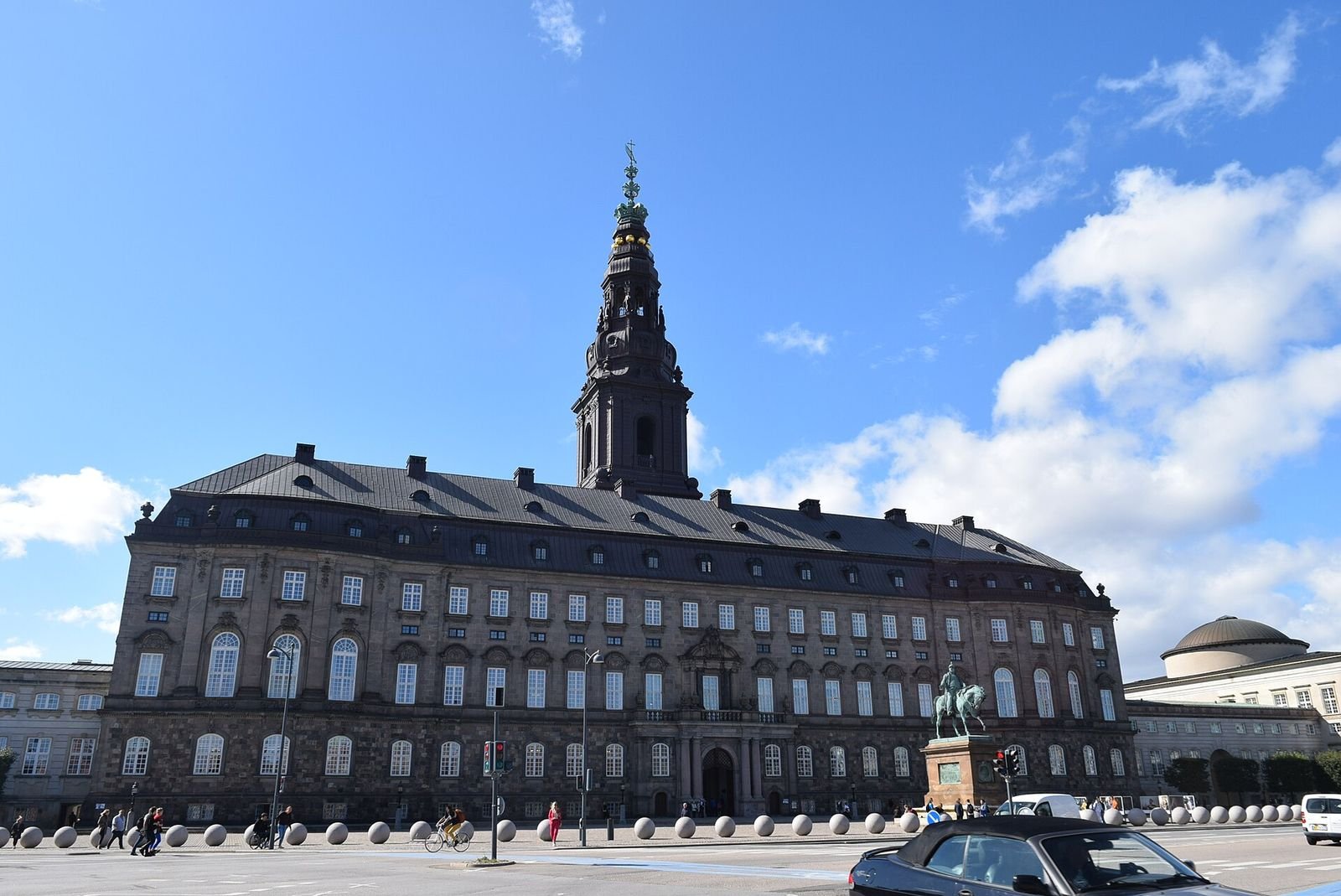
Denmark's parliament on Thursday unanimously ratified a security agreement with the United States covering Greenland, clearing the final legislative hurdle for a deal aimed at bolstering security in the Arctic and North Atlantic and easing tensions over President Donald Trump's desire to annex the island.
In the 179-seat parliament, known as the Folketing, the 109 members present voted in favour of the text, which was adopted without opposition or abstention. The vote followed the second reading of the text and went through without any debate. Greenland's parliament had passed the agreement in early November by 16 votes, with seven abstentions.
The United States, Denmark and Greenland signed the agreement in New York on September 22 to resolve tensions after Trump repeatedly threatened to take control of the mineral-rich, self-governing Danish territory of 57,000 people. Trump's refusal to rule out military or economic force to acquire the island triggered a diplomatic crisis within NATO in January and months of intensive negotiations. The new pact supplements a 1951 accord on the U.S. military presence in Greenland.
The executive agreement does not need approval from the U.S. Senate and will enter into force once Denmark's foreign ministry informs the United States in a diplomatic note that procedures are complete. It expands the U.S. military's role in Greenland, including permission to establish a "Golden Dome" missile defence system and to build two military bases, while reaffirming Danish sovereignty and Greenlanders' right to self-determination. The deal is to remain in force even if Greenland gains full independence, and it blocks countries outside the European Union and NATO from strategic sectors in order to stop China or Russia from gaining influence over the territory, particularly through investments.
Denmark's Defence Minister Jeppe Bruus told Reuters the signatories will now start work on a new Greenland law to screen outside investors on security grounds and on plans for the two new U.S. military bases outlined in the agreement. "I expect that the US will now also start to be more concrete on the purposes and the arrangement around these two areas," Bruus said. Naaja Nathanielsen, a Greenlandic member of the Danish parliament, said Trump's pressure had led to distrust in Greenland towards the U.S. administration. "It's been really difficult for Greenlanders these past two years. It's been seeping into every aspect of our lives," she told Reuters, adding that she hoped the agreement would open a path to dialogue. The U.S. ambassador to Denmark, Kenneth Howery, welcomed the vote, calling the agreement "a tremendous accomplishment" that bolsters the security of all sides, including NATO.
Analysts cautioned that ratification is a beginning rather than an end. Mikkel Vedby Rasmussen, a political science professor at the University of Copenhagen, said that with the treaty in hand the United States will be able to demand greater influence on decisions with security policy implications and on part of the extraction of strategic resources. Other experts say the agreement does not add much U.S. military access, since the northernmost U.S. base is already in Greenland, which lies on the shortest route from Europe to North America. Trump said last month that "massive oil, gas and mineral exploration" was set to begin on Greenland, a contentious statement on a territory that has banned new drilling for crude, and Denmark has said any resource extraction must respect local law.