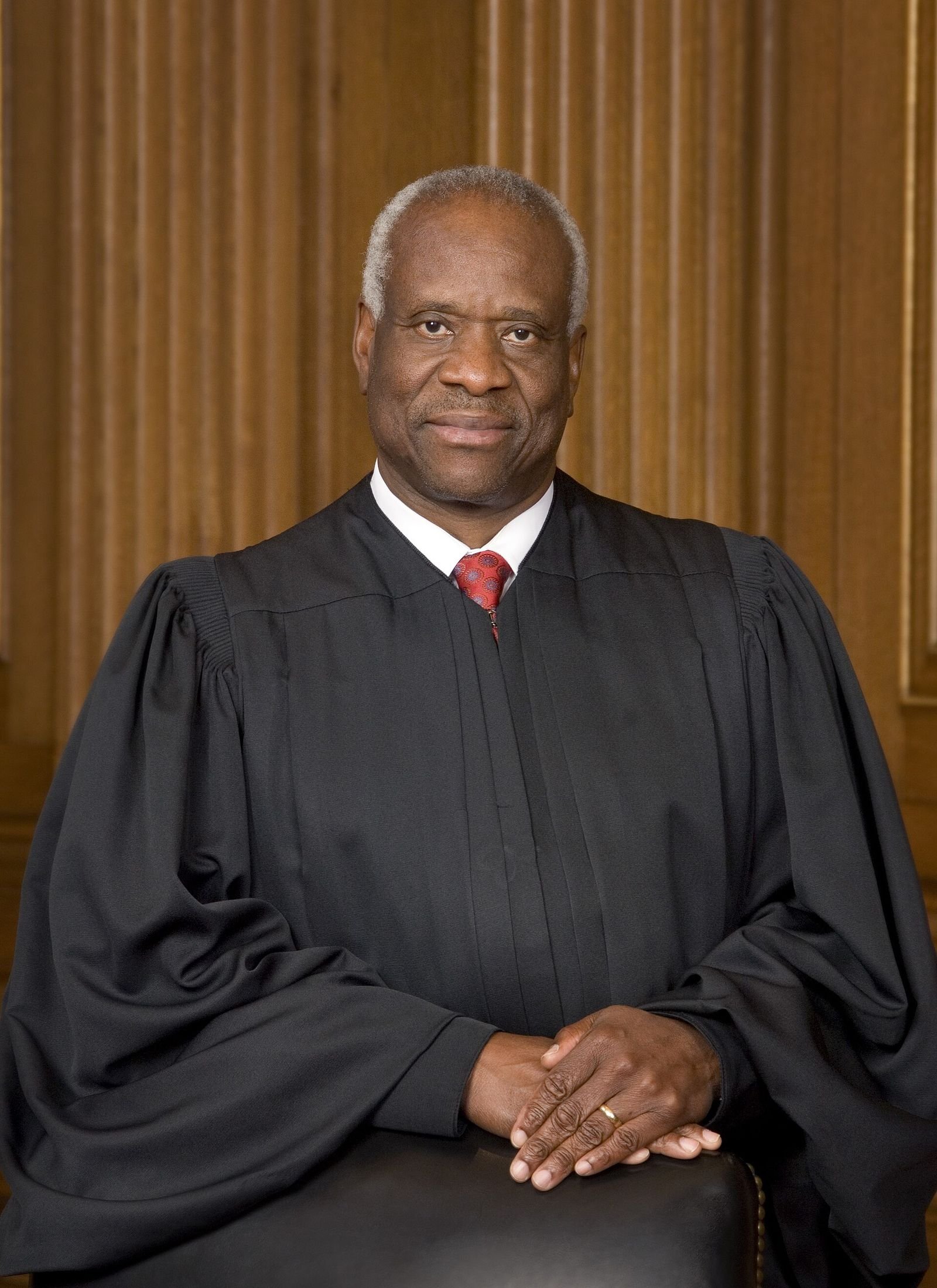
Justice Clarence Thomas warned Monday that the Supreme Court is leaving the door open for states to compel speech from private citizens by declining to hear a challenge to a California law.
The court declined a petition from Dr. Azadeh Khatibi, a California ophthalmologist, and the nonprofit Do No Harm, who argued that the state forces her to make statements she disagrees with while teaching courses doctors must take to keep their licenses. Thomas, joined by Justice Samuel Alito, dissented from the decision not to take up the case.
The dispute centers on California's 2019 law, Assembly Bill 241, which took effect in 2022 and requires continuing medical education courses involving direct patient care to include instruction on implicit bias — either through examples of how it affects treatment decisions and health outcomes or strategies for addressing its contribution to health care disparities. California requires licensed physicians to complete 50 hours of state-approved continuing education every two years.
A unanimous three-judge panel of the U.S. Court of Appeals for the Ninth Circuit upheld the dismissal of the lawsuit in July 2025, ruling that the courses count as government speech because of California's extensive regulation of the medical profession, and therefore fall outside First Amendment free-speech scrutiny. The appeals court declined to rehear the case in December 2025.
"When, as here, the government does not issue its own messages but instead requires private speakers to communicate the government's viewpoint, the First Amendment applies," Thomas wrote in his nine-page dissent. "A State cannot regulate its way out of First Amendment scrutiny. We should not permit the government-speech doctrine to be wielded as a cover for censorship or a cloak for compelled speech."
Thomas also argued that the court's 2022 decision in Shurtleff v. Boston, which the Ninth Circuit relied on, "is leading courts astray" and should be reconsidered. Justice Neil Gorsuch also said he would have accepted the case, but he did not join Thomas's dissent — leaving the challengers one vote short of the four needed for the court to hear arguments.
The court's refusal to hear the case leaves the Ninth Circuit's ruling in place but does not settle whether California's requirement violates the First Amendment. The justices issued no opinion on the merits, and the constitutional question remains unresolved.