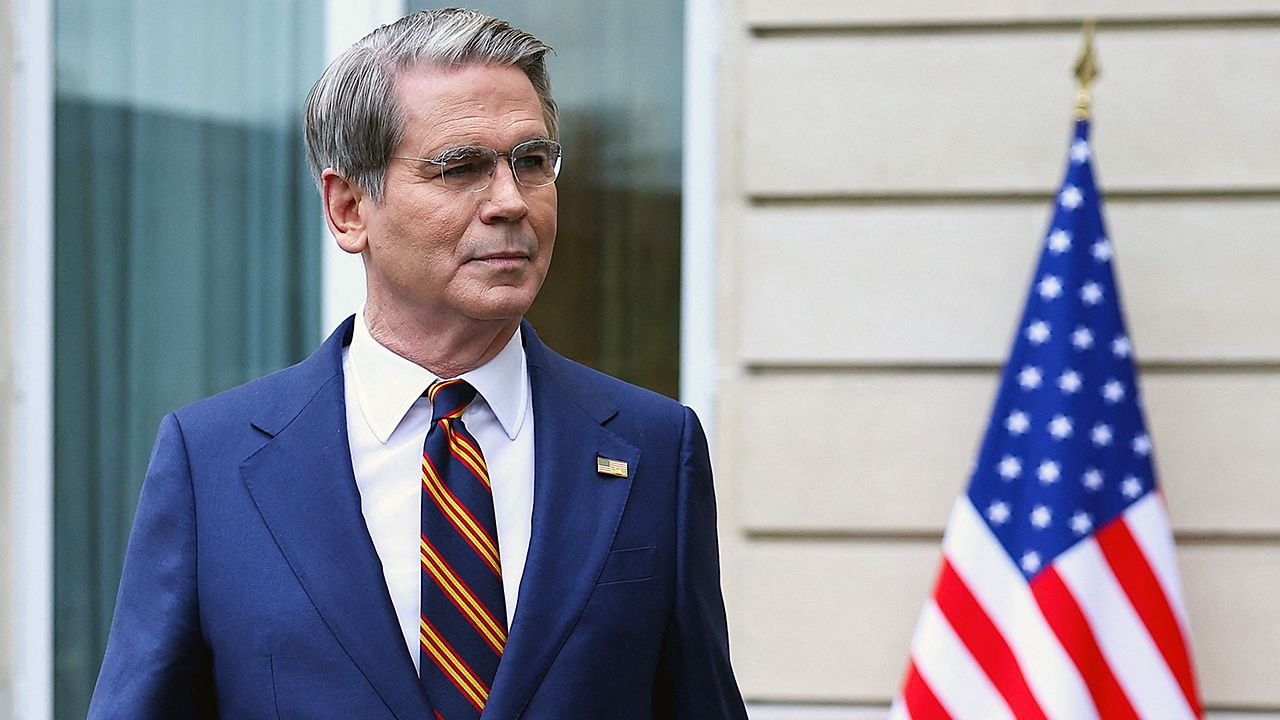
Treasury Secretary Scott Bessent on Sunday sought to calm Americans after a week of bank technology outages, telling CBS News that customers should not worry about their financial institutions and comparing the disruption to the side effects of a vaccine.
Speaking on Face the Nation with Margaret Brennan, Bessent was asked about thousands of customers who had trouble reaching some of the country's biggest banks during tech outages this past week, a problem that prompted some people to withdraw cash, CBS News reported. Bessent said banks have been at the forefront of cybersecurity for decades, face attacks every day, and remain by far the most resilient companies in the U.S. economy. He attributed last week's glitch to banks patching their security systems, saying the patches themselves can cause a temporary fault, and pointed to J.P. Morgan as an example. Americans, he said, should think of it as a vaccine: an arm may hurt and a person may feel a little bad the next day, but long-term immunity and resiliency increase, according to the CBS transcript.
The outages affected JPMorgan Chase, Wells Fargo and Bank of America, leaving thousands of customers struggling to access banking services, The Hill reported via Wisevoter. JPMorgan Chase attributed its Monday, November 16 outage to a software bug in its hardware systems and said customers could still access their accounts and funds, according to the report. The bank problems came in the same period as a nearly 24-hour outage affecting Microsoft Outlook and Teams, and Bessent noted that banks experience cyberattacks every day, every week and every month. President Donald Trump downplayed the outages on Tuesday in Manila, Philippines, The Hill reported. The episode has raised questions about how resilient core banking technology is during routine security upgrades, since patching is meant to strengthen defenses but can itself interrupt access to deposits and payments.
Bessent also addressed anxiety in financial markets and the role of Nvidia, which Brennan described as sometimes called the central bank of AI because it uses its cash to finance data centers and boost demand for its own sales, CBS News reported. Bessent said Nvidia remains fantastically profitable with near unlimited worldwide demand for its chips, and noted that the board has slowed things down with the chief financial officer now in charge. He linked the past week's market sell-off to a combination of factors, including Democrats moving ahead in the polls and then winning on Election Day, Democratic positions on the AI buildout spooking investors, hawkish remarks from the Federal Reserve, and a substantial tightening in financial conditions over recent months, according to the transcript.
On data centers, Bessent said he had not spoken to Trump about the president's Friday press-conference remarks vowing tremendous penalties for companies that build data centers in other countries, CBS News reported. Bessent said he was sitting in that press conference but did not get a chance to speak to the president afterward. He framed Trump's concern as preventing a big technology transfer offshore, noting that 97% of high-end chips are now made in Taiwan and pointing to large TSMC fabs being built in Arizona as part of an onshoring push. Bessent clarified that the policy targets American companies and is not reversing U.S. encouragement of data centers in Gulf allies such as the United Arab Emirates, according to CBS News. He added that the AI industry has done a poor job explaining itself to the public and needs to rebuild trust with communities where centers are built.
Bessent said the administration still needs answers from Nvidia over allegations involving advanced AI chips sent to China, CBS News reported. Seven days after saying he wanted answers within 10 days, Bessent said the administration has been in touch with temporary management, lead directors and lawyers but does not yet have the answers it needs. He stressed that a culture of non-compliance remains a possibility to be established, not a settled finding, and said the board is moving quickly to determine whether any problem existed and at what level of the company. On reports of handshake deals, Bessent argued that deals of that size still leave bills and money movements that can be traced. He also discussed Megaspeed, the Singapore-based company at the center of scrutiny, saying Nvidia took it off its vendor or sales list in August 2025, and defended a hard line at the H200 chip threshold while distinguishing companies that do business with the Chinese military from the military itself, according to the transcript.