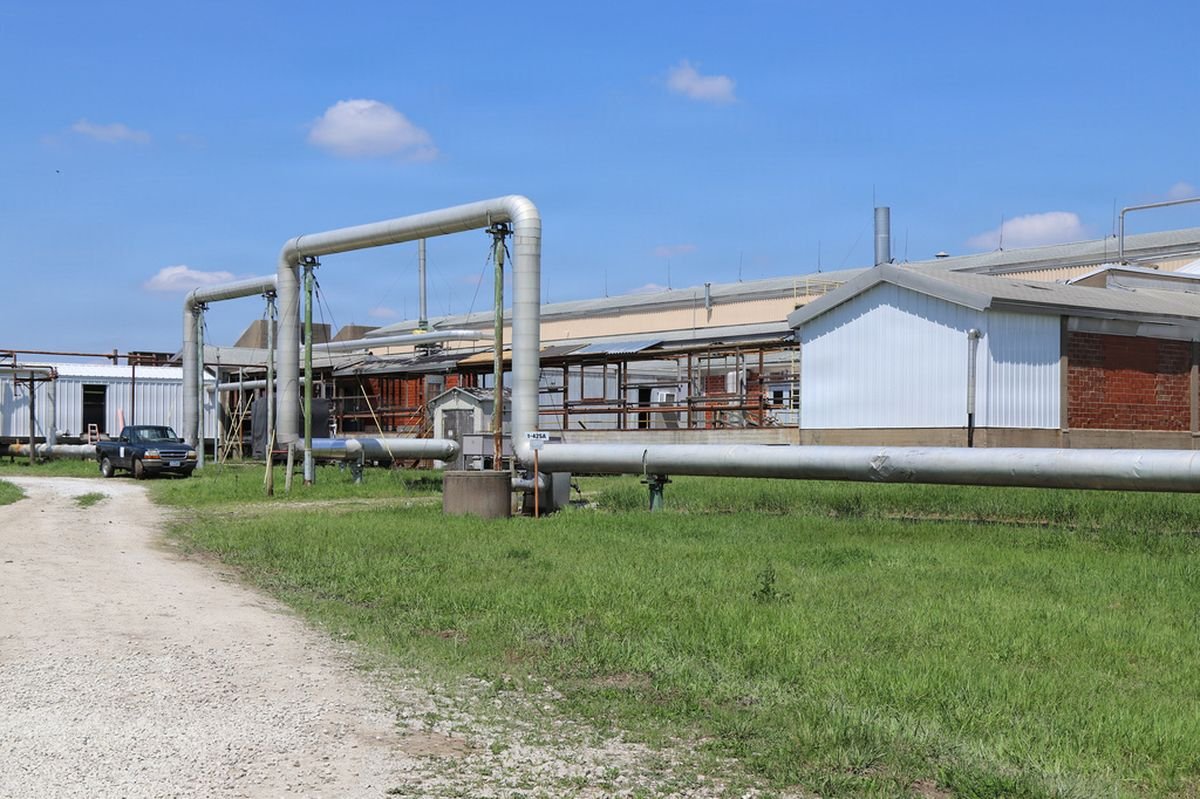
The Justice Department on Sunday asked a federal appeals court to lift its pause on a permit allowing the U.S. Army to detonate nearly five tons of material containing lead azide at an Iowa munitions plant, saying the Army intends to carry out the detonation on Tuesday, CNN reported. The Army, in coordination with the Environmental Protection Agency, plans to destroy nearly 70 drums of lead azide, a compound used to detonate munitions, at the Iowa Army Ammunition Plant in Middletown, according to the report.
In a filing on Saturday, the Justice Department argued that the court's order "does not enjoin or otherwise prohibit the Army from acting under a separate legal authority," CNN reported. The Army says the degraded material could explode on its own as temperatures drop. "The real choice, in other words, is not between a detonation and no detonation. It is between a planned and mitigated detonation and an unplanned and unmitigated explosion," the filing said, according to the report. The department cited a federal regulation that exempts responses to an "immediate threat" to human health, public safety, property or the environment from EPA permitting requirements, and said Col. Aaron Teller, commander of the Army's 71st Ordnance Group, had determined the lead azide poses "an immediate threat," CNN reported.
A federal appeals court temporarily paused the EPA permit on Thursday after environmental groups sued, CNN reported. The detonation, originally scheduled for Friday morning, had been moved to Monday. The Army discovered during "routine stockpile surveillance" in March that lead azide housed in bunkers had been degrading, according to Acting Army Secretary Adam Telle, and an Army FAQ distributed to the community last month described the degraded material as "extremely unstable and sensitive to even slight friction or movement," the report said. The EPA emergency permit would allow the detonation between November 13 and February 11, 2027, according to CNN.
The plan has drawn heavy pushback from Iowans and politicians concerned about a lead-dust plume spreading over Iowa, the Mississippi River and into parts of Illinois, CNN reported. Thien Chau, a senior attorney at Earthjustice, which represents the environmental groups, said in a statement on Sunday that the Army "seemed more concerned over the weekend with finding a way to sidestep the judicial process than on meeting the public's demands for greater transparency, notice to affected communities, and far stronger protection of people, property, and the environment from serious harm," according to the report. Iowa Gov. Kim Reynolds activated a state emergency operations center on Friday, officials in Illinois warned residents about dust spilling into their state, and the Federal Aviation Administration restricted flights around Middletown from Monday through Wednesday, CNN reported. The City of Fort Madison said Saturday it was notified the detonation would most likely occur either Monday or Tuesday, according to the report.
Lead is unhealthy at any level and especially dangerous to children, health officials said, according to CNN. Cedar Rapids, more than 80 miles north of Middletown, is monitoring its drinking water supply drawn from wells along the Cedar River, while Iowa City officials said they did not know about the planned detonation until news began circulating early last week, the report said. Illinois officials advised residents to stay indoors on the detonation day with windows and doors closed for one to two days after as a precaution, CNN reported. The local National Weather Service office forecasts cooler, drier conditions on Tuesday with highs in the upper 30s and wind speeds expected near zero, according to the report.
The Army, in a joint statement with the Department of Health and Human Services and the EPA on Friday afternoon, said "the entire interagency is working together to ensure that the controlled detonation in Middletown, Iowa, is conducted in the safest fashion possible," CNN reported. Telle said officials had determined a controlled detonation was the option that posed the lowest risk to the public, according to the report. The Army had previously awarded a contract to MuniRem Environmental, a Georgia-based firm that uses chemicals to neutralize munitions, but later canceled the deal citing safety concerns, CNN reported, and a September letter included in court filings said the decision was supported by technical consensus across military and federal explosive safety authorities that detonation was the only safe method of treatment.