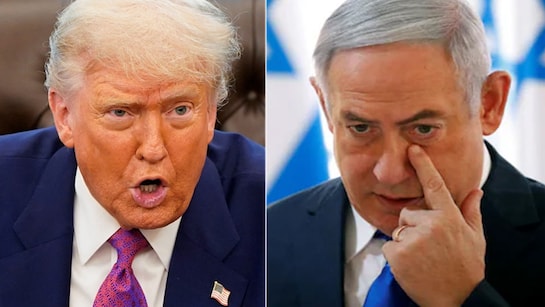
President Donald Trump has warned that Israel would risk losing crucial support from the United States if it proceeds with annexing the occupied West Bank, in remarks made to Time magazine and published Thursday.
In the interview, which took place by phone on October 15, Trump made clear that annexation would cross a line he had promised Arab partners not to violate. “It won’t happen. It won’t happen because I gave my word to the Arab countries. And you can’t do that now. We’ve had great Arab support,” Trump said. “Israel would lose all of its support from the United States if that happened.”
The comments came as both Vice President JD Vance and Secretary of State Marco Rubio issued their own warnings to Israel, cautioning that any annexation efforts would undermine the Gaza ceasefire agreement and threaten Trump’s broader Middle East peace initiative.
During a press briefing at Tel Aviv’s Ben Gurion Airport, Vance criticized recent moves by Israeli lawmakers to advance two bills paving the way for annexation. “The West Bank is not going to be annexed by Israel. The policy of President Trump is that the West Bank will not be annexed. This will always be our policy,” Vance said. He described the parliamentary vote as a “very stupid political stunt” that disrespects U.S. diplomatic efforts in the region.
Secretary Rubio echoed those concerns before leaving Washington, warning that annexation could jeopardize the delicate truce reached in Gaza after two years of devastating conflict. “I think the president’s made clear that’s not something we can be supportive of right now, and we think it’s potentially threatening to the peace deal,” Rubio told reporters.
The truce, brokered by the Trump administration earlier this month, has allowed for the release of several Israeli hostages and Palestinian prisoners, as well as the return of the remains of deceased captives. It has also led to a partial withdrawal of Israeli forces from Gaza, though tensions remain high on both sides.
Trump has sent a steady stream of top officials to Israel in recent weeks to reinforce the ceasefire and prevent a renewed outbreak of violence. Vance completed a three-day visit Thursday, while Rubio arrived for meetings with Israeli and Palestinian leaders.
In the same interview, Trump expressed optimism that Saudi Arabia would soon join the Abraham Accords, the U.S.-led initiative to normalize relations between Israel and Arab nations. “Yes, I do. I do,” he said when asked whether he believed Riyadh would sign on by year’s end.
He argued that regional obstacles that had previously delayed Saudi participation—namely the Gaza conflict and tensions with Iran—had now diminished following U.S. airstrikes earlier this year targeting Iranian military assets. “They had a Gaza problem and they had an Iran problem. Now they don’t have those two problems,” Trump said.
The former president also hinted at weighing a controversial decision regarding the possible release of Palestinian political leader Marwan Barghouti, a senior Fatah figure imprisoned in Israel. Barghouti’s release had been one of Hamas’s demands during previous ceasefire negotiations, according to Egyptian media reports.
While Washington continues to push for a durable peace framework, Israeli lawmakers’ annexation efforts and increasing settler violence in the West Bank have drawn criticism from U.S. officials and threatened to reignite tensions across the region.
As the situation remains fragile, Trump’s warning marks one of his clearest public rebukes of Israel since returning to office, signaling a shift toward prioritizing regional stability over unconditional support for Israel’s domestic political agenda.