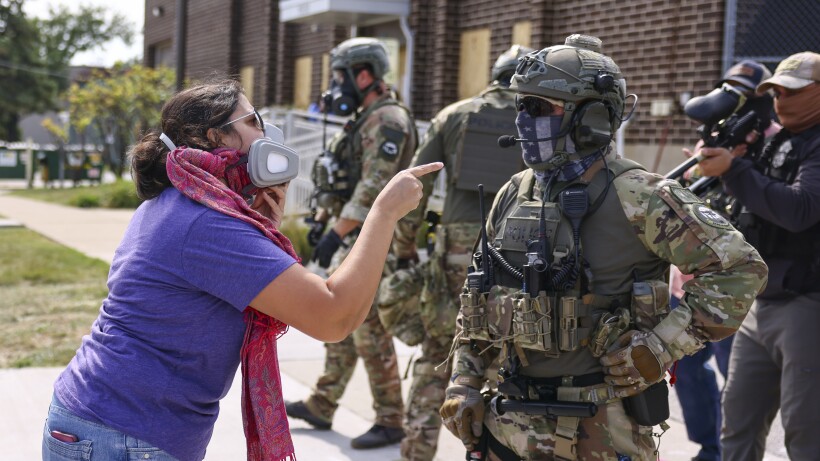
The power struggle between the Trump administration and Democratic-led states intensified this weekend as President Donald Trump authorized the deployment of National Guard troops to Chicago, just hours after a federal judge in Oregon temporarily blocked his plan to send troops into Portland. The two simultaneous developments reflect deepening divisions over the president’s aggressive use of federal authority in local matters tied to immigration enforcement and civil unrest.
In Portland, U.S. District Judge Karin Immergut issued a temporary restraining order that halts Trump’s attempt to federalize and deploy Oregon’s National Guard. The order came in response to a lawsuit filed by state officials who argued that the federal government’s plan violated state sovereignty and lacked any legitimate security basis.
Judge Immergut stated that the situation in Portland, while tense at times, did not justify the use of military force and criticized the administration’s portrayal of the city as being under siege. She emphasized that decisions about the state’s National Guard should remain under Oregon’s control, not the federal government’s.
The Trump administration had argued that nightly demonstrations near a federal immigration building in Portland had become dangerous and warranted military intervention. However, state and local leaders insisted the protests were largely peaceful and manageable with existing law enforcement resources. The ruling, which halts the deployment for now, will remain in effect until a follow-up hearing later this month, as the administration prepares an appeal to the Ninth Circuit Court of Appeals.
While Trump’s plan for Portland was blocked, the White House moved quickly to approve the deployment of 300 Illinois National Guard members to Chicago. Officials said the troops would assist in protecting federal property and immigration officers following a series of confrontations between protesters and federal agents.
The decision comes on the heels of an incident where federal border agents reportedly fired “defensive shots” at a woman who allegedly rammed her car into a government vehicle during protests outside a Chicago federal building. The woman was taken into custody after being treated for minor injuries, but officials have not disclosed whether charges will be filed.
The move to send troops to Chicago immediately drew sharp criticism from Illinois Governor JB Pritzker, who called the deployment “political theater” and accused the administration of overstepping constitutional boundaries. Pritzker said that state and local law enforcement already had the situation under control and that federal intervention would only inflame tensions further. City leaders echoed those concerns, warning that a military presence could escalate unrest instead of restoring order.
Despite the pushback, the Trump administration defended its actions, framing the deployments as a necessary step to maintain safety and enforce immigration laws. White House spokesperson Abigail Jackson said the president “will not stand by as violent agitators endanger federal officers or destroy federal property,” claiming that Democratic officials have failed to keep their cities safe.
The contrasting events in Oregon and Illinois highlight the growing political and legal battle over Trump’s use of federal forces inside the U.S. The Oregon ruling underscores judicial resistance to what many see as federal overreach, while the Chicago deployment shows the administration’s determination to assert control even over state objections.
As both situations develop, they are poised to become defining moments in the ongoing clash between state authority and federal power. With court appeals looming and tensions continuing on the ground, the standoff between the Trump administration and Democratic governors signals that the fight over the president’s domestic use of military forces is far from over.