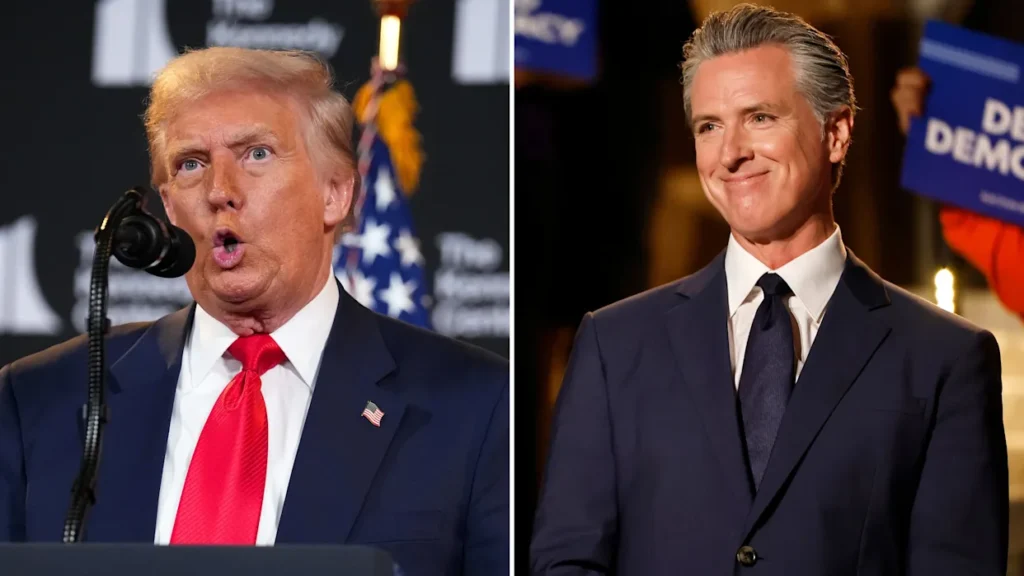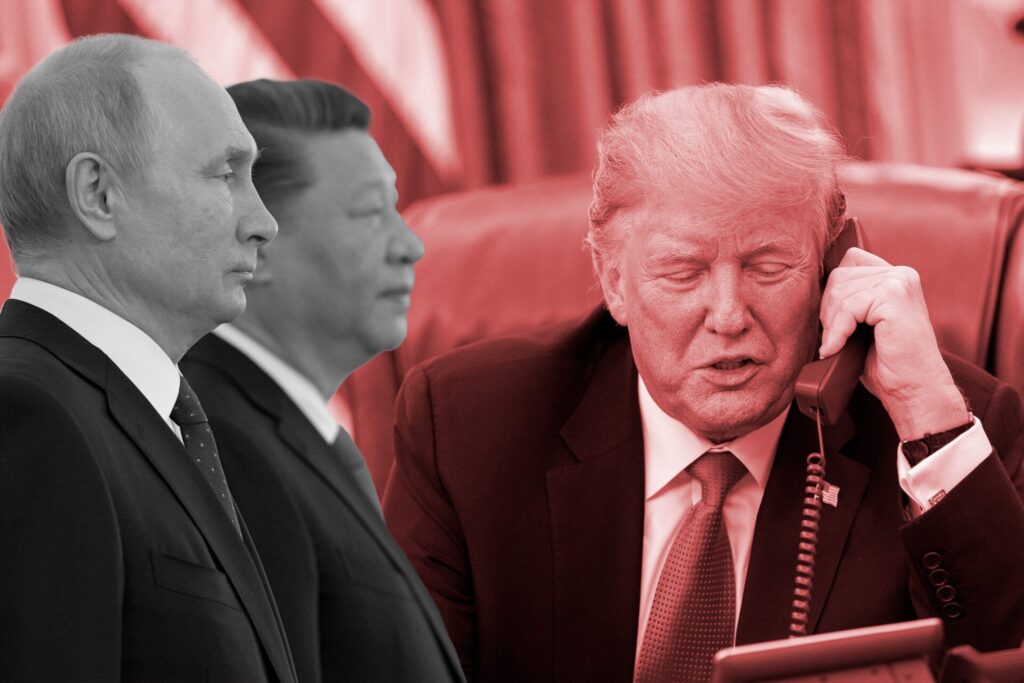
President Donald Trump has ordered the immediate resumption of U.S. nuclear weapons testing, bringing an abrupt end to the moratorium that has stood since 1992. The announcement was made on Thursday, shortly before his scheduled meeting with Chinese President Xi Jinping in Busan, South Korea. Trump shared the directive on his Truth Social account, framing the move as a response to what he described as “unfair advantages” held by Russia and China in nuclear weapons development.
In his statement, Trump said the Department of Defense would begin testing “on an equal basis” with other nuclear powers, claiming that both Russia and China had expanded their programs in recent years while the United States had fallen behind. He wrote that “Russia is second, and China is a distant third, but will be even within five years,” suggesting that renewed U.S. testing was necessary to maintain global dominance. The post sparked immediate debate among defense experts and world leaders about the potential consequences of restarting such tests.

The United States last conducted a full-scale explosive nuclear test in September 1992, just before signing the Comprehensive Nuclear-Test-Ban Treaty (CTBT), an agreement designed to halt the development and refinement of nuclear weapons worldwide. Although the treaty was never formally ratified by the U.S. Senate, successive American administrations from both parties honored the moratorium for more than three decades. Trump’s decision, therefore, represents a major shift in long-standing U.S. nuclear policy.
Officials within the Pentagon did not immediately clarify whether the president was calling for underground explosive tests at the Nevada Test Site or non-explosive missile and warhead evaluations. Experts note that the infrastructure for underground testing has not been active for decades and would take years to restore. It is estimated that restarting large-scale nuclear detonations could require as much as three years of preparation, including environmental assessments, safety measures, and new testing equipment.
The international response was swift. Russian officials condemned the announcement, warning that it could lead to a new arms race and further strain already fragile global security. A senior member of Russia’s parliament told state media that Trump’s order “destroys any remaining trust” between nuclear powers. China’s Foreign Ministry also criticized the move, urging the United States to uphold its previous commitments and avoid actions that could destabilize the global strategic balance.
In Washington, reactions were mixed. Some Republican lawmakers praised the decision as a bold step toward strengthening national defense and deterring adversaries. They argued that nuclear testing could help modernize aging U.S. warheads and ensure reliability. Democrats and arms control advocates, however, strongly opposed the order, warning it could provoke other nations to resume their own testing and erode decades of nonproliferation progress. The Arms Control Association described the decision as “reckless and unnecessary,” saying it risks dismantling the international framework that has helped prevent nuclear escalation since the Cold War.
Analysts believe Trump’s timing was deliberate, coming just as he seeks to project strength during ongoing diplomatic talks in Asia. By linking the decision to his meeting with President Xi, Trump appeared to be sending a message that the United States will not allow China to expand its nuclear reach unchecked. The announcement also coincides with reports that Russia recently tested new nuclear-capable missiles and underwater drones, both of which the Kremlin touted as signs of technological superiority.
Within the military community, the move has raised questions about its practicality. The U.S. National Nuclear Security Administration (NNSA), which oversees the nation’s stockpile, has long maintained that computer simulations and subcritical tests are sufficient to ensure weapon reliability without the need for explosive testing. Critics argue that restarting physical detonations would waste billions of dollars, draw international condemnation, and potentially expose nearby populations to radiation hazards.
For decades, the global effort to halt nuclear testing has been seen as one of the few areas of international consensus. Since the early 1990s, nearly every major nuclear power — with the exception of North Korea — has refrained from explosive tests. Renewing them could unravel the delicate trust that underpins global disarmament efforts, especially among nations in volatile regions such as South Asia and the Middle East. Observers warn that if the United States resumes testing, other countries like India, Pakistan, and possibly Iran could follow suit.
Trump, however, defended his decision as a matter of national security. Speaking aboard Air Force One after the announcement, he said that the U.S. must ensure “our weapons work as intended and that we stay far ahead of our rivals.” He added that he would still support eventual global denuclearization but insisted it must be “from a position of unmatched American strength.” His remarks reflect a long-held view within his administration that military superiority is the best guarantee of peace.
In the coming weeks, the Pentagon is expected to outline a more detailed plan for how the resumption of testing will be implemented. Officials may face both logistical and political hurdles, as environmental groups and international watchdogs prepare to challenge any attempts to conduct explosive trials. Regardless of the timeline, Trump’s decision has already set off a worldwide debate — one that could reshape nuclear policy and global security for years to come.