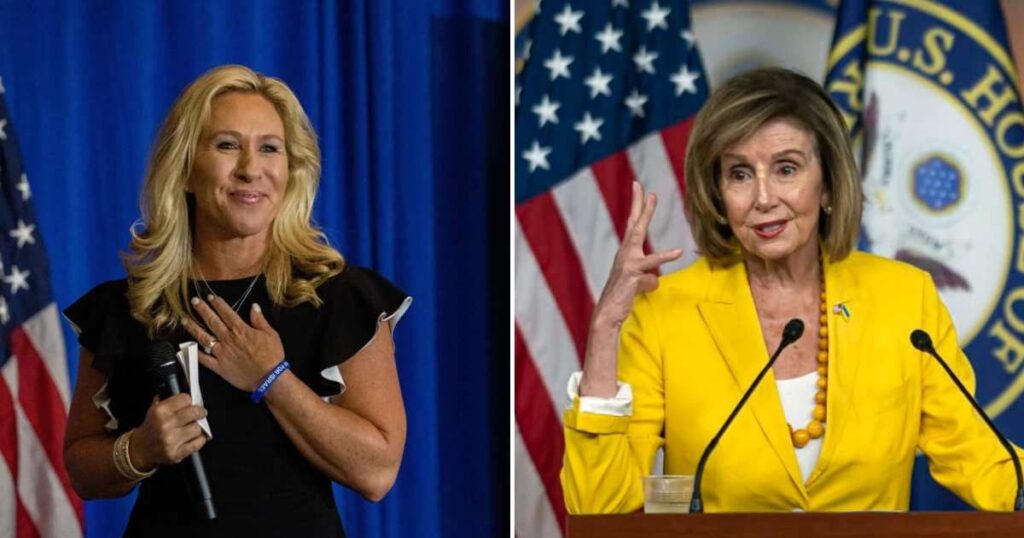
WASHINGTON, DC — The upcoming retirements of Rep. Marjorie Taylor Greene of Georgia and former House Speaker Nancy Pelosi of California have intensified debate over the long-criticized pension benefits available to members of Congress. Taxpayers covered more than $38 million in annual retirement payments to former lawmakers in 2022, and the latest departures have put that cost back in the spotlight.
Greene’s Retirement Date Ensures Pension Eligibility
Greene announced she will leave Congress on January 5, 2026, a timing that analysts say appears carefully aligned with federal pension rules. Members of Congress become eligible for FERS retirement benefits after five full years of service. Greene, sworn in on January 3, 2021, crosses that threshold just before stepping down.
Demian Brady of the National Taxpayers Union Foundation said the timing likely wasn’t accidental.
“It certainly seems like her retirement date was chosen to ensure she became vested,” Brady said. He noted that Greene’s pension will be relatively modest because of her short time in office, but still a meaningful benefit.
Using the standard FERS calculation, Brady projects Greene will receive about $8,717 per year starting at age 62—adding up to more than $265,000 over her lifetime.
Pelosi Set to Receive One of the Largest Pensions in Congress
Pelosi, who plans to retire in 2027, is poised to qualify for one of the highest congressional pensions under the current system. With nearly four decades in Congress and multiple years as Speaker of the House, her FERS benefit is estimated at around $107,860 annually, according to Brady’s analysis.
Pelosi’s long tenure highlights the broader cost of the pension program. In 2022, the average annual pension under FERS was $45,276, while retirees still enrolled in the older Civil Service Retirement System (CSRS) collected an average of $84,504.
Massie Revives Push to Eliminate Congressional Pensions
The spotlight on Pelosi and Greene has strengthened efforts inside Congress to eliminate these taxpayer-funded benefits. Rep. Thomas Massie of Kentucky, a longtime critic of the pension system, said he plans to reintroduce legislation aimed at ending FERS pension eligibility for House members.
Massie emphasized he does not fault Greene for accepting a benefit she was required to pay into.
“Representatives can’t opt out of FERS,” he said. “If a member is forced to contribute, it’s reasonable for them to receive what they paid for. But the system itself needs to change.”
Massie’s proposal includes both ending pensions for lawmakers and creating an option for members to decline participation, shifting retirement planning toward private-sector-style 401(k) savings.
DeSantis Echoes Call for Reform
Former congressman and current Florida governor Ron DeSantis—a co-sponsor of Massie’s earlier bill—added fresh momentum to the debate. DeSantis, who rejected his own pension while in Congress, reiterated on X that the system is outdated and unfair compared to what most American workers receive.
“End pensions in Congress,” he wrote, arguing that lawmakers already benefit from the Thrift Savings Plan, the federal version of a 401(k).
Growing Public Pressure
With two high-profile retirements exposing both the modest and the substantial ends of the congressional pension scale, calls for reform are gaining traction. Critics argue that lawmakers should not receive guaranteed lifetime benefits when many private-sector employees rely solely on personal retirement accounts.
For now, the pension system remains intact—but Pelosi’s and Greene’s exits have revived a longstanding debate over whether taxpayers should continue footing the bill for retirement benefits legislators no longer extend to most Americans.