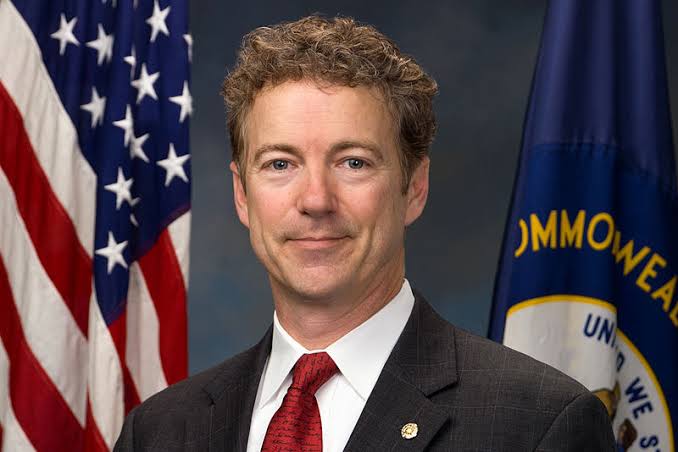
Senator Rand Paul attempted to ease tensions with former President Donald Trump on Sunday after being publicly criticized for voting with Democrats to extend the government shutdown and for challenging Trump’s decision to use military force against suspected drug traffickers in the Caribbean. Speaking on NBC’s “Meet the Press,” Paul said he still considers himself a supporter of Trump despite their policy disagreements.
Paul explained that he has known Trump personally for years, describing their friendship and mutual respect. He mentioned that he has played golf with the former president numerous times and defended him throughout the impeachment trials. Paul emphasized that his loyalty does not mean blind agreement, noting that his role as a senator is to voice concerns when he believes constitutional principles are at stake.
One of Paul’s main objections is Trump’s authorization of military strikes against suspected drug boats off the coast of Venezuela. He argued that such actions go against America’s long-standing legal and moral traditions, as they involve lethal force against individuals without due process or proof of guilt.
According to Paul, the military’s actions resemble acts of war rather than law enforcement operations. He pointed out that killing individuals without a formal declaration of war or identification of suspects contradicts fundamental American values. “When you kill someone if you’re not in war, you really need to know someone’s name,” he said, stressing that evidence should always precede the use of deadly force.
Paul also reminded viewers that historically, U.S. forces stop and board suspicious vessels rather than destroy them. He referenced Coast Guard procedures, explaining that most drug interceptions are carried out through boarding operations. Statistics show that about a quarter of ships searched by the Coast Guard turn out to be innocent, meaning that a policy of striking suspected boats could unjustly kill innocent people.
The Kentucky senator expressed concern over the distance involved in these military actions. The alleged drug boats are reportedly 2,000 miles from U.S. shores, far from posing an immediate threat. He suggested that such vessels are more likely trafficking drugs within the Caribbean region rather than targeting the United States directly.
Paul questioned the assumption that these boats pose a national security threat, calling for evidence to justify the military response. He warned that conflating drug enforcement with acts of war blurs the line between peace and conflict, potentially leading to unnecessary escalation.
He argued that if the U.S. government wishes to pursue open military action against entities near Venezuela, it should first obtain congressional approval. Declaring war, he said, is a grave and costly decision that should not be made unilaterally by the president.
Paul’s remarks reflect his broader stance on limiting executive power in foreign policy and upholding the Constitution’s separation of powers. While reaffirming his respect for Trump’s presidency, he insisted that his duty is to defend the rule of law and prevent the misuse of military authority.
By framing the issue as one of constitutional principle rather than personal loyalty, Paul sought to distinguish his disagreement from partisan conflict. His comments underscore a long-standing tension within the Republican Party between strong executive action and conservative constitutional restraint.
In his closing remarks, Paul made clear that his criticism was not rooted in opposition to Trump personally but in concern for the precedents such actions could set. “It doesn’t mean I dislike Donald Trump,” he said. “I’m one of his biggest supporters. But when it comes to war and peace, Congress must have a say.”
The senator’s comments have reignited debate over how far presidential powers can extend in combating international drug trafficking and whether military intervention is an appropriate tool in such cases.