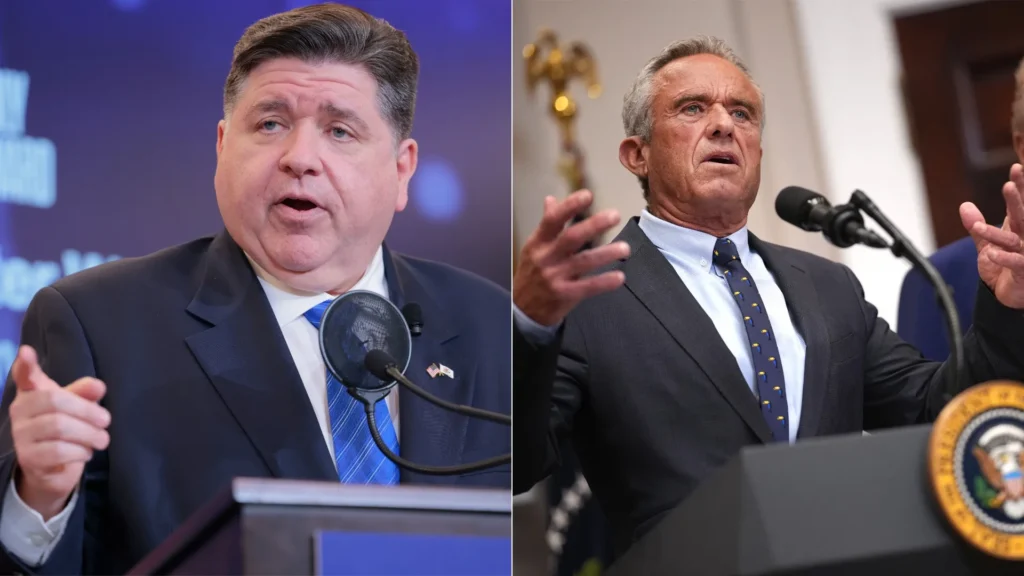
CHICAGO — Illinois Gov. J.B. Pritzker on Tuesday approved new legislation aimed at shielding state vaccine policy from what he described as “junk science” increasingly influencing federal decision-making.
The law gives the Illinois Department of Public Health led by Dr. Sameer Vohra, the authority to create independent, state-specific immunization guidelines. These recommendations will be shaped with input from the state’s Immunization Advisory Committee, a panel of physicians, nurses and public health experts.
Under the new rules, the committee can issue recommendations that do not necessarily align with the Centers for Disease Control and Prevention. This includes guidance on seasonal vaccines such as flu, COVID-19 and RSV, as well as core childhood vaccines like MMR and Hepatitis B.
The legislation also empowers IDPH to draw from multiple scientific sources — including the CDC, the World Health Organization and other leading experts — and requires that state-recommended vaccines be covered by insurance plans regulated in Illinois.
Rep. Bob Morgan, D-Deerfield, who sponsored the bill, underscored the urgency of the change. He noted that the CDC’s advisory committee was preparing to revisit the child immunization schedule and review Hepatitis B vaccine efficacy during meetings on Dec. 4 and 5.
“We’ve depended on the federal system for trusted guidance since the 1930s,” Morgan said. “But that trust has been dismantled.”
Giving the Committee More Power
The advisory committee, chaired by pediatric infectious disease specialist Dr. Marielle Fricchione of Rush Children’s Hospital, will meet later this week. She said the updated structure makes the group more inclusive and capable of responding quickly as new data emerges. It also puts safeguards in place if a future IDPH director deviates from the committee’s science-driven recommendations.
Fricchione stressed that vaccines remain one of medicine’s most important innovations, recalling a recent case involving a 2-year-old patient she treated over Thanksgiving.
“When I give a child a vaccine, they leave the clinic immediately protected from diseases that once terrified entire generations,” she said.
Political Divide on Vaccine Policy
House Bill 767 passed in October along party lines, with Republican lawmakers criticizing what they saw as political motives.
The measure follows a September executive order from Pritzker instructing IDPH to establish its own vaccine guidance after the FDA withdrew authorization for COVID-19 shots for children, pregnant individuals and adults under 65 without risk factors.
Before signing the bill, Pritzker took aim at U.S. Health and Human Services Secretary Robert F. Kennedy Jr., accusing him and others of promoting conspiracy theories about vaccines causing autism — claims repeatedly disproven by scientific research.
“While RFK Jr. and his QAnon-inspired allies spread dangerous misinformation in Washington, Illinois is choosing to protect public health,” Pritzker said.
Tripti Kataria, president-elect of the Illinois State Medical Society, welcomed the new law and encouraged patients with questions to consult their doctors, noting that the amount of medical information available today can be overwhelming.
Pritzker pointed to the state’s response to a measles outbreak earlier this year, a 50% uptick in vaccine uptake — as evidence that residents trust science.
“We believe in science in Illinois,” he said. “So during this flu season, make sure you get vaccinated, get your kids vaccinated and remind seniors to get their shots. Vaccines are safe, effective and the responsible choice.”