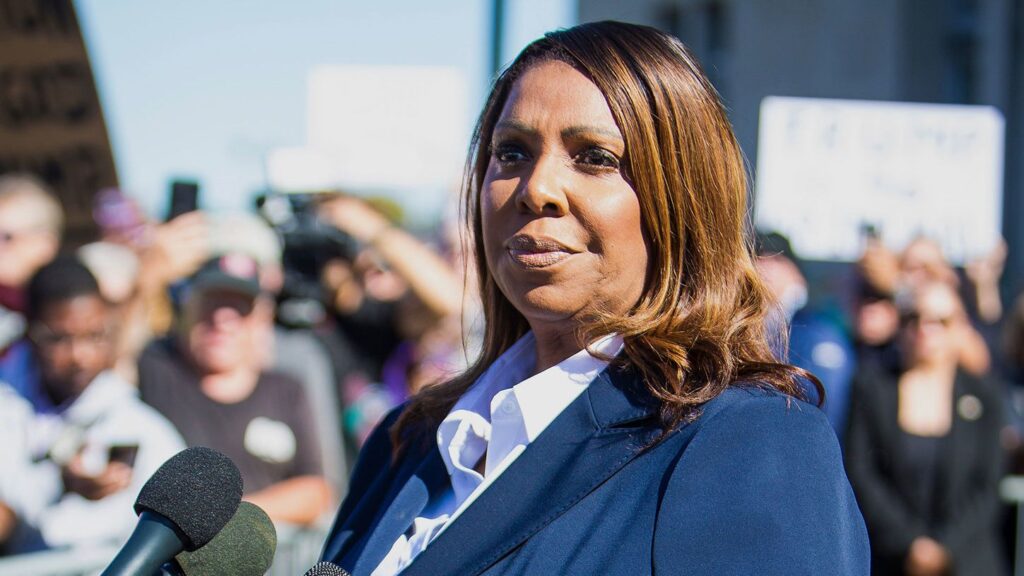
Federal prosecutors suffered another major setback Thursday when a grand jury declined to re-indict New York Attorney General Letitia James, just days after a judge tossed out the Justice Department’s earlier bank fraud case against her.
A U.S. official confirmed that the grand jury in Norfolk, Virginia, voted against issuing a new indictment when prosecutors presented the charges for a second time. The refusal is extremely uncommon — grand juries almost always approve indictments.
READ MORE: Jasmine Crockett Signals Possible Senate Run as She Contacts Potential Rivals
Judge’s Earlier Dismissal Set Up a Rare Second Attempt
The government’s push for a new indictment came after a dramatic courtroom development last week, when a federal judge dismissed the original charges against James and former FBI Director James Comey. The judge ruled that Lindsey Halligan, the acting U.S. attorney overseeing the case, had been improperly appointed, invalidating the indictments. The dismissal, however, allowed prosecutors to refile the charges if they chose to.
Despite that opportunity, the grand jury’s rejection now leaves prosecutors with far fewer options and deepens questions about the case’s legitimacy.
James Calls Case ‘Baseless’
In a statement, James thanked the grand jurors and reiterated her position that the accusations never should have been brought.
“As I have said from the start, the charges against me are baseless,” she wrote. “It is time for this unchecked weaponization of our justice system to stop.”
Her attorney, Abbe Lowell, blasted the government’s pursuit of the case, saying it “should never have existed in the first place.” He warned that any continued effort to prosecute James would be “a shocking assault on the rule of law.”
The Allegations at the Center of the Case
James was originally charged in October with bank fraud and making false statements. Prosecutors alleged she misrepresented a Norfolk, Virginia home as her second residence on mortgage documents in 2020, even though she allegedly rented it out as an investment property to secure a more favorable interest rate.
James has denied all wrongdoing and argued she is being targeted for political reasons. Between Trump’s terms in the White House, James sued him for allegedly inflating property values — a civil case that resulted in a major ruling against him in 2023.
That judgment included heavy financial penalties that were later significantly reduced on appeal. The appeals court left some restrictions on the Trump Organization intact but criticized the earlier penalties as “excessive.”
Claims of Political Retaliation and Internal Turmoil
James’ legal team has argued that the charges stemmed from vindictive prosecution and improper conduct by DOJ and Fair Housing Finance Authority officials. They also pointed to Trump’s public calls for the case to be pursued.
The timeline also raised concerns: her indictment came just weeks after Erik Siebert, the previous U.S. attorney, resigned amid fears he was being pushed out for refusing to indict James. Shortly afterward, Halligan — a former Trump staffer and his personal attorney — stepped in as interim U.S. attorney. Comey was indicted within a week; James followed weeks later.
Both James and Comey challenged Halligan’s appointment, leading to the dismissal of their charges.
Future of the Case Remains Uncertain
With Thursday’s grand jury rejection, the government’s ability to refile charges against James appears increasingly limited.
Meanwhile, it remains unclear whether prosecutors will try to re-indict James Comey. His alleged offense — lying to Congress in 2020 — may now fall outside the statute of limitations. Although federal law allows a six-month extension in certain situations, the judge noted that the extension may not apply if the original indictment was invalid from the start.
For now, the grand jury’s refusal marks a significant and highly unusual rebuke — and a new setback for federal prosecutors attempting to revive the high-profile case.