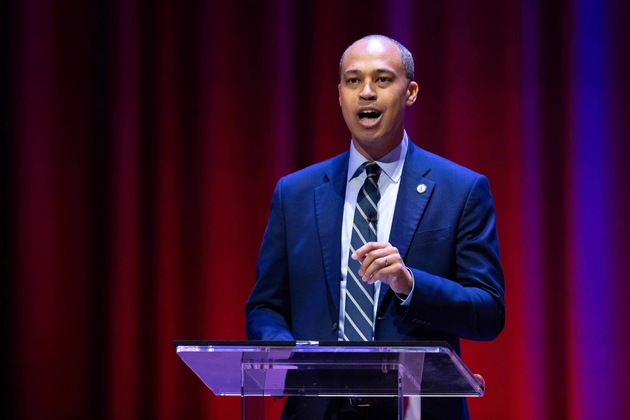
ay Jones has won the race for Virginia Attorney General, marking a historic and highly political victory that immediately set the tone for his term. Just hours after the race was called, Jones delivered a pointed message aimed directly at President Donald Trump, signaling that the legal battles between the state government and the White House could intensify in the months ahead.
Jones, 35, ran on a campaign centered around economic security, healthcare protections, and defending voting rights. His victory makes him one of the youngest attorneys general in Virginia’s modern history, and a rising figure within the Democratic Party. His supporters have described his win as a generational shift from older party leadership toward a more diverse, progressive slate of officeholders.
In his election night remarks, Jones wasted no time drawing clear battle lines.
“I will protect our jobs, our health care, and our economy from President Trump’s attacks,” he said to a cheering crowd. “We stand firm against the people who would take us backward.”
His comments signal an intention to continue challenging federal policies from Washington that he argues undermine workers, reproductive rights, civil liberties, and environmental protections. Jones framed his victory not just as a win for Virginia, but as part of a national struggle over the future direction of the country.
READ MORE: AOC Says Zohran Mamdani’s Victory Is a Warning to the Democratic “Old Guard”
Political analysts say the tone of his speech highlights the broader tension between state leadership in Democratic-led regions and the Trump administration’s aggressive moves to reshape national governance. With the 2026 midterms approaching, both sides are preparing for legal fights that could shape voter access, policing oversight, and state regulatory powers.
Throughout his campaign, Jones pledged to expand consumer protections, combat corporate price gouging, and defend the Affordable Care Act at the state level. He also vowed to strengthen oversight of law enforcement agencies while promoting investments in mental health and community-based prevention programs.
Jones’ election also holds symbolic importance. He becomes the first Black Attorney General in Virginia history, a notable milestone in a state with a deeply complex political and cultural legacy. Supporters in Richmond chanted “History made!” as results rolled in.
Republican candidates and Trump allies have criticized Jones’ agenda, calling it overreaching and claiming he will “politicize law enforcement.” But Jones dismissed those claims, saying the real threat comes from what he described as efforts to strip away civil protections and economic stability.
“This is not about left versus right,” Jones said. “This is about whether we move forward or fall backward.”
The White House has not yet issued a formal response to Jones’ remarks, but Trump allies online have already begun framing Jones as a “radical” out of step with Virginia’s values. Meanwhile, progressive leaders across the country celebrated his victory, calling it a sign that younger voters and suburban coalitions continue to shape political outcomes.
Jones is expected to be sworn in early January, and his first actions in office will be closely watched — particularly any legal challenges involving federal directives. Both parties agree on one point: his arrival signals a more confrontational era in the relationship between Virginia’s attorney general and the presidency.
For now, Jones says his focus is clear: “My job is to serve the people of Virginia — not power, not fear, not intimidation. We move forward together.”