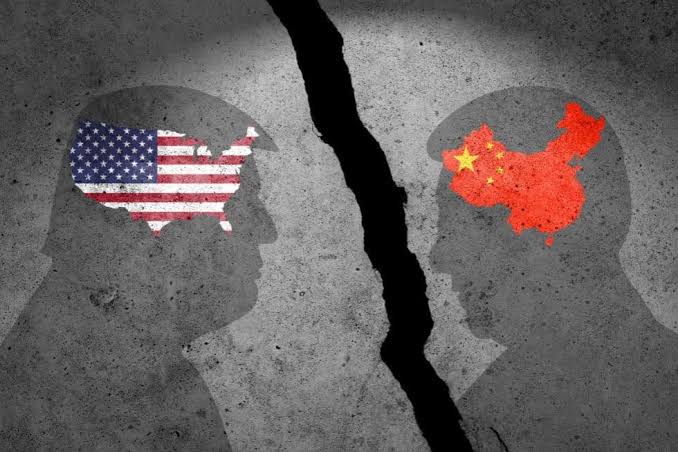
Markets rallied on Monday as U.S. President Donald Trump adopted a noticeably softer tone toward China following a weekend of heightened tensions over trade and tariffs. After last week’s dramatic sell-off, which saw global markets tumble amid fears of an escalating trade war, investors appeared relieved by signs that Washington and Beijing may still be open to negotiation.
Stocks, oil, and cryptocurrency prices all rebounded after falling sharply on Friday when Trump threatened sweeping new tariffs on Chinese imports. The move came in response to Beijing’s surprise announcement that it would impose new export controls on rare earth minerals — materials essential for advanced electronics, electric vehicles, and U.S. defense systems. China currently dominates the global rare earth supply chain, giving it considerable leverage in any trade dispute.
On Friday, Trump warned that the United States would respond with “massive” tariffs if China did not reverse course, and even suggested he might cancel his upcoming meeting with Chinese President Xi Jinping. The comments triggered a sell-off across markets, with the Dow Jones Industrial Average falling nearly 700 points and Asian indexes tumbling over the weekend.
But by Sunday night, Trump appeared to shift gears. In a post on Truth Social, he struck a conciliatory tone: “Don’t worry about China, it will all be fine! Highly respected President Xi just had a bad moment. He doesn’t want Depression for his country, and neither do I. The U.S.A. wants to help China, not hurt it.”
That softer message marked a clear pivot from Friday’s fiery rhetoric and seemed aimed at calming jittery investors. The reassurance worked — by Monday afternoon, the Dow was up more than 400 points, the S&P 500 had regained most of its losses, oil prices climbed 2%, and Bitcoin rebounded past $60,000. Analysts said the president’s remarks helped soothe fears of a full-blown trade breakdown between the world’s two largest economies.
“Markets are responding more to tone than to policy at the moment,” said economist Laura Chen of Capital Strategies Group. “As long as Trump signals openness to dialogue, traders are willing to bet that a trade truce will hold through the end of the year.”
Vice President JD Vance also weighed in, taking a firmer line than the president but leaving the door open for diplomacy. “China needs to decide how it wants to negotiate with the United States,” Vance said in a statement. “We will always defend American jobs and security, but we prefer cooperation over confrontation.”
Meanwhile, major business leaders urged the administration to focus on long-term resilience rather than short-term market gains. JPMorgan Chase CEO Jamie Dimon said in a statement that “it’s become painfully clear the U.S. has allowed itself to become too reliant on unreliable sources of critical minerals and manufacturing — all essential for our national security.” Dimon called for greater domestic investment in mining, processing, and clean energy manufacturing to reduce strategic vulnerabilities.
Despite the market rebound, economic uncertainty remains. U.S. and Chinese negotiators are continuing talks ahead of a planned late-October summit between Trump and Xi in South Korea. The two sides are under pressure to finalize a comprehensive trade deal before November 1, when their current tariff truce expires.
The upcoming meeting will test whether the weekend’s diplomatic reset can be sustained. Trump has signaled that he is open to compromise but insists any agreement must include “real enforcement mechanisms” and “fair treatment” for American businesses. Chinese state media, meanwhile, described the Sharm el-Sheikh peace summit last week — where Trump appeared with other world leaders — as evidence that Washington seeks “stability and cooperation” after years of turbulence.
For now, investors appear cautiously optimistic. “We’ve seen this cycle before — harsh words, then a temporary pause, then new negotiations,” said market analyst David Ross. “What’s different this time is the scale of economic pressure both sides are under. That makes peace — even temporary peace — a lot more valuable.”
Trump and Xi are expected to meet in South Korea in the final week of October. If progress is made, it could ease global trade tensions and stabilize markets heading into the winter — but if talks collapse, analysts warn that another round of tariffs could once again rattle the global economy.