TOKYO — Around 20 leading companies from Japan and the United States have shown interest in participating in projects tied to Tokyo’s $550 billion investment commitment in the United States, according to a joint factsheet released Tuesday.
The initiative stems from a trade agreement reached earlier this year, in which U.S. President Donald Trump agreed to lower tariffs on Japanese automobile imports and other products. In exchange, Japan pledged to channel massive investment into U.S.-based projects over the coming years.
Among the Japanese corporations expressing interest are SoftBank Group, Mitsubishi Electric, and Hitachi, alongside major U.S. companies. The list of proposed ventures spans key sectors such as energy, artificial intelligence infrastructure, and critical minerals — collectively representing up to $400 billion in potential investments.
Japan’s investment package will reportedly include a mix of equity contributions, loans, and loan guarantees facilitated through state-backed agencies.
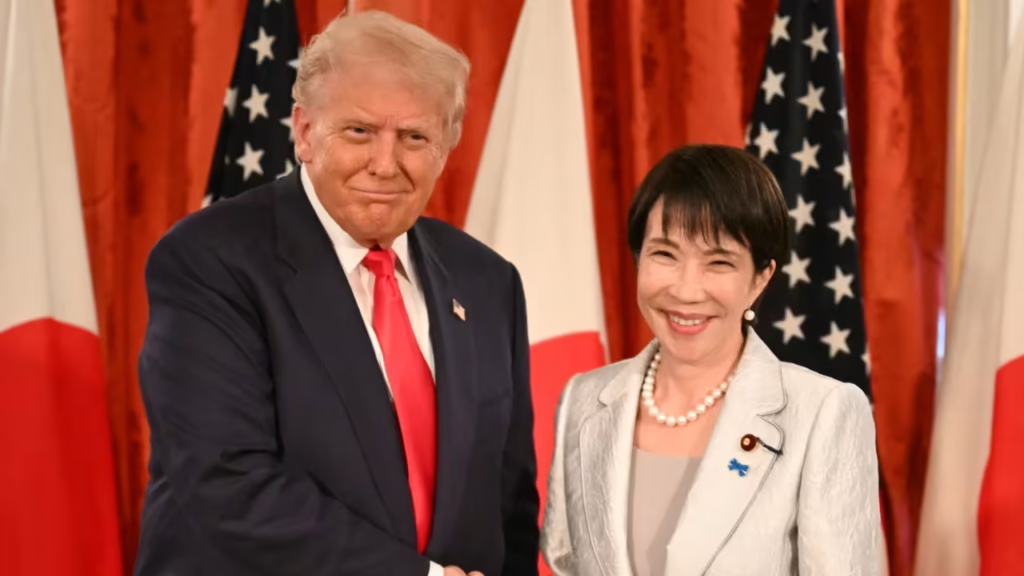
The new list was published following a meeting between President Trump and Japanese Prime Minister Sanae Takaichi in Tokyo on Tuesday. The two leaders finalized agreements aimed at deepening trade ties and expanding cooperation on rare earth materials.
U.S. energy firm Westinghouse is reportedly considering projects to build pressurized water reactors and small modular reactors valued at up to $100 billion, with potential participation from Japanese companies such as Mitsubishi Heavy Industries, Toshiba, and IHI. GE Vernova could also take part in developing small modular reactors and supplying related power equipment in partnership with Japanese firms.
SoftBank, led by founder and CEO Masayoshi Son — who has previously met with Trump — is reportedly interested in a $25 billion large-scale power infrastructure project. Meanwhile, U.S.-based Carrier could provide thermal cooling systems, and Japanese electronics giant Panasonic is exploring opportunities in energy storage development.
Other Japanese companies, including Murata Manufacturing, TDK, and Fujikura, have also expressed interest in contributing to the initiative.
The collaboration reflects a deepening economic and technological partnership between the two allies, emphasizing clean energy, advanced infrastructure, and strategic resource development as key pillars of the expanding U.S.–Japan relationship.
Reporting by Makiko Yamazaki; Editing by Clarence Fernandez and Thomas Derpinghaus