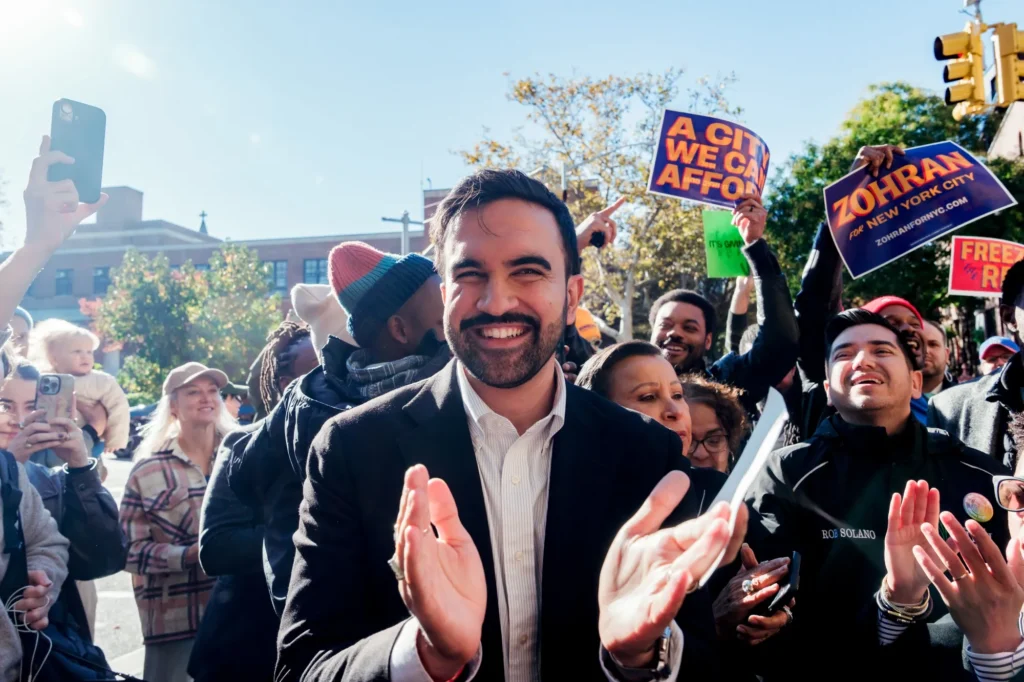
Andrew Cuomo’s attempt to congratulate Zohran Mamdani on his victory did not unfold quietly. As the former governor offered well-mannered acknowledgment of Mamdani’s win, a wave of loud boos rose from the crowd. But Cuomo didn’t allow that reaction to stand for even a moment. He immediately stepped forward, raised his hand, and told his own audience to stop.
The atmosphere in the room shifted instantly. Many expected Cuomo to ignore the boos or let the reaction speak for itself. Instead, he made it clear that the result of the night was not something to distort with hostility. He insisted that regardless of political disagreements, the outcome deserved respect.
Cuomo addressed the crowd directly, stating, “No, no… that’s not right, and that is not us.” The message was clear and simple: you don’t diminish someone else’s win, particularly in a democratic contest. He emphasized that the night belonged to Mamdani, not to himself, not to old grudges, and not to the emotions circulating in the room.
Observers took note of the tone. It wasn’t forced. It wasn’t performative. Cuomo sounded measured — almost reflective. He acknowledged the competitive nature of the race but reminded everyone present that political transitions and election nights require dignity. The moment was less about political rivalry and more about conduct.
For Mamdani, the exchange unfolded in real time without any involvement on his part. He did not speak during the disruption. He stood, acknowledged the situation, and allowed Cuomo to handle the reaction. The silence from Mamdani’s side reinforced the professionalism of the moment.
Many in the crowd may not have expected Cuomo to go out of his way to defend a political opponent. Mamdani has been sharply critical of Cuomo in the past, and the two have represented very different political styles. But Cuomo’s remarks suggested that, at least on election night, those tensions were secondary to publicly honoring the voters’ decision.
Political analysts immediately pointed out how rare such gestures have become. In an era where election outcomes often lead to insults, denial, or confrontation, Cuomo deliberately chose a different tone. He leaned into tradition: congratulate the winner and move forward.
There was also a subtle message about leadership — not the leadership of holding office, but the leadership of moments. Cuomo recognized that his response to the crowd could either heighten or reduce division. He chose to cool the room down. That choice matters, especially in the current climate.
Supporters in attendance reacted with mixed emotions. Some nodded along with Cuomo’s statement, acknowledging the importance of respecting the result. Others remained silent, perhaps still carrying frustration from the campaign. But what mattered more was the precedent being set: losing or winning, the process must be acknowledged respectfully.
Mamdani’s team did not respond with any triumphalism. They issued no gloating statements, no victory taunts. Their tone matched the final message of the night — recognition, transition, and moving forward.
In the broader political environment, this moment stands out. It highlighted that disagreements do not need to erase basic standards of civility. Cuomo could have allowed bitterness to define the room, but instead he reinforced a lesson that many feel has been fading: grace matters, even when power shifts.
By the end of the evening, the moment had already begun spreading across social media. Clips circulated with captions praising the gesture, calling it a reminder that respect can still show up in politics. Whether audiences supported Cuomo, Mamdani, both, or neither, the gesture itself resonated.
The night did not just belong to Zohran Mamdani in terms of electoral victory. It belonged to the idea that democratic contests can still end with acknowledgment instead of antagonism — if leaders choose to make that decision in the moment when it counts.