Tensions across Latin America have sharply intensified following two major developments this week — the U.S. Senate’s decision to block a War Powers resolution and growing outrage from Colombia over a U.S. military strike that allegedly hit a Colombian vessel.
In a narrow 48–51 vote, the Senate rejected a bipartisan proposal to restrict President Trump’s authority to launch attacks against suspected drug-smuggling operations in the Caribbean. The resolution, backed by several Democrats and a handful of Republicans, would have forced the administration to seek congressional approval before carrying out further strikes. Its failure effectively gives the White House continued freedom to conduct military operations in the region without additional oversight.
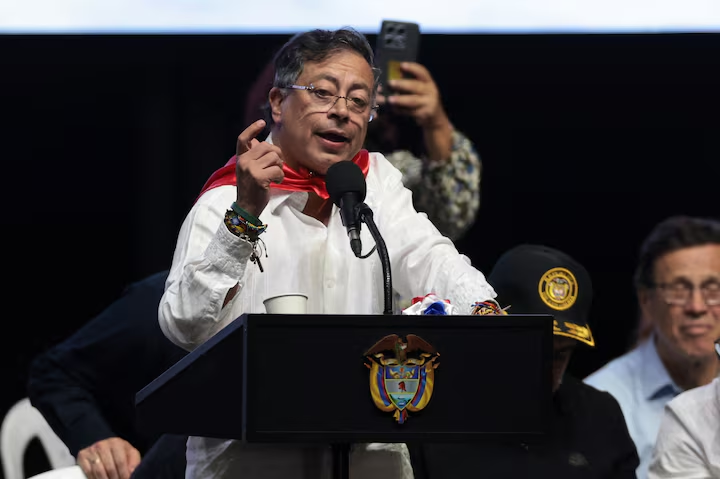
The move comes amid growing controversy surrounding recent U.S. strikes in waters near Venezuela. Colombian President Gustavo Petro has claimed that one of the vessels targeted by U.S. forces was Colombian and carried civilians. The White House dismissed the accusation as “baseless,” but the statement from Bogotá has sparked a diplomatic storm that threatens to strain relations between Washington and its key South American ally.
Adding to the confusion, U.S. officials have yet to provide Congress with solid proof that the boats targeted were engaged in narcotics trafficking. Lawmakers briefed on the matter told reporters that much of the intelligence presented so far remains “unclear” and “unverified,” with no conclusive evidence tying the vessels to drug operations.
Meanwhile, Venezuela has accused local extremist factions of plotting a “false-flag” bombing at the closed U.S. Embassy in Caracas. President Nicolás Maduro claims the plan was designed to blame his government and justify American retaliation. Venezuelan officials say they foiled the alleged plot and are investigating possible foreign links.
The renewed military tension follows Trump’s recent order to halt all diplomatic outreach to Venezuela — a decision that effectively shut down back-channel talks with Maduro’s government. Analysts say that move has left little room for negotiation, increasing the risk of escalation between Washington and Caracas.
Reports from regional outlets indicate that at least four U.S. strikes have taken place over the past few weeks, resulting in more than 20 reported deaths. However, the identities and affiliations of those killed remain uncertain.
Regional leaders, including those from Mexico and Brazil, have urged both the U.S. and Venezuela to exercise restraint. They warn that continued military actions could destabilize the region and trigger a new humanitarian crisis.
With diplomatic ties fraying and questions mounting over the legality of U.S. strikes, the situation in the Caribbean is growing increasingly volatile — and the end of dialogue between Washington and Caracas may have opened the door to a far riskier phase in U.S. foreign policy.