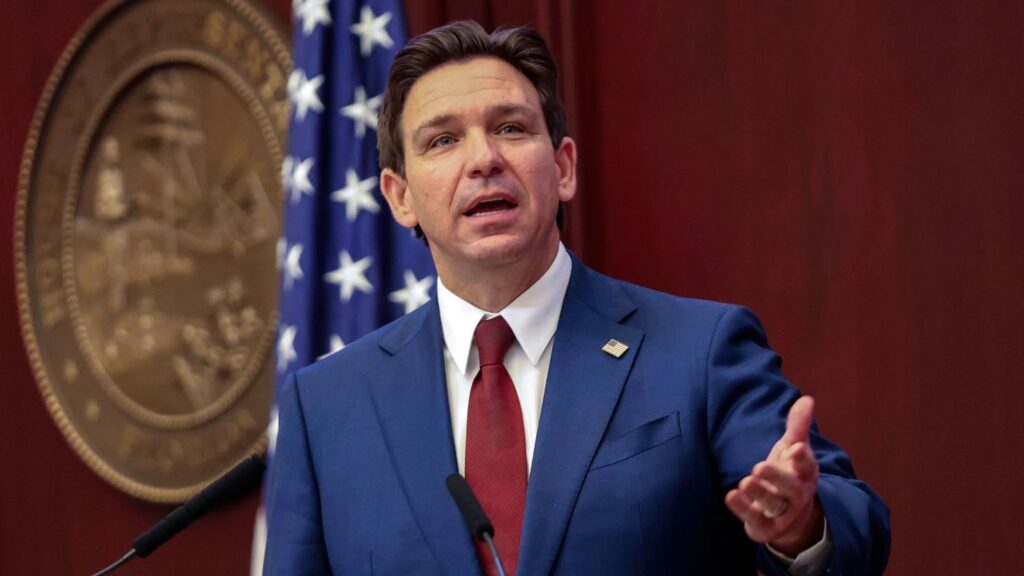
Florida Governor Ron DeSantis is speaking out against what he describes as an unfair property tax system that increasingly burdens long-time homeowners. During a recent statement, DeSantis highlighted how residents who purchased their homes decades ago are now facing rising tax bills as property values climb.
“It’s almost like they have to pay rent to the government, just to be able to enjoy their property. That’s wrong. We need to do something about it,” the governor said.
DeSantis emphasized that many Floridians have fully paid off their homes, sometimes decades ago, only to be hit with higher property taxes simply because their home’s market value has increased.
“[People] have their homes paid off and they bought it 30 years ago for a certain amount. Now they’re being told it’s worth so much more and they have to pony up more and more money,” he added.
According to DeSantis, this situation creates financial stress for homeowners, particularly retirees and those on fixed incomes, who often struggle to keep up with rising tax assessments. The governor framed this as an issue of fairness and equity, arguing that homeowners should not be penalized for the appreciation of their property.
The Florida property tax system relies heavily on assessments that reflect current market values. While intended to ensure local governments have sufficient revenue, DeSantis contends that it disproportionately impacts those who have owned their homes for decades and are not benefiting from the increased market value.
DeSantis’s remarks have struck a chord with many residents, especially in rapidly growing regions of Florida where property values have skyrocketed. Homeowners in cities like Miami, Tampa, and Orlando have reported seeing their annual tax bills increase substantially, even without any changes to their property itself.
Experts note that property tax hikes can lead to difficult choices for families, sometimes forcing residents to sell homes they’ve lived in for decades because they can no longer afford the annual payments. DeSantis warned that this trend could push seniors and long-term residents out of the communities they helped build.
The governor also stressed that these tax burdens are often disconnected from actual services provided. Many homeowners feel they are paying far more than what they receive in public services, which amplifies frustration over rising assessments.
DeSantis indicated that the state government must explore solutions to prevent homeowners from being unfairly taxed due to market fluctuations. Possible measures could include stricter limits on annual assessment increases or tax relief programs targeted at long-time residents.
The governor suggested that property tax reform is not just an economic issue, but a moral one. He argued that Floridians who have invested in their communities over decades should not be treated as cash cows for local governments simply because real estate prices have climbed.
Florida’s real estate market has seen a surge in recent years, fueled by population growth, migration from other states, and increased demand for housing. While this has boosted the economy and property values, it has also created challenges for maintaining affordability and fairness in taxation.
DeSantis’s call for reform comes at a politically significant time, as property taxes often become a major issue in local and state elections. Advocates for homeowners say addressing these concerns could not only relieve financial pressure but also ensure long-time residents are not forced out of their communities.
In closing, DeSantis reaffirmed his commitment to protecting Floridians from excessive taxation. He argued that the government has a responsibility to ensure residents can continue to enjoy their homes without being burdened by ever-increasing financial obligations.
“We need to do something about it,” he said, urging lawmakers and local officials to consider measures that would make the system more equitable and sustainable for all Floridians.