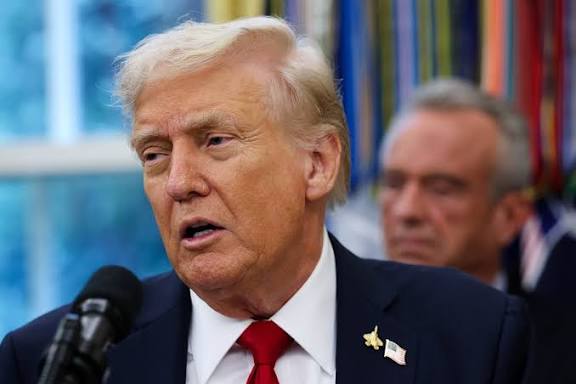
President Donald Trump on Saturday intensified his calls to abolish the Affordable Care Act (ACA), known widely as Obamacare, urging Senate Republicans to redirect federal healthcare funds from insurance companies directly to the American people.
The comments, posted on his Truth Social platform, mark Trump’s latest attempt to revive one of his signature political battles, the dismantling of the healthcare law first enacted during the Obama administration in 2010.
“Give It to the People”
In his online post, Trump criticized the structure of the ACA, claiming it funnels “hundreds of billions of dollars” into large insurance companies that, in his view, fail to deliver quality healthcare.
> “I recommend to Senate Republicans that the hundreds of billions currently being sent to money-sucking insurance companies to prop up ObamaCare be sent directly to the people, so they can buy their own, much better, healthcare — and still have money left over,” he wrote.
> “In other words, take from the big, bad insurance companies, give it to the people, and terminate, per dollar spent, the worst healthcare anywhere in the world, ObamaCare.”
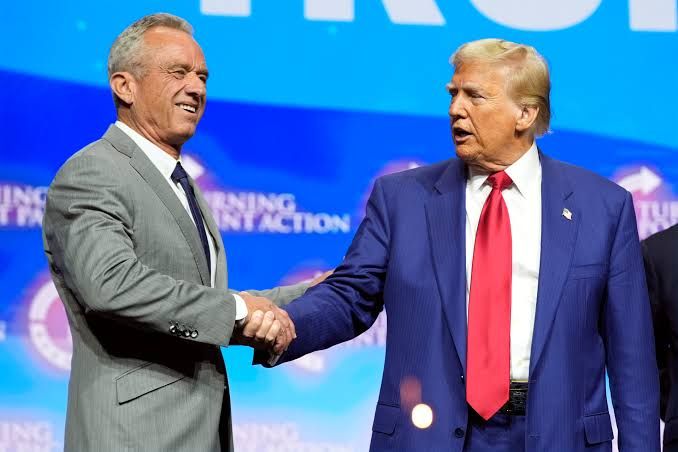
Trump’s message echoes his long-held argument that healthcare decisions should rest with individuals rather than bureaucrats or corporations.
A Renewed Push Against the Affordable Care Act
The Affordable Care Act expanded access to health insurance for millions of Americans through subsidies and Medicaid expansion. But since his first term, Trump has made repealing it a political priority, labeling it a “disaster” and an “expensive failure.”
Although Republicans attempted multiple times to repeal the ACA during his first presidency, internal divisions and Democratic opposition prevented its full rollback. Now, with Trump back in office and the GOP controlling both chambers of Congress, the effort has regained momentum.
Timing Tied to the Shutdown
Trump’s new push coincides with a prolonged government shutdown, now stretching into its sixth week — one of the longest in U.S. history.
The shutdown began over disputes about budget priorities but has increasingly focused on healthcare spending. Democrats have refused to back a funding bill unless it includes an extension of ACA insurance subsidies that are scheduled to rise early next year.
Republicans, meanwhile, have argued that the subsidies are wasteful and unfairly favor large insurance providers.
A Divided Senate Faces Growing Pressure
The standoff has placed the Senate under growing public and political pressure. With government workers still unpaid and disruptions mounting in sectors such as air travel, both parties are searching for a path forward.
Trump’s proposal to bypass insurance companies and give Americans direct payments to purchase their own coverage — has attracted attention but also skepticism.
Several conservative lawmakers, including Senators Lindsey Graham and James Lankford, expressed openness to Trump’s idea, saying it could empower citizens and reduce corporate influence over healthcare.
However, moderate Republicans and Democrats warn that such a move could destabilize the insurance market and leave millions uninsured.
Democratic Response: “A Dangerous Gamble”
Senate Democratic Leader Chuck Schumer blasted Trump’s remarks, calling the plan “a dangerous gamble with people’s health.”
Schumer argued that the ACA’s subsidy system is vital for keeping insurance affordable for working families, adding that scrapping it without a detailed replacement plan would create “chaos in the healthcare system.”
Other Democrats accused Trump of using the healthcare issue as a bargaining tool in the shutdown negotiations rather than seeking genuine reform.
Experts Warn of Coverage Gaps
Healthcare analysts also voiced concern about the feasibility of Trump’s proposal.
According to policy researchers at the Kaiser Family Foundation, eliminating ACA subsidies could strip coverage from more than 10 million Americans who currently rely on financial assistance to pay their premiums.
They noted that sending direct payments to individuals might sound appealing but would require entirely new administrative systems, potentially causing confusion and delays in access to care.
No Clear Replacement Plan Yet
So far, the White House has not released any official blueprint outlining how direct payments would replace existing insurance subsidies or how the plan would be funded.
A senior administration official, speaking on background to Reuters, said Trump’s proposal is meant to “start a broader conversation” about modernizing healthcare funding, not necessarily an immediate legislative demand.
Still, Trump’s repeated calls to “terminate” Obamacare have fueled speculation that a formal repeal bill could be introduced in Congress before the end of the year.
Shutdown Fallout Expands
The shutdown’s impact continues to grow nationwide.
Airports have reported hundreds of canceled flights due to air-traffic controller shortages, while national parks and some federal offices remain closed. Economists warn that an extended shutdown could begin to slow growth and weaken consumer confidence heading into the holiday season.
Trump has used these disruptions to pressure Congress, insisting that Democrats are prioritizing “insurance company bailouts” over reopening the government.
Republican Strategy in Flux
Inside the Republican Party, views remain divided.
Some lawmakers see Trump’s proposal as a way to reshape the healthcare debate heading into 2026 midterms. Others fear that reviving the Obamacare fight could alienate moderate voters who depend on ACA coverage.
Despite the uncertainty, Trump’s influence over the party remains strong, and his latest comments have already shifted the focus of ongoing negotiations.
Public Reaction Mixed
Early polling shows Americans split over Trump’s idea.
A Newsweek survey released on Saturday found that while 46% of respondents agree the ACA needs major reform, 51% oppose eliminating subsidies without a replacement.
Public sentiment largely mirrors the divide in Congress — support for Trump’s message among conservatives and deep resistance among Democrats and independents.
Analysts: Political Risk, High Reward
Political analysts note that Trump’s push could energize his base but carries significant political risk.
“Healthcare has always been a double-edged sword for Republicans,” said political scientist Larry Sabato. “Every time they move to repeal Obamacare, they risk backlash from voters who benefit from it.”
Still, Sabato added, Trump’s framing — portraying himself as fighting for ordinary Americans against “greedy” corporations — could prove politically powerful if the debate continues into the new year.
A Long-Running Battle Resurfaces
Trump’s renewed attack on the ACA revives a policy battle that has defined Washington for more than a decade.
From the 2010 passage of Obamacare to the failed repeal efforts of 2017, the law has been a persistent flashpoint in American politics — symbolizing broader debates over the role of government in healthcare.
With the current shutdown adding urgency, Trump’s proposal ensures the issue will once again dominate headlines and congressional negotiations.
What Comes Next
The Senate is expected to hold a rare weekend session to discuss both the shutdown and healthcare funding.
Lawmakers face a choice: extend the ACA subsidies as Democrats demand, or explore Trump’s proposed alternative of direct payments to citizens.
If no deal is reached soon, the shutdown could enter its seventh week, deepening economic strain and testing how long public patience can hold.
Conclusion
President Trump’s call to “end Obamacare” and “give healthcare money directly to the people” has reignited one of the most divisive issues in American politics.
While his supporters hail it as a bold step toward personal freedom and fiscal responsibility, critics view it as reckless and ill-defined.
For now, the debate has shifted the focus of Washington’s shutdown standoff and set the stage for yet another high-stakes fight over the future of U.S. healthcare.